Newsletter Subscribe
Enter your email address below and subscribe to our newsletter
[forminator_form id="25163"]

All voices matter
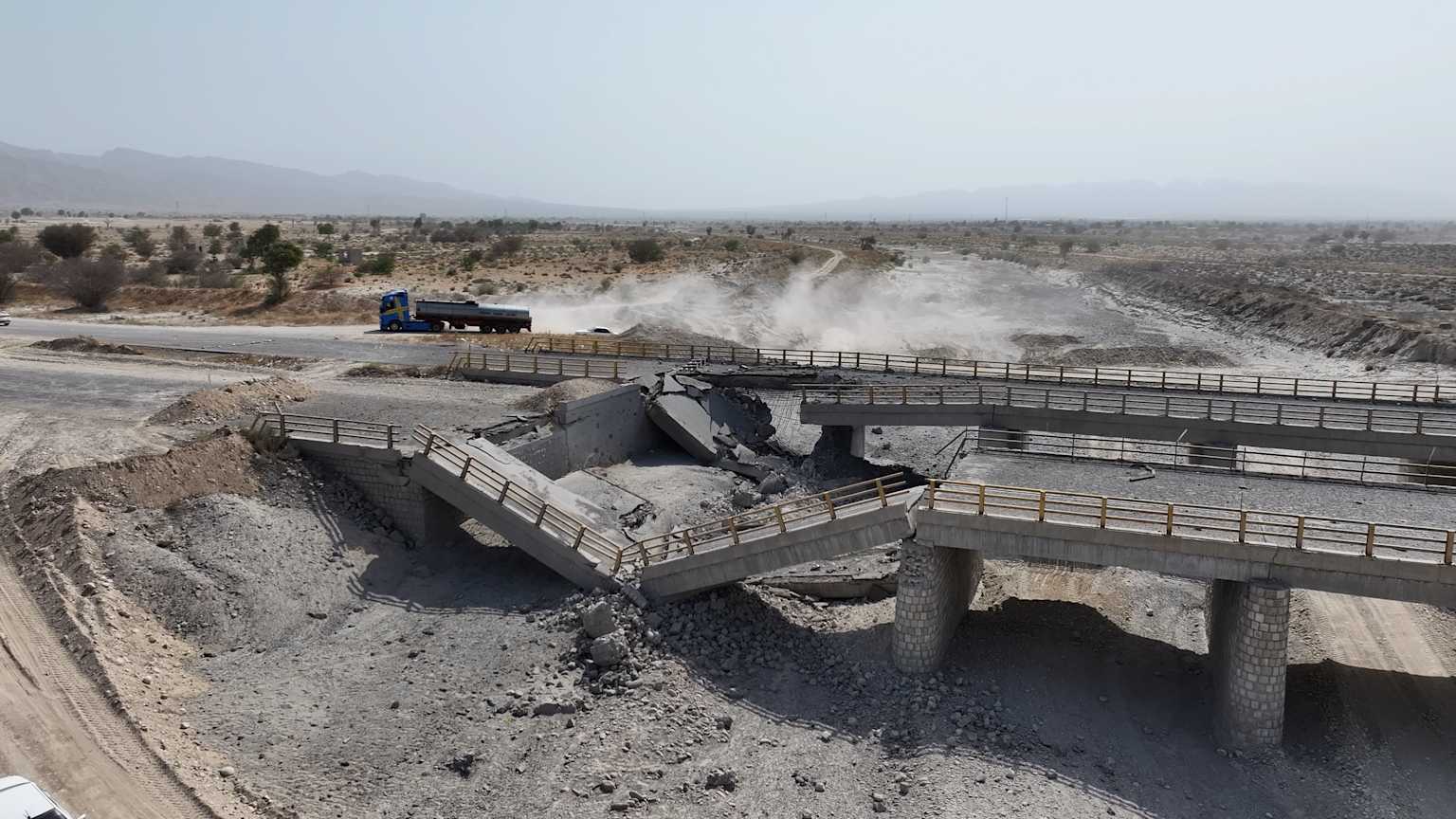
itv+1ktvbapnewsThe United States launched a seventh consecutive night of airstrikes against Iran on Friday, while Tehran escalated its retaliatory campaign against U.S. military facilities and allied civilian infrastructure across the Persian Gulf, deepening a conflict that shows no signs of abating.
U.S. Central Command confirmed it began another wave of precision strikes against Iranian military targets on Friday evening, continuing a campaign that has now lasted a full week. The strikes, which CENTCOM said are intended "to further degrade Iranian military capabilities," have progressively expanded in scope.itv+3
Iranian state television reported that U.S. airstrikes hit at least six bridges in the southern Hormozgan province overnight into Friday, killing at least eight people and wounding around 20 others. The attacks appeared aimed at severing road and rail access to Bandar Abbas, Iran's largest port on the Strait of Hormuz. Airstrikes also collapsed a surveillance tower at Chabahar port, a key trade route for Afghanistan, according to the Associated Press.nypost+3
Iranian authorities said the total death toll from the recent U.S. strikes has reached at least 46, with more than 400 wounded.apnews
Iran's Islamic Revolutionary Guard Corps responded with its own wave of attacks under the banner of "Operation Nasr 2," releasing footage of strikes on U.S. military targets in Jordan, Kuwait, and Bahrain. The IRGC said it targeted the U.S. logistics center at Port Abdullah in Kuwait, command facilities linked to the U.S. Fifth Fleet in Bahrain, and the Al-Azraq air base in Jordan.iranpress+2
The IRGC also claimed to have struck two U.S. radar sites in Oman, saying it destroyed long-range aerial radar and vessel detection systems.aljazeera
In a strike with broader civilian implications, Iranian missiles and drones hit a power and water desalination plant in Kuwait on Friday, damaging a key source of drinking water in the desert nation. About 90 percent of Kuwait's drinking water comes from desalination, making such facilities a critical vulnerability.ktvb+1
The escalating exchange of strikes over control of the Strait of Hormuz — through which roughly a fifth of the world's oil passes — has rattled global energy markets and drawn in Gulf states hosting U.S. forces. There has been no indication from either side of willingness to resume negotiations. President Trump has threatened to target Iranian oil and energy infrastructure next week if Tehran does not agree to talks.cnn+1