Newsletter Subscribe
Enter your email address below and subscribe to our newsletter
[forminator_form id="25163"]

All voices matter
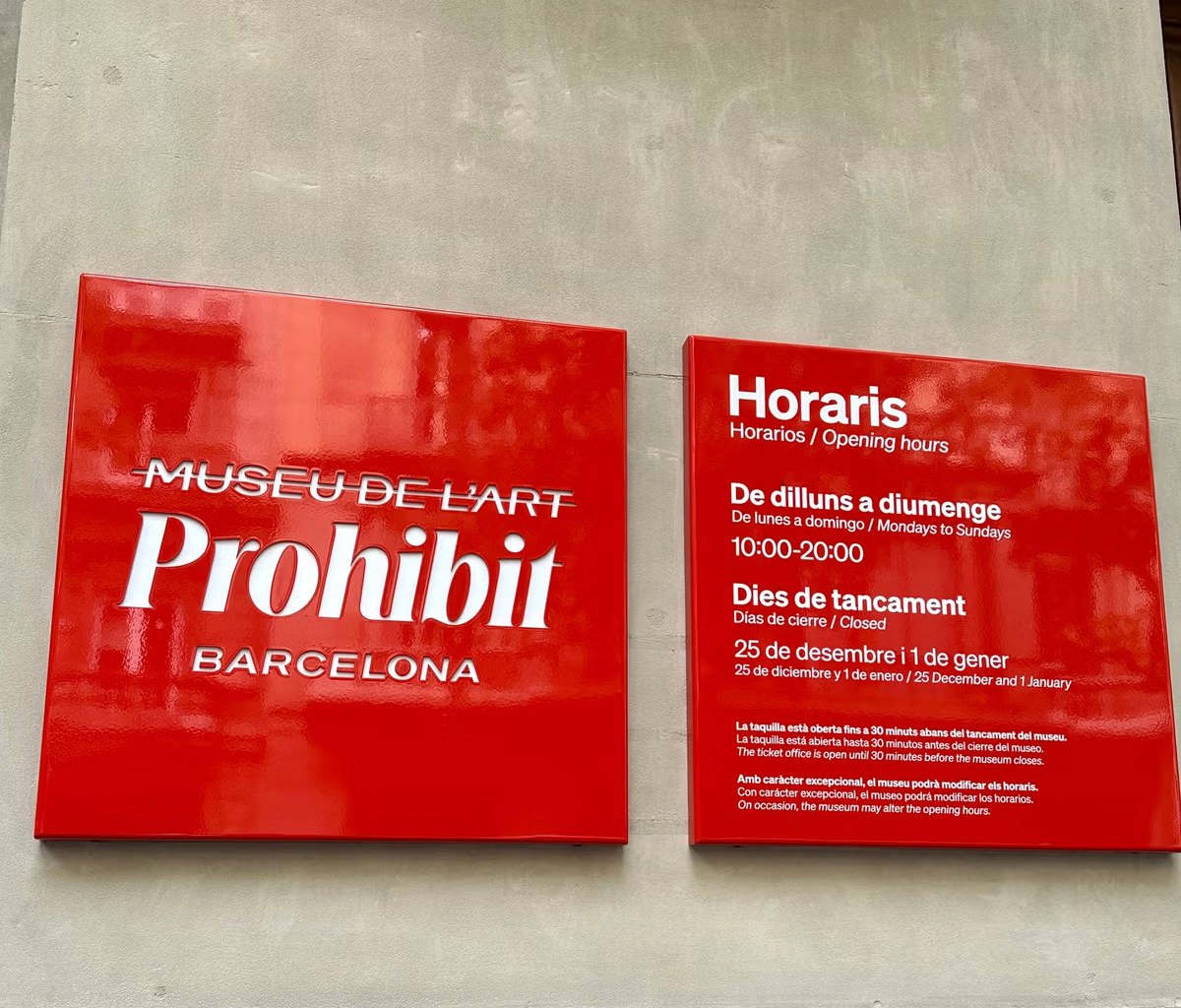
museuartprohibit+1.museuartprohibit+1.theartnewspaper+1.museuartprohibit+1.museuartprohibit+1.The Museum of Forbidden Art in Barcelona, the world's first museum dedicated exclusively to censored and banned artworks, has closed its doors indefinitely less than two years after its opening, citing financial losses caused by a four-month protest led by the Solidarity and Unity of Workers union (SUT) that made operations unsustainable.
The Museu de l'Art Prohibit (Museum of Forbidden Art) opened its doors in Barcelona in October 2023 as the world's first and only museum dedicated exclusively to censored artworks. Housed in the modernist Casa Garriga Nogués in Barcelona's Eixample district, the museum was founded by Tatxo Benet, a Catalan journalist and businessman who is also one of the founders of Mediapro.museos+2
The museum was directed by Rosa Rodrigo, formerly the Director of Strategic Development at Museu Nacional Centro de Arte Reina Sofia, with artistic direction from Carles Guerra, an independent curator who previously led institutions like MACBA and the Antoni Tàpies Foundation. At its peak, the museum displayed 42 of Benet's collection of approximately 200 censored works spanning paintings, sculptures, engravings, photographs, installations, and audiovisual pieces that had been banned or denounced for political, social, commercial, gender, or religious reasons. Within its first months of operation, the museum attracted over 13,000 visitors to its galleries, showcasing controversial works by artists including Picasso, Banksy, Andy Warhol, Robert Mapplethorpe, Ai Weiwei, Francisco de Goya, and Gustav Klimt.barcelonaobertura+4
Tatxo Benet's journey into collecting censored art began in 2018 when he purchased Santiago Sierra's controversial work "Political Prisoners in Contemporary Spain," which was promptly removed from the ARCO art fair in Madrid after its acquisition. This pivotal moment sparked Benet's mission to acquire artworks that had been "censored, prohibited or denounced due to political, social or religious reasons," ultimately leading to his collection of over 200 pieces. "When there is an act of censorship, two things happen: An artist's freedom is curtailed, but also the people's freedom to interact with the piece of art is restricted," Benet explained to the Art Newspaper.smithsonianmag+1
The collection spans diverse themes and controversies, featuring works like Jani Leinonen's "McJesus" (depicting Ronald McDonald crucified), Ines Doujak's provocative sculpture of the former Spanish king, and León Ferrari's "Western and Christian Civilization" showing Christ on an American fighter jet. Benet approaches his collecting with remarkable openness, stating "I have zero taboos" and believing that displaying these works "will increase visitors' levels of tolerance." Far from merely accumulating controversial pieces, Benet sees his collection as representing "an unparalleled potential within our societies" to confront abuses of power through artistic expression. His vision transformed what began as a personal collection into what he hoped would be an internationally recognized institution celebrating creative freedom and challenging censorship.barcelonaobertura+3
The labor protests that ultimately led to the museum's closure had a devastating financial impact. According to the museum's organization, the continuous demonstrations in front of the building resulted in a 75% drop in income compared to the previous year and a staggering 95% drop below growth forecasts. The dispute began when the museum terminated its contract with Magmacultura, a subcontractor managing part of its customer service staff, affecting seven workers who were temporarily relocated to other cultural spaces.bonart+1
Workers' complaints centered on what they considered precarious conditions: extended periods of standing, inadequate rest breaks, insufficient air conditioning, and demands to be incorporated as direct museum employees rather than subcontracted staff. While museum management characterized the protests as disruptive to visitor flow, the SUT union maintained that many potential visitors chose not to enter once they learned about the labor conflict, highlighting what they saw as hypocrisy in a museum dedicated to freedom of expression while rejecting workers' demands. Following the closure, Tatxo Benet announced plans to transform the collection into a traveling exhibition that would continue to showcase banned artworks around the world.museuartprohibit+2