Newsletter Subscribe
Enter your email address below and subscribe to our newsletter
[forminator_form id="25163"]

All voices matter
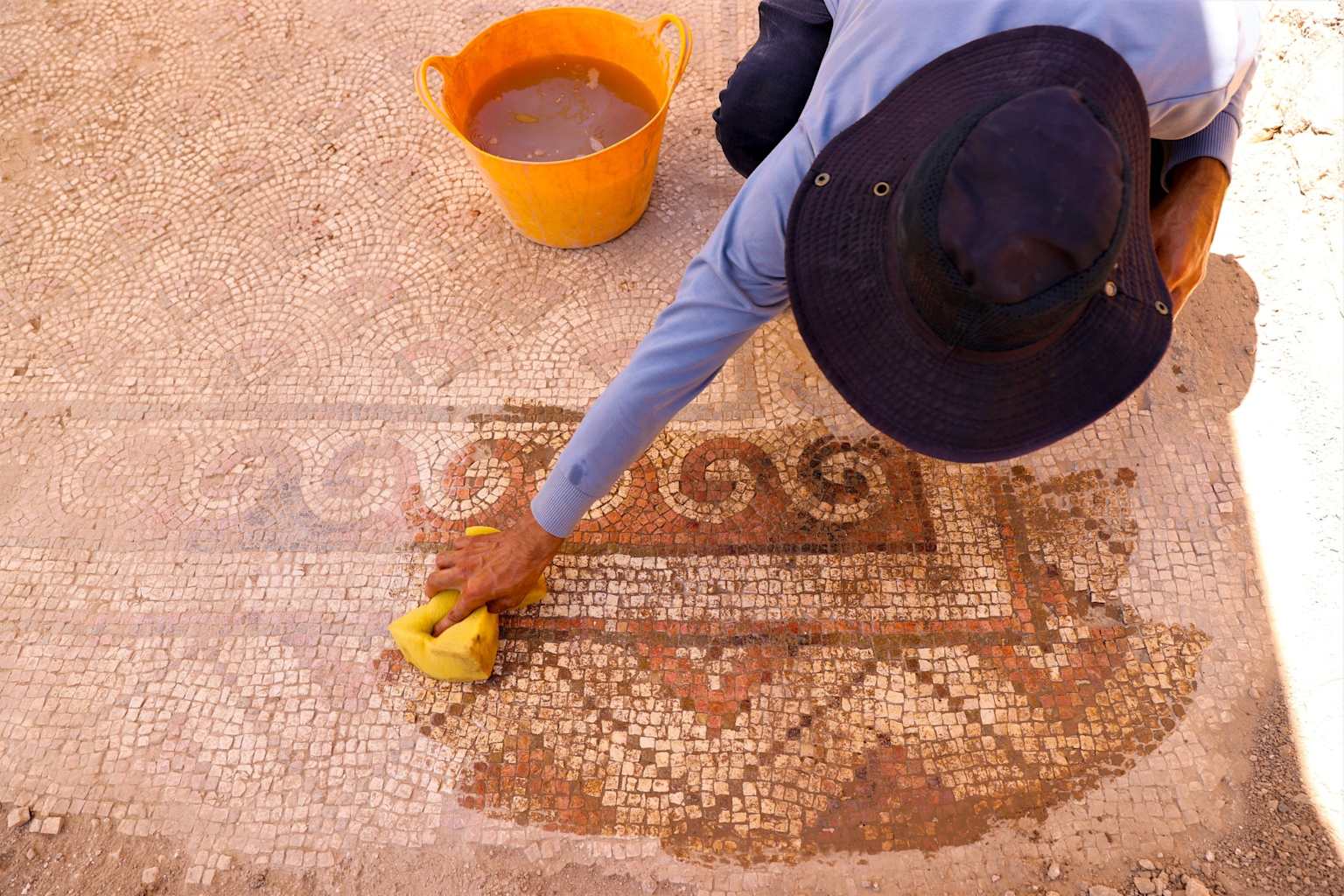
dailysabah+1.dailysabah.dailysabah.dailysabah.arkeonews.Archaeologists working at the ancient city of Dara in southeastern Türkiye have uncovered a nearly 1,500-year-old mosaic decorated with wave and drop motifs, spanning approximately 50 square meters in what is believed to have been a residential structure within this historically significant Byzantine frontier town.
The wave pattern featured in the Dara mosaic represents one of the most enduring decorative motifs in ancient Mediterranean art, with roots stretching back to Greek mosaics of the late fifth century BCE. This particular border design—characterized by stylized curling waves rendered in contrasting colors—was especially prevalent in Roman Imperial mosaics, where it typically framed central figural or geometric panels. The wave pattern at Dara follows this classical tradition, with the curling forms creating a rhythmic visual flow around the mosaic's perimeter.harvardartmuseums+1
Wave motifs held particular significance in Byzantine frontier cities like Dara, where water management was crucial for survival. The combination of wave and drop patterns in this mosaic likely reflects both aesthetic tradition and local importance of water resources. This decorative choice connects to broader Hellenistic-Roman mosaic traditions, where wave borders were among the most common design elements, appearing in sites from Greece to North Africa. The Dara example demonstrates how this ancient motif persisted well into the Byzantine period, showcasing the cultural continuity in decorative arts despite political changes in the region.stockcake+1
Dara was established in 507 AD by Emperor Anastasius I as a critical frontier fortress to counter the Persian Sassanid stronghold at nearby Nusaybin (Nisibis). Strategically positioned between the Mesopotamian plain and the Tur Abidin Mountains, about 30 kilometers southeast of Mardin and just 7 kilometers from the modern Syrian border, Dara quickly evolved from a small settlement into the military and administrative center of Roman Mesopotamia.museumofwander+2
The city's defensive importance was evident in its massive fortification walls, large water cisterns, and careful site selection that took advantage of natural defensive features and access to the Cordes River. During its heyday, Dara (also known as Anastasiopolis after its founder) housed approximately 40,000 people and witnessed numerous Roman-Persian conflicts, including the famous Battle of Dara in 530 AD. The fortress changed hands multiple times throughout its history—falling to the Sassanids after a four-month siege in 573 AD that reportedly drove Byzantine Emperor Justin II insane—before eventually coming under Arab control around 639-640 AD.turkisharchaeonews+5
Dara's sophisticated water management system stands as one of its most remarkable engineering achievements, enabling the fortress city to sustain its large military garrison and civilian population despite frequent sieges. The system featured an elaborate network of cisterns, channels, and pipes that collected, stored, and distributed water throughout the settlement. Archaeological excavations have revealed a 1,500-year-old drinking water canal spanning 400 meters in length, protected by massive two-ton stones and utilizing advanced cement pipe distribution systems.dailysabah+1
The water infrastructure served both practical and defensive purposes. When Sassanid forces attempted to dehydrate the city by building dams on the Cordes River, Roman soldiers used their stored mountain water as a strategic resource, allowing them to withstand prolonged sieges. Recent discoveries include water channels beneath the agora's shops leading to a substantial main canal, demonstrating how the system efficiently transported water from mountain cisterns to public spaces, bathhouses, and residential areas. One particularly impressive cistern, recently unearthed and locally known as "the dungeon," stands six meters deeper than Istanbul's famed Basilica Cistern, highlighting the remarkable scale and sophistication of Dara's water engineering.chasingthedonkey+3