



Newsletter Subscribe
Enter your email address below and subscribe to our newsletter
[forminator_form id="25163"]

All voices matter

A team of Stanford physicists has documented the first direct observation of a quantum jump in sound, capturing the instant a single unit of vibration — known as a phonon — dropped from one energy level to another inside a…
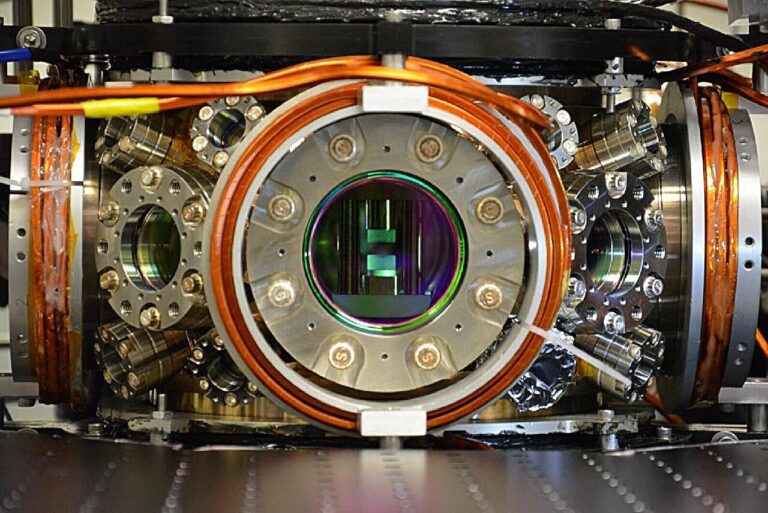
A team led by Stanford physicist Benjamin Lev has built a network of ultracold atoms and photons that functions as an associative memory — and stores up to seven times more memories than the classical neural network model that helped…

In a pair of advances that probe the quantum nature of the vacuum, physicists have for the first time directly imaged the fluctuations of a quantum field in its ground state, while a separate team has reported the strongest astrophysical…
A foundational postulate of quantum physics, formulated by Richard Feynman nearly 80 years ago, has been directly verified by experiment for the first time. The research, published August 26 in Science Advances, confirms that the "path integral" — which predicts…

An international team of physicists has used a quantum simulator to directly observe energy spectra predicted by conformal field theory for the first time, confirming decades-old theoretical predictions about how quantum systems behave at critical points between order and disorder.…
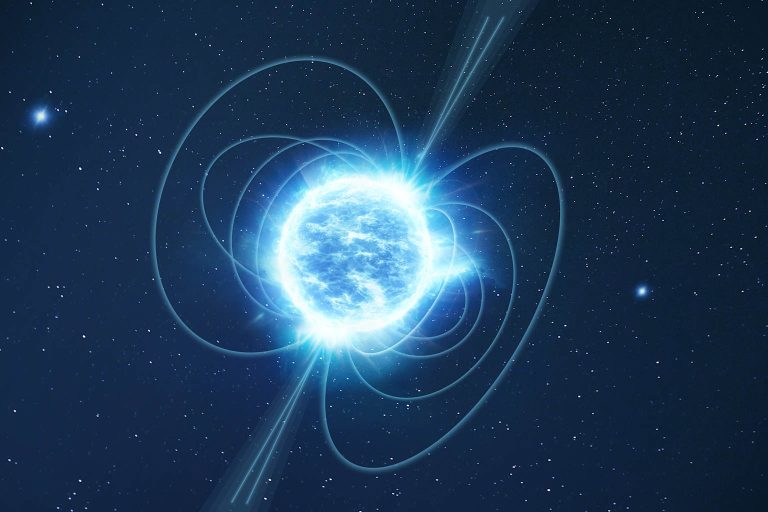
An international team of astronomers has reported what may be the first direct astrophysical evidence of vacuum birefringence — a nearly 90-year-old quantum physics prediction that extreme magnetic fields can alter how light travels through seemingly empty space. The results,…

Physicists have for the first time observed a fundamental quantum limit on how precisely the position and time evolution of a single electron can be measured simultaneously, according to a study published in Nature Photonics on July 3, 2026.
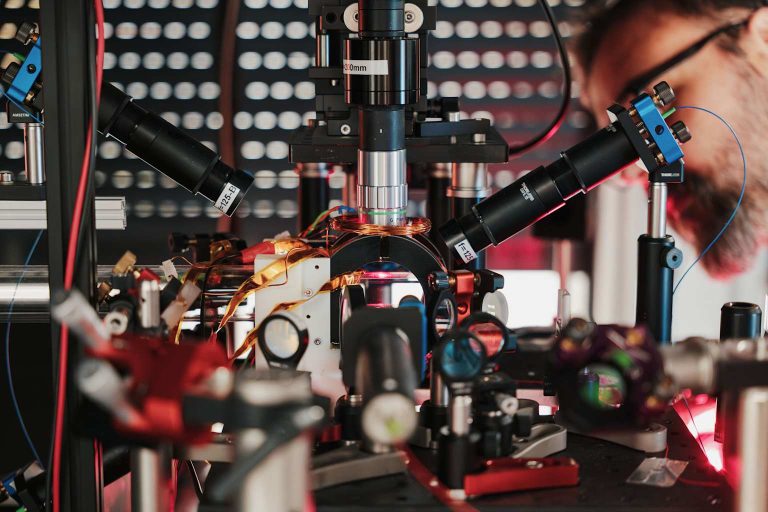
A physicist at the University of Birmingham has constructed a quantum "mini-universe" from ultracold atoms that measures the passage of time without any external clock — offering the first controlled experimental evidence that time can emerge from within an isolated…