Newsletter Subscribe
Enter your email address below and subscribe to our newsletter
[forminator_form id="25163"]

All voices matter
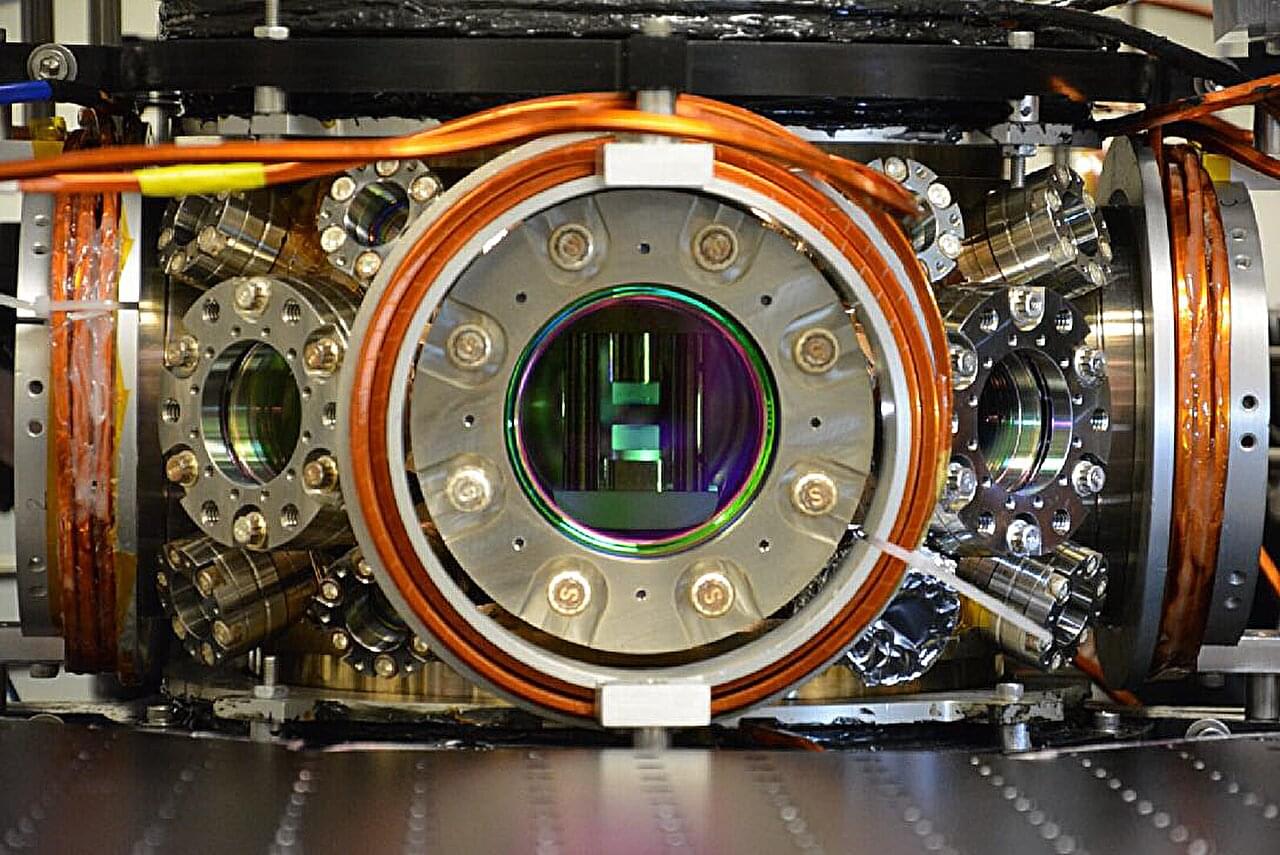
science+1eurekalert+1physA team led by Stanford physicist Benjamin Lev has built a network of ultracold atoms and photons that functions as an associative memory — and stores up to seven times more memories than the classical neural network model that helped earn a Nobel Prize. The results, published September 3 in the journal Science, point toward a future where AI hardware could learn and remember using far fewer resources.eurekalert+1
The work builds on the Hopfield network, a mathematical model introduced in 1982 that showed how a system of interacting spins can store and retrieve memories from partial or corrupted inputs. John Hopfield shared the 2024 Nobel Prize in Physics for that foundational contribution, which helped lay the groundwork for modern large language models. But Hopfield networks hit a wall: overload them with too many memories and the system collapses into a disordered spin glass state, where recall fails.phys+1
Lev's group turned that limitation into an advantage. Using Bose-Einstein condensates — clusters of roughly 10,000 atoms each cooled to near absolute zero and behaving as single "super atoms" — the researchers placed up to 20 such spins inside an optical cavity formed by two curved mirrors. Photons bouncing thousands of times between the mirrors created all-to-all connections among the spins, mimicking synapses in a biological brain.arxiv+1
In a 16-spin network, the quantum-optical spin glass recalled an average of about 12 memories, compared with roughly 3.6 for a Hopfield network of the same size. When the researchers loosened the atomic traps to amplify polaronic deformations — self-reinforcing spin-motion coupling — capacity climbed to 25 memories, a sevenfold improvement over the Hopfield limit.science+1
The system also exhibited short-term plasticity: photon-mediated forces caused the atoms to shift position, dynamically rewiring the network's connections in a process the researchers liken to synaptic plasticity in the brain.eurekalert+1
The apparatus currently operates inside a vacuum chamber at cryogenic temperatures, making practical deployment distant. Lev acknowledged the research remains at a proof-of-principle stage but said his team is already working to scale up the number of spins and introduce quantum entanglement among them.eurekalert
"We now have a proof of principle of a physical network that adjusts itself in a way a learning system would, and if we can improve and scale that up, AI hardware might become far less power-hungry to train," Lev said.phys