Newsletter Subscribe
Enter your email address below and subscribe to our newsletter
[forminator_form id="25163"]

All voices matter
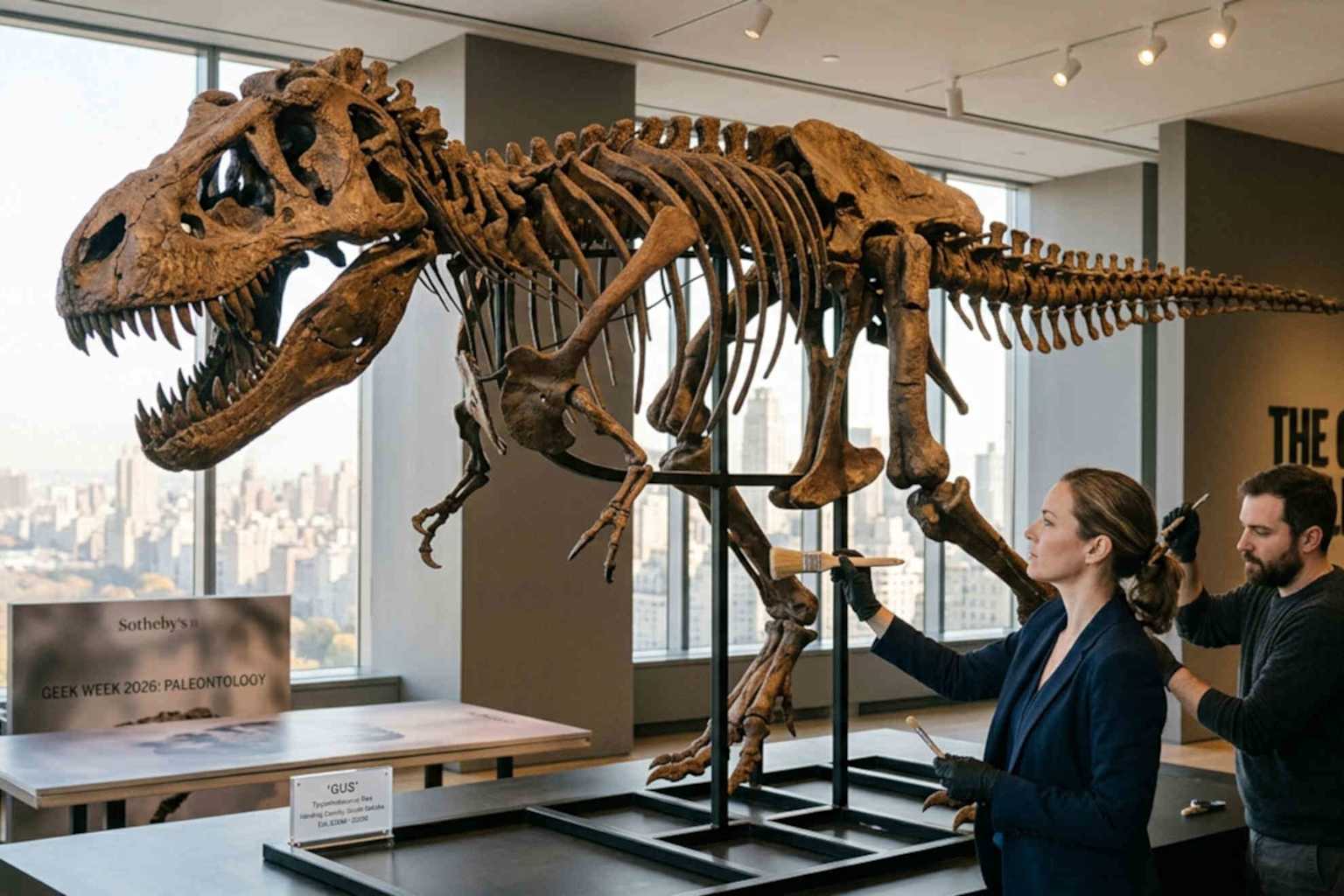
nbcnews+1cnbc+1npr+1A Tyrannosaurus rex skeleton nicknamed "Gus" sold for $50.1 million at Sotheby's in New York on Tuesday, shattering the record for the most expensive fossil ever sold at auction. The 67-million-year-old specimen, one of the largest and most complete T. rex skeletons ever discovered, far exceeded its pre-sale estimate of $20 million to $30 million.news.artnet+4
Gus was excavated from Harding County's Hell Creek Formation in South Dakota between 2021 and 2023. The skeleton measures 38 feet in length and stands over 12 feet tall. Sotheby's described it as one of the finest T. rex examples in private hands, and it headlined the auction house's annual Geek Week series alongside rare meteorites, space exploration artifacts, and vintage technology.sothebys+2
The auction opened with a minimum bid of $19 million. Bidding quickly surpassed expectations, with the final hammer price reaching $50.13 million — roughly 67 percent above the high estimate.kotatv+3
The sale eclipses the previous auction record of $44.6 million set in July 2024, when Citadel founder Ken Griffin purchased a Stegosaurus skeleton named "Apex" at Sotheby's. That specimen, a 150-million-year-old Stegosaurus discovered in Colorado, had itself surpassed the $31.8 million paid for "Stan," another T. rex, in 2020.cnbc+2
The identity of Gus's buyer has not been publicly disclosed. NPR reported before the sale that the starting bid alone would have placed Gus among the most expensive fossils ever auctioned.npr
The sale reflects an accelerating trend of record-breaking prices for prehistoric specimens at auction. As Artnet News noted, Gus's result arrived amid what it called "fossil fever" among wealthy collectors. Sotheby's had exhibited Gus at its Breuer building in New York from July 1 through the day of the sale, drawing public attention ahead of the auction.news.artnet+1
Paleontologists have expressed mixed views about the commercialization of fossils, with some arguing that high-profile sales raise public interest in natural history while others worry that specimens end up beyond the reach of scientific study.