


Newsletter Subscribe
Enter your email address below and subscribe to our newsletter
[forminator_form id="25163"]

All voices matter
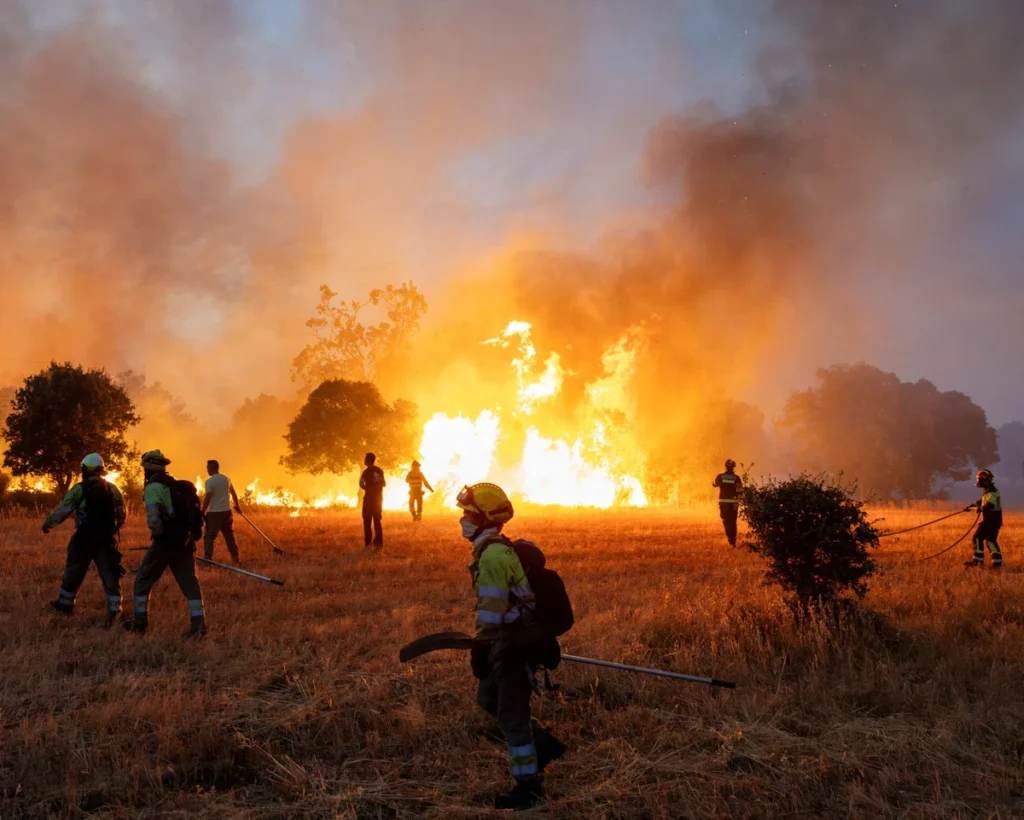
phys+1thenationalnewsphys+1The area of Europe affected by wildfires could nearly triple by the end of the century if greenhouse gas emissions continue to rise, according to a study published Wednesday in the journal Global Change Biology. The research arrives as the continent battles one of its worst wildfire seasons on record, with more than 550,000 hectares burned across the EU by mid-August — about two and a half times the 20-year average.phys+1
Led by the Potsdam Institute for Climate Impact Research (PIK) with contributions from the Senckenberg Society for Nature Research, the study found that under a high-emissions scenario where global temperatures rise by roughly 3.6°C, approximately 192% more land would burn annually by 2070–2100 compared to today. Even under a low-emissions scenario limiting warming to around 1.8°C, the researchers project 39% more land burning each year.straitstimes+1
"Climate change is driving up fire activity across Europe as hot, dry and windy conditions become more severe," said Maik Billing, PIK researcher and lead author. "If we emit more, and global temperatures rise by roughly 3.6°C, we see fires become much more prevalent, especially around the Mediterranean and across much of Western and Central Europe, including areas that to date have not experienced many fires."phys+1
The study also modeled the effects of improved fire prevention, early detection, and firefighting. Continued investment in wildfire management could reduce burned area by 92% in a 1.8°C future and by 72% at 3.6°C of warming. But the authors cautioned that these projections may be optimistic under extreme conditions.thenationalnews+1
"If fires become really extreme, our ability to contain them might break down and we do not know yet where this point is," said co-author Thomas Hickler of the Senckenberg Society. "The recent record fires in France clearly show that we cannot simply extrapolate from the experiences of the past."straitstimes
According to Deutsche Welle, the EU's contribution to forest and wildfire management programs between 2021 and 2027 totals around €2.1 billion, and World Bank estimates suggest every euro spent on prevention saves up to seven euros on firefighting and reconstruction.dw
The findings land amid a summer of devastating fires. Back-to-back heatwaves and early drought have created tinderbox conditions since July, with major blazes in France, Greece, Spain, and Belgium. More than 20 people have been killed and over 300,000 evacuated, according to The National News. In the High Fens, a cross-border wetland region between Germany and Belgium, around 3,000 hectares have burned in what is Belgium's largest wildfire in decades.dw+1
"With climate change, conditions could become so extreme that we really hit limits to what we can do to prevent and fight fires once they get to a certain size," said PIK co-author Kirsten Thonicke. "So, reducing emissions is absolutely essential, together with strengthening local fire management."phys


