Newsletter Subscribe
Enter your email address below and subscribe to our newsletter
[forminator_form id="25163"]

All voices matter
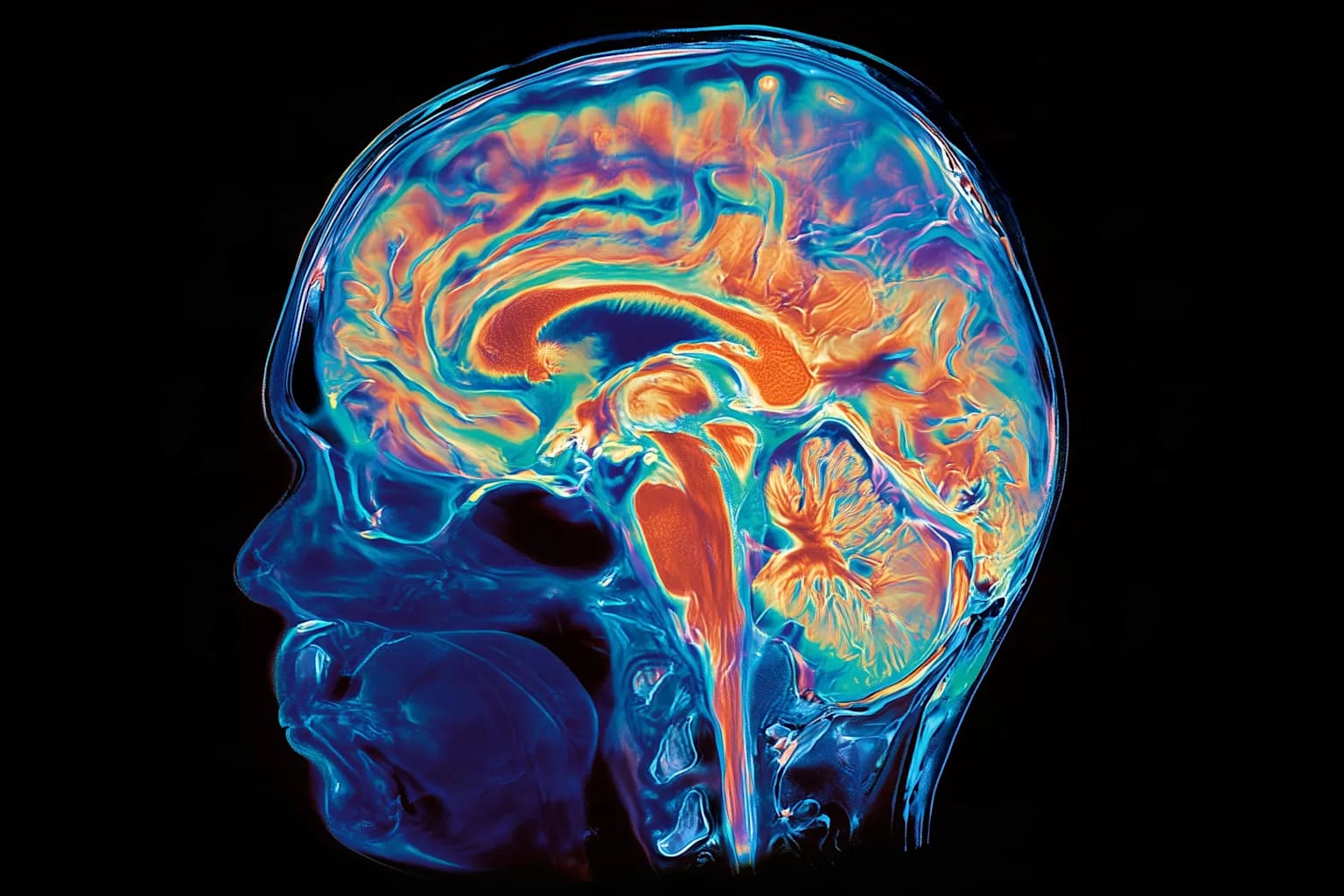
sciencedailysciencedailysciencedailyA study published in Nature Neuroscience on September 18 has upended a foundational assumption in neuroscience: the human brain, long treated as a single organ with a shared developmental origin, appears to be two ancient nervous systems fused together over more than 500 million years of evolution.sciencedaily
Researchers at Stanford Medicine found that the forebrain and midbrain arise from one progenitor cell population, while the hindbrain develops from an entirely separate type of early cell. The two systems follow distinct developmental pathways from the earliest stages of embryonic development and never overlap.sciencedaily
"We've shown for the first time that the front of the brain arises from a totally different progenitor cell than the back of the brain," said Kyle Loh, associate professor of developmental biology and the study's senior author.iosconews+1
The forebrain supports higher-order abilities including language, consciousness, and abstract reasoning. The hindbrain, often called the brain stem, controls automatic survival functions such as breathing, heartbeat regulation, sleeping, and hunger.sciencedaily
The researchers studied developing mouse embryos and identified that the forebrain and midbrain progenitors express a gene called Otx2, while a separate population expressing Gbx2 gives rise to the hindbrain. Analysis of chromatin — the material that packages DNA inside cells — confirmed the two populations are committed to separate developmental paths from the start.sciencedaily
The discovery solved a longstanding laboratory problem. For decades, scientists had been unable to grow human hindbrain neurons in vitro, likely because they were attempting to convert forebrain progenitors into hindbrain cells — something the study shows is not possible.sciencedaily
Armed with the new understanding, the team successfully guided human pluripotent stem cells into functional hindbrain motor neurons for the first time. The lab-grown cells produced electrical signals and made proteins associated with specific hindbrain regions controlling facial and swallowing muscles.sciencedaily
The advance opens new avenues for studying diseases that damage the brain stem, including amyotrophic lateral sclerosis and spinal muscular atrophy, a leading genetic cause of death in children under one year of age.sciencedaily
The team traced the two-origin brain pattern across 550 million years of evolutionary history, finding the same arrangement in chickens, zebrafish, and acorn worms — small seafloor creatures that share a distant common ancestor with humans.iosconews+1
"Our research suggests that evolution took two existing neural systems and pushed them together spatially," Loh said. "Having the brain as one organ would probably be more efficient, but we rely on this primordial way to make the brain as two separate pieces."sciencedaily