Newsletter Subscribe
Enter your email address below and subscribe to our newsletter
[forminator_form id="25163"]

All voices matter
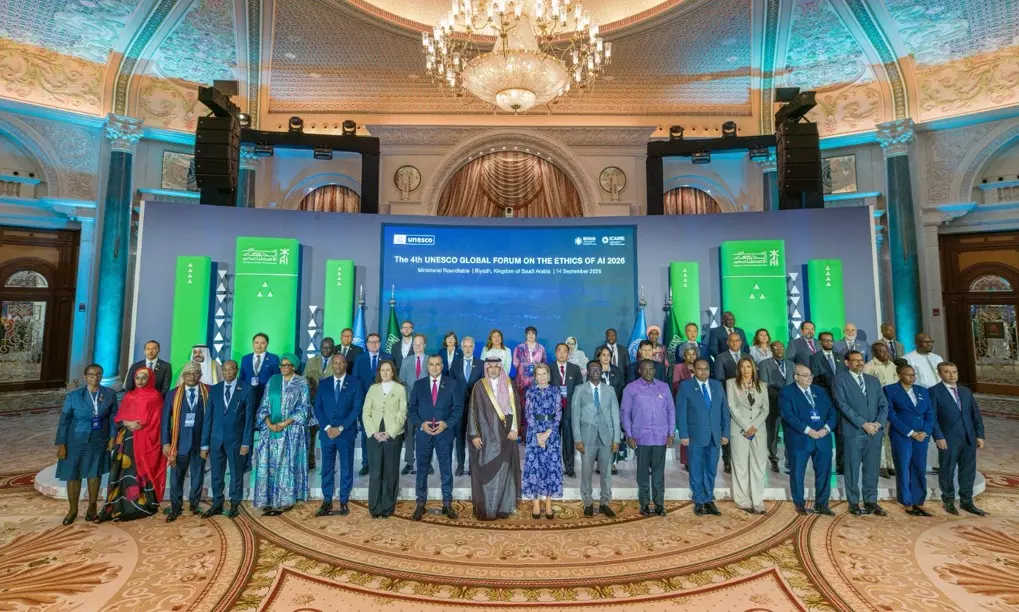
english.aawsat+1english.aawsatThe Fourth UNESCO Global Forum on the Ethics of Artificial Intelligence opened in Riyadh on Tuesday, drawing ministers and senior officials from more than 60 countries to confront the challenges of governing a technology that even its creators warn may be advancing faster than the world can manage.
Saudi Arabia, UNESCO, and the International Center for AI Research and Ethics issued a joint statement following a closed ministerial meeting, calling for stronger international cooperation to ensure AI development supports "human well-being, sustainable development, and the public good." The forum, running through September 17, is co-hosted by the Saudi Data and AI Authority and organized in partnership with UNESCO and ICAIRE.english.aawsat+2
SDAIA President Abdullah bin Sharaf Alghamdi set the tone for the gathering, urging delegates to move beyond rhetoric. "We need to work together, turn shared principles into action and make AI governance inclusive, accountable and people centered," he said. Alghamdi noted that Saudi Arabia's hosting of the forum comes during what the Kingdom has designated as the Year of Artificial Intelligence, and he pointed to the country's establishment of ICAIRE in 2022 and its launch of national AI ethics principles as evidence of its commitment.arabnews+2
UNESCO Deputy Director-General Åsa Regnér acknowledged the urgency of the moment, saying governments "struggle to keep pace" with AI's advancement. She noted that 109 UNESCO member states have moved to implement the organization's 2021 Recommendation on the Ethics of AI, with the process already underway in 78 of them. Regnér also highlighted a persistent gender gap, noting that women account for only 26 percent of employees in data and AI fields despite strong academic performance.arabnews+1
The ministerial statement placed particular emphasis on the needs of developing countries, especially in Africa, calling for action to narrow gaps in AI infrastructure, expertise, and institutional capacity. Ghana's Minister for Communication, Digital Technology and Innovation, Samuel Nartey George, made the case for a distinctly African approach, announcing that Ghana is committing $250 million over two years toward AI computing infrastructure intended to serve as a regional hub for West Africa.madhyamamonline+2
"We're not building for Ghana. Ghana is just 35 million people. We're building that infrastructure with a mindset of Africa as a continent," George said.adomonline
The Riyadh gathering unfolds against a backdrop of rising alarm within the AI industry itself. Anthropic CEO Dario Amodei issued a proposal over the weekend to slow the pace of frontier AI development, drawing rare public support from OpenAI CEO Sam Altman, Google Alphabet Inc. DeepMind chief Demis Hassabis, and xAI owner Elon Musk. Meanwhile, multiple AI researchers have publicly warned about existential risks, and former Google DeepMind engineer Bilal Chughtai wrote on X that "we might be running out of time" to avoid catastrophic outcomes.english.aawsat+2
Regnér framed the forum as a bridge between ambition and implementation. "Riyadh is about turning that shared ambition into practice," she said.arabnews