Newsletter Subscribe
Enter your email address below and subscribe to our newsletter
[forminator_form id="25163"]

All voices matter

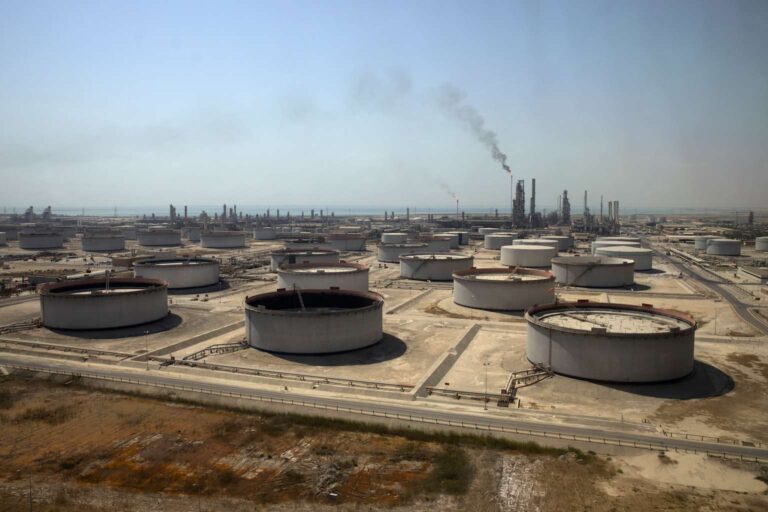
reuters.energyconnects+1.nationthailand.Oil prices rose early Monday, Oct. 5, in Asian trading. Yemen's Iran-backed Houthis said they had fired ballistic missiles and drones at Saudi Aramco sites in Riyadh and the Khurais area, which raised fresh worries about output from the region's biggest exporter.reuters
Reuters reported that Brent crude futures rose 81 cents, or 0.79%, to $$103.06$$ dollars a barrel by 2202 GMT Sunday. U.S. West Texas Intermediate gained 46 cents to $$91.57$$ dollars. Khurais is one of Saudi Arabia's main oil-producing areas. It was not immediately clear whether the claimed strikes damaged any facilities or disrupted production.bloomingbit+1
The latest move adds to supply concerns tied to the US-Israeli war on Iran, which began in late February. Before the war, Brent traded at about $$73$$ dollars a barrel. Gulf News reported that Brent has carried a wider risk premium than WTI because of security threats around the Strait of Hormuz. Recent data put the gap between the two benchmarks at more than $$11$$ dollars a barrel. Tanker shortages, higher insurance costs and longer voyages have also pushed delivered crude costs higher.gulfnews+1
Worries have also spread to the Red Sea. The Vibes reported that Saudi-backed forces in Yemen have launched a full-scale operation against the Houthis, who it said have seized control of the Bab el-Mandeb chokepoint.thevibes
The Houthis have stepped up attacks on the kingdom in recent weeks. On Sept. 24 they claimed strikes on Aramco facilities in Yanbu and on a "sensitive target" in Riyadh. That day Brent went above $$108$$ dollars before it settled near $$106.50$$ dollars. Saudi Arabia has also been working to restart its East-West pipeline, which was hit by drones from Iraq in September. The 1,200-kilometer line had let the kingdom send crude overland to Yanbu and avoid Hormuz.energyconnects+1
On Sunday, seven core OPEC+ members kept November production targets unchanged after a brief online meeting, as the market had expected. The countries are Saudi Arabia, Russia, Iraq, Kuwait, Algeria, Kazakhstan and Oman, and they will meet again on Nov. 1. Gulf producers have been pumping below their quotas. In August the seven supplied 25 million barrels per day, about 5 million bpd less than before the war in February.nationthailand
"Despite rising flows through the Strait of Hormuz, their output levels remain well below quota," UBS analyst Giovanni Staunovo said. "Consequently, the oil market remains tight."nationthailand
Prices had dropped on Friday, Oct. 2, after European leaders agreed to President Donald Trump's request to release diesel reserves. The Group of Seven has agreed to release 100 million barrels of oil and diesel over four months.nationthailand