Newsletter Subscribe
Enter your email address below and subscribe to our newsletter

All voices matter
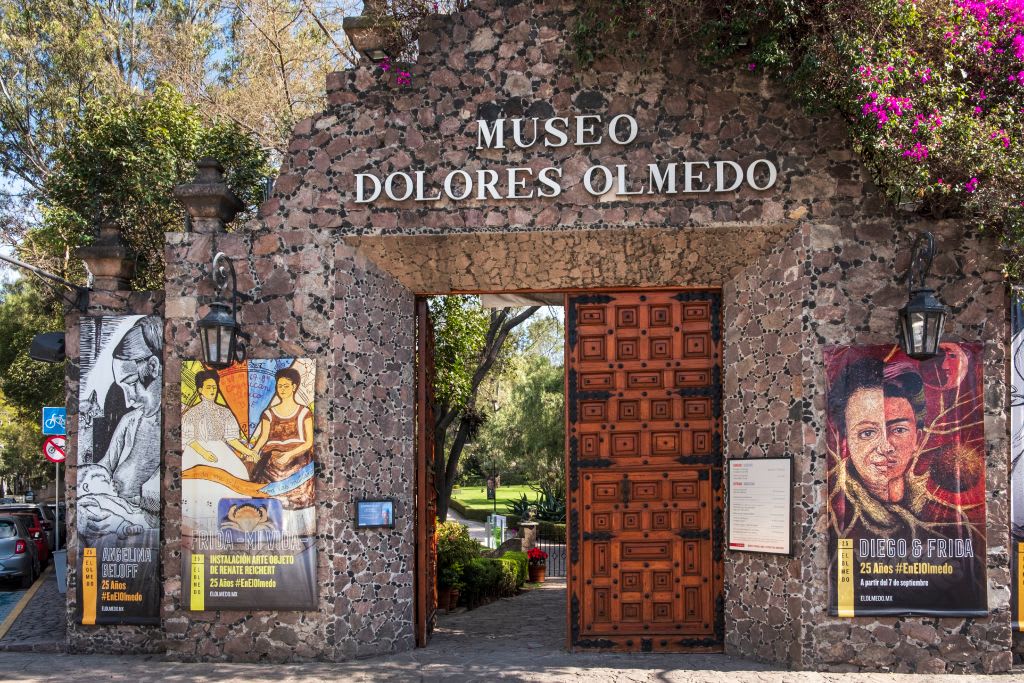
instagram+1.tripadvisor+1.theartnewspaper.cdmxsecreta.cdmxsecreta.The Museo Dolores Olmedo, home to the most significant collection of works by Frida Kahlo and Diego Rivera, is set to reopen in 2026 after being closed since 2020, though questions linger about whether the museum will remain in its original Xochimilco hacienda location against the explicit wishes in Dolores Olmedo's will.
The Museo Dolores Olmedo houses one of the world's most important collections of works by renowned Mexican artists Diego Rivera and Frida Kahlo. The permanent collection features approximately 145 paintings by Rivera and 25 works by Kahlo, acquired directly from Rivera himself. This impressive assemblage represents the largest private collection of Frida Kahlo's artwork globally and includes her iconic pieces such as Henry Ford Hospital (1932), The Broken Column (1944), and Self-Portrait with Monkey (1945).artsandculture.google+2
In 2019, the museum renovated its permanent exhibition titled "Diego & Frida: 25 Years in El Olmedo," marking the first time in the museum's history that works from both artists were displayed together in the same gallery space rather than separately. Beyond the Rivera-Kahlo collection, the museum also showcases works by Russo-French artist Angelina Beloff (Rivera's first wife), pre-Hispanic artifacts numbering around 6,000 pieces, and an extensive collection of Mexican folk art that highlights the country's rich cultural heritage.fridakahlo+2
The controversy surrounding the Museo Dolores Olmedo centers on the legality of relocating the museum's invaluable collection from its original home in La Noria hacienda in Xochimilco to the Parque Urbano Aztlán in Chapultepec. Legal experts have highlighted that Dolores Olmedo's original trust documents, signed in 1993 and updated in 2002, explicitly designated La Noria as the permanent site for her collection, allowing only for "very exceptional" temporary loans of artworks. Critics argue that the museum trust's documents were irregularly modified in 2020, most controversially by removing the Mexican people as beneficiaries and by changing the financial institution from government-linked Nacional Financiera to CiBanco (which is now under investigation).theartnewspaper+1
The dispute has mobilized Mexico's cultural community, with over 200 artists and intellectuals signing an open letter titled "in defense of Dolores Olmedo's legacy," demanding transparency about the planned 40-year loan of the collection to Aztlán—which many view as a $30 million business venture that violates Olmedo's wishes. Legal expert Luis Cacho has affirmed that while the Instituto Nacional de Bellas Artes y Literatura (INBA) can inspect the artwork's preservation, it cannot prevent the relocation; however, he suggested that the Secretary of Finance and the mayor of Xochimilco could potentially enforce compliance with Olmedo's will since they serve on the trust's board. Meanwhile, cultural advocates question why the museum remains closed when international loans of the Rivera and Kahlo works reportedly generate approximately $450,000 per exhibition.artsandculture.google+2
Allegations of missing Frida Kahlo artworks have cast a shadow over the Museo Dolores Olmedo's upcoming reopening. Hilda Trujillo Soto, who served as director of the Casa Azul (Frida Kahlo Museum) for nearly two decades, publicly claimed in April 2025 that six pages from Kahlo's diary and more than a dozen works vanished from the museum's collection. According to Trujillo Soto, she discovered in 2009 that twelve diary entries (on six double-sided pages) from March 1953 were missing when comparing the original to a facsimile published in 1994. She also alleged that numerous Kahlo artworks listed in Diego Rivera's detailed inventory of donations to the Mexican people have appeared at auctions in the United States.theartnewspaper+1
The controversy extends beyond the missing pages to include a $10 million Kahlo drawing reportedly burned at a party as part of a failed NFT project in 2022. Despite Trujillo Soto's claims that she immediately informed Banxico's trustee and then-director general Carlos Phillips Olmedo about the missing diary pages, she states no investigation was conducted. Art historian Helga Prignitz Poda called the situation "a scandal," emphasizing that the diary represents "the most important source for anyone who wants to study Frida Kahlo's work." These allegations have intensified scrutiny of the museum trust's management practices as the reopening approaches.theartnewspaper+2