Newsletter Subscribe
Enter your email address below and subscribe to our newsletter
[forminator_form id="25163"]

All voices matter
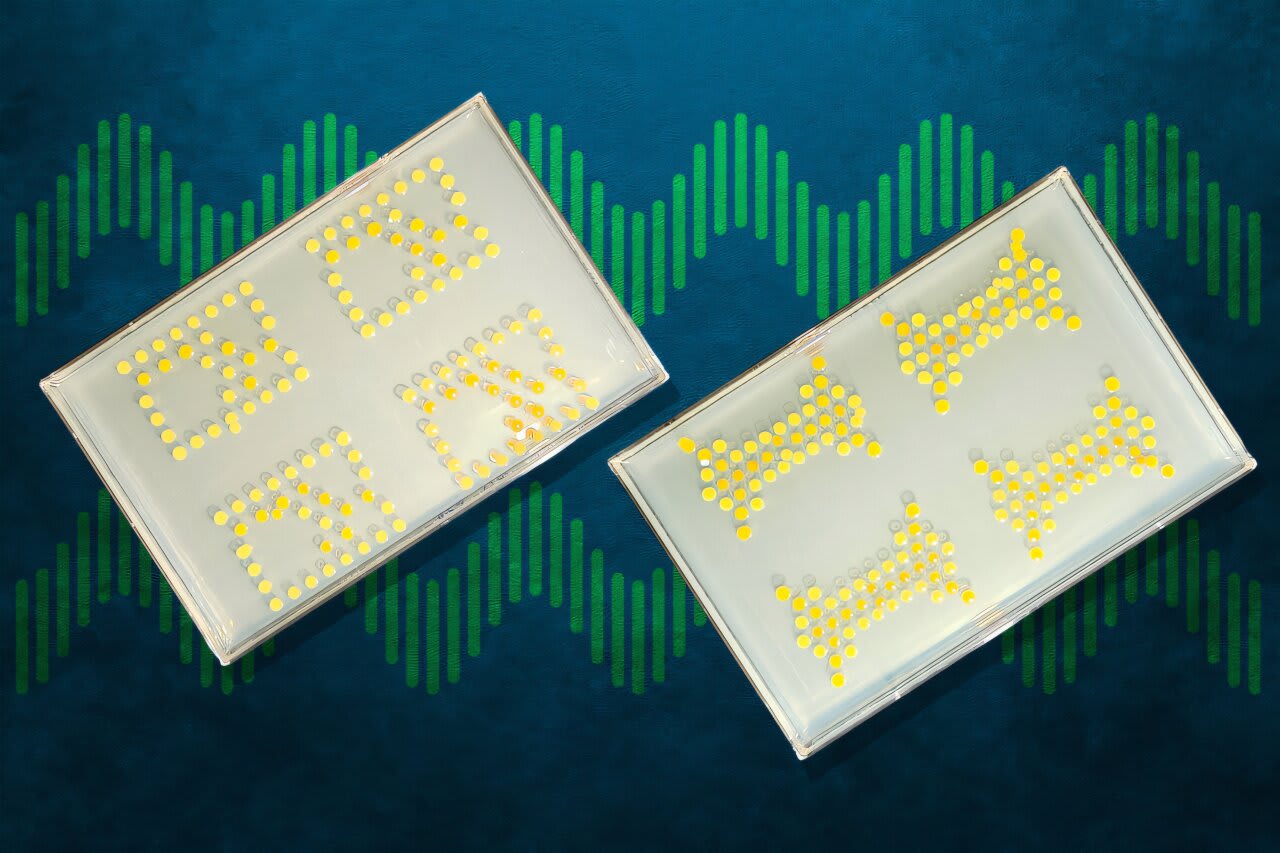
news.mit+1mjengohub+1knowridge+1Researchers at the Massachusetts Institute of Technology have engineered bacteria to function as transistors, creating "living circuit boards" that can be printed onto growth medium in Petri dishes and perform basic computational logic using chemical signals instead of electricity.
The study, published in Nature Chemical Biology on August 17, used a bacterium called Pantoea agglomerans, commonly found on plant surfaces. Lead author Hamid Doosthosseini and senior author Christopher Voigt, head of MIT's Department of Biological Engineering, designed two types of bacterial transistors along with three relay strains that pass molecular signals in a single direction between colonies.techxplore+2
The team printed bacterial colonies onto agar plates roughly five millimeters apart using an acoustic liquid handler. The physical arrangement of colonies determines the circuit's function, meaning researchers can build different computational systems simply by changing the layout rather than rewriting genetic code. The largest demonstrated circuit linked 24 bacterial colonies to execute arithmetic calculations, and the team also demonstrated OR gates, implication operations, and a demultiplexer that routes signals based on a control input.news.mit+3
These biological circuits operate far slower than silicon — a single calculation takes approximately eight hours. But the researchers argue that speed is beside the point for biological applications, where monitoring agricultural soil or plant health unfolds over hours, days, and growing seasons.knowridge+1
"We're not trying to replace computers," Voigt said, according to MIT's announcement. The goal is to embed computational control directly into living ecosystems.news.mit
The team envisions placing bacterial circuits on plant roots or leaves, where they could detect drought, pests, or disease and trigger biological responses such as producing a fungicide. The approach also addresses a longstanding limitation in synthetic biology: cramming too many functions into a single cell can overload its protein-making machinery. Distributing computation across many specialized colonies sidesteps that bottleneck.interestingengineering+2
The research received partial funding from DARPA and IARPA.interestingengineering