Newsletter Subscribe
Enter your email address below and subscribe to our newsletter
[forminator_form id="25163"]

All voices matter
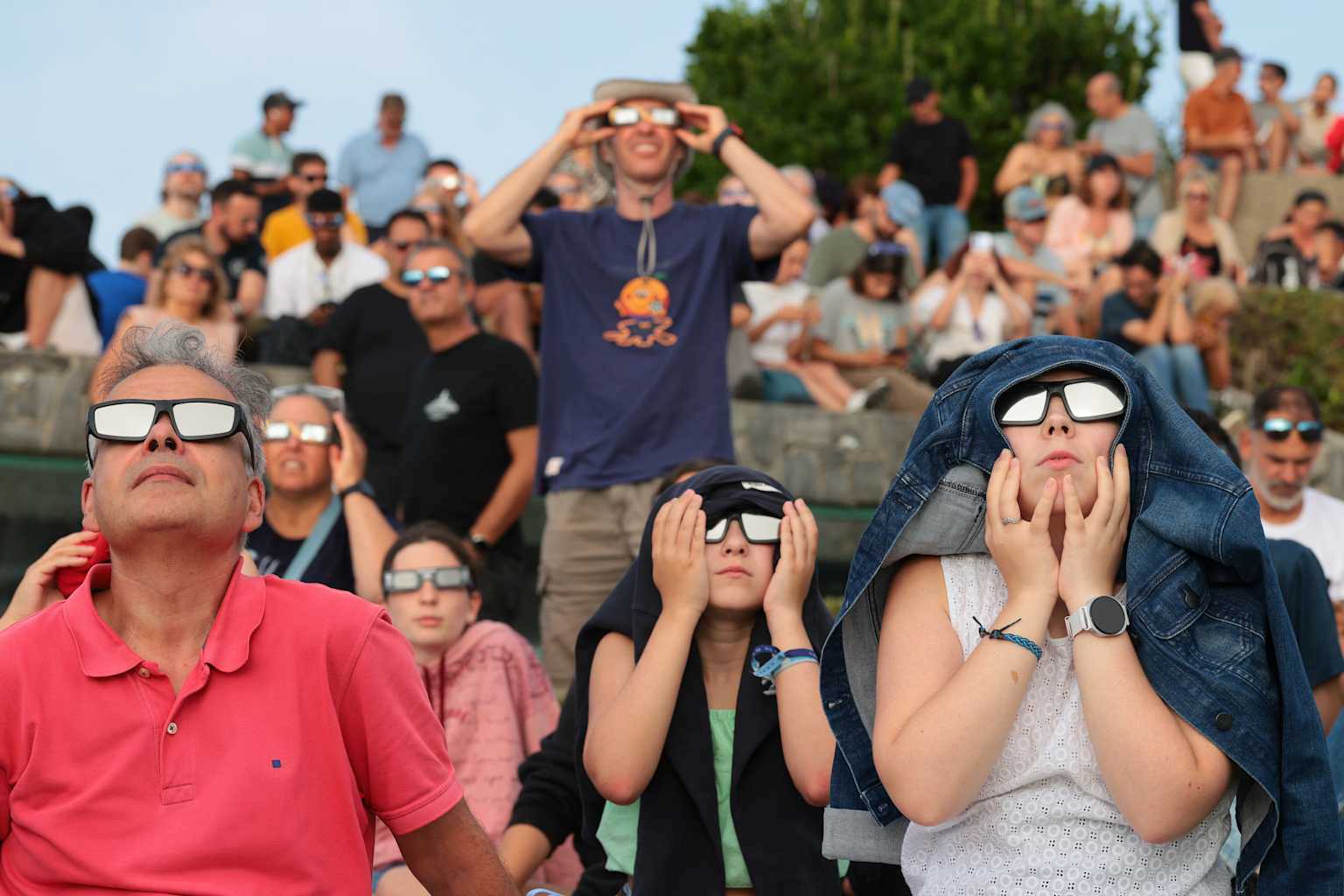
english.nvenglish.nvusembassyMillions of people gathered across northern Spain on Wednesday to witness the country's first total solar eclipse in more than a century, as the moon's shadow swept from Greenland and Iceland across the Atlantic before reaching the Iberian Peninsula in the early evening hours.
Officials estimated that as many as 6 million people could converge on Spain's eclipse path, which stretches roughly 200 kilometers wide from the northwest coast through cities including A Coruña, Oviedo, León, Zaragoza, and Valencia before crossing the Mediterranean island of Mallorca. An estimated 460,000 international visitors traveled to the country for the event, with more than 300,000 heading to rural towns and villages in search of optimal viewing conditions.english.nv
The U.S. Embassy in Madrid issued an alert on August 11 warning American citizens of traffic restrictions and congestion, particularly in areas within the zone of totality. The embassy advised travelers departing from the Balearic Islands to leave for the airport two to three hours earlier than usual and cautioned that local authorities could require proof of hotel reservation or domicile to access areas temporarily closed to traffic.usembassy
Spain also faces an elevated wildfire threat in areas within the path of totality, adding another layer of concern for the influx of visitors. The Spanish government established an eclipse-specific website to coordinate traffic and safety measures.usembassy
With the path of totality bypassing the continental United States entirely, American eclipse chasers made the transatlantic journey to experience the event. CBS News reported from Mallorca, where meteorologist Rob Marciano covered the scene as tourists arrived from across the globe. Only a small partial eclipse was visible from parts of the northern U.S., with cities like Boston seeing roughly 16 percent solar coverage and New York just 9 percent.socialnews+1
The eclipse reached Spain beginning around 8:28 p.m. local time, with totality lasting between 30 seconds and nearly two minutes depending on location. Astronomer César González of the Madrid Planetarium called the event "one of the best spectacles in nature". Iberia International Consolidated Airlines Group, S.A. said it would share live images from a charter flight viewing the eclipse from 10 kilometers above sea level.science.nasa+1
Beyond Spain, a partial eclipse was visible across much of Europe and northwestern Africa. In southwest England, communities organized viewing parties despite tourism officials noting no major surge in last-minute bookings. The next total solar eclipse will occur on August 2, 2027.bbc+1