Newsletter Subscribe
Enter your email address below and subscribe to our newsletter
[forminator_form id="25163"]

All voices matter
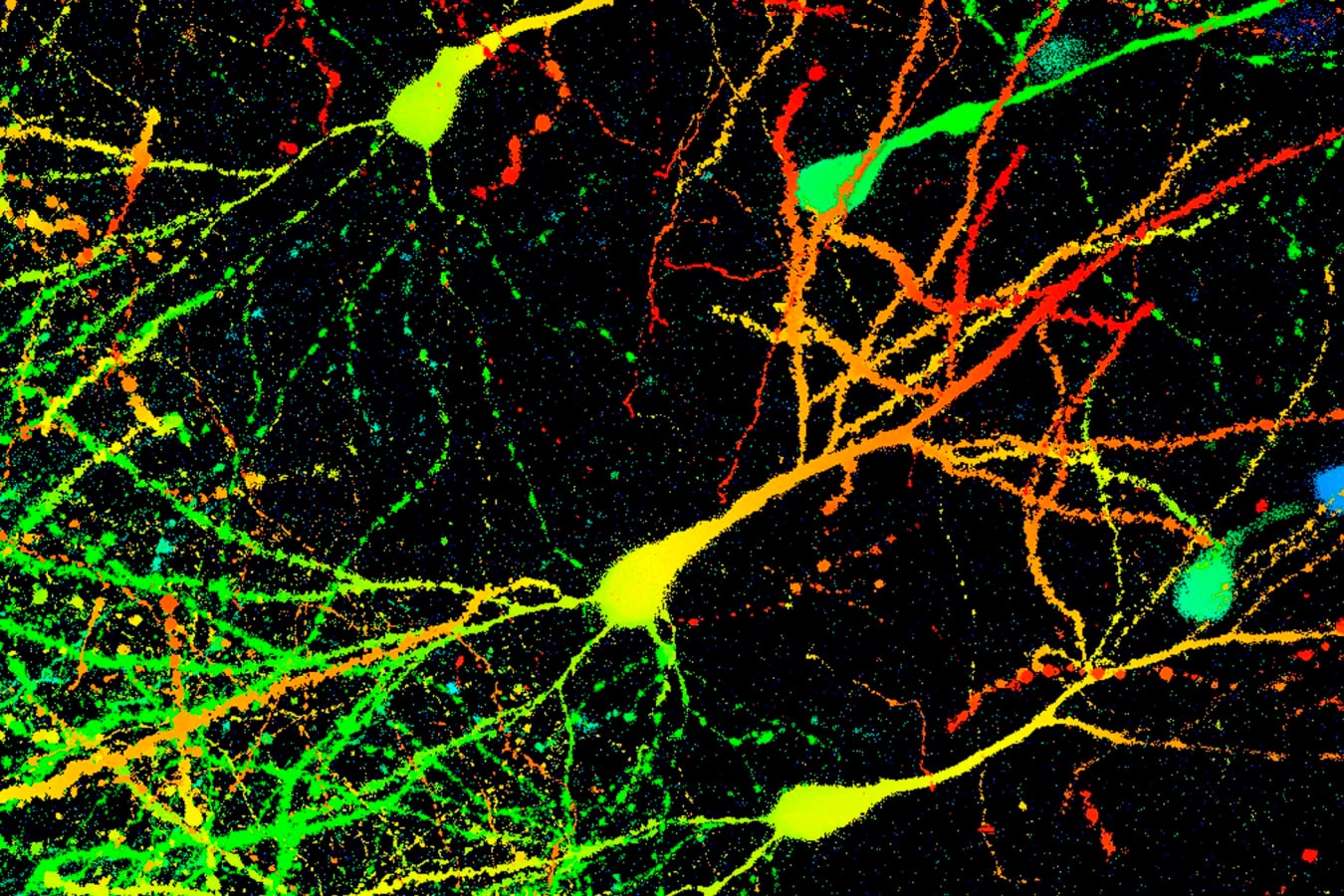
livescience+1oist+1livescience+1Long-term memories may not depend on the strength of individual connections between neurons, as neuroscientists have long believed. Instead, memories appear to survive through resilient clusters of synaptic architecture — a finding revealed by putting mice into artificial hibernation and watching more than half their brain connections disappear while their memories remained intact.
The study, published Thursday in the journal Science, was led by researchers at the Okinawa Institute of Science and Technology (OIST) in Japan and offers a new framework for understanding how the brain holds onto information even as its physical structure changes dramatically.livescience+2
The research team, led by Kazumasa Tanaka of OIST's Memory Research Unit, trained mice to associate a specific environment with a mild foot shock and to navigate a maze to find food. They then induced artificial hibernation by activating a set of hypothalamic neurons identified in prior work, which triggered a rapid drop in metabolic activity and body temperature.livescience
Within 30 minutes, the brain began eliminating synapses. Within 24 hours, more than half of hippocampal synapses — the connections critical to memory — had vanished. Yet when the mice awoke, they froze in the environment where they had been shocked and navigated the maze as easily as before, demonstrating fully intact recall.news-medical+2
"To compare the animals with or without hibernation, their behaviors are not different whatsoever," Tanaka told Live Science.livescience
A central tenet of neuroscience holds that memories form when individual synapses grow stronger through a process called long-term potentiation. The new findings do not dispute that this mechanism is essential for forming memories, but suggest it may not be what keeps them alive over time.news-medical+1
When the researchers compared hibernating mice to another group whose synapses were disrupted using anesthesia and a chemical blocker, the anesthetized mice lost their memories while hibernating mice did not. The difference: in hibernating brains, spatially clustered groups of synapses between memory-encoding neurons were selectively preserved, while non-clustered connections were pruned away.genengnews+1
"This suggests that for long-term memory, only particular clusters of synapses matter — the rest may be dispensable," Tanaka said in an OIST press release.oist+1
The findings add to growing evidence that the physical traces of memory in the brain are far more dynamic than once thought. Rather than a fixed circuit, memory appears to rely on a higher-order topological organization — a pattern of connectivity that can survive even when individual components are lost.eurekalert+1
Tanaka noted the research could also inform how engineers design data storage systems in computers. His team is now working to characterize these synaptic clusters at a molecular level and to understand how the brain selectively spares them during hibernation's widespread remodeling.livescience
"With this study," Tanaka said, "we just opened up another door to tackle this problem."livescience