Newsletter Subscribe
Enter your email address below and subscribe to our newsletter
[forminator_form id="25163"]

All voices matter
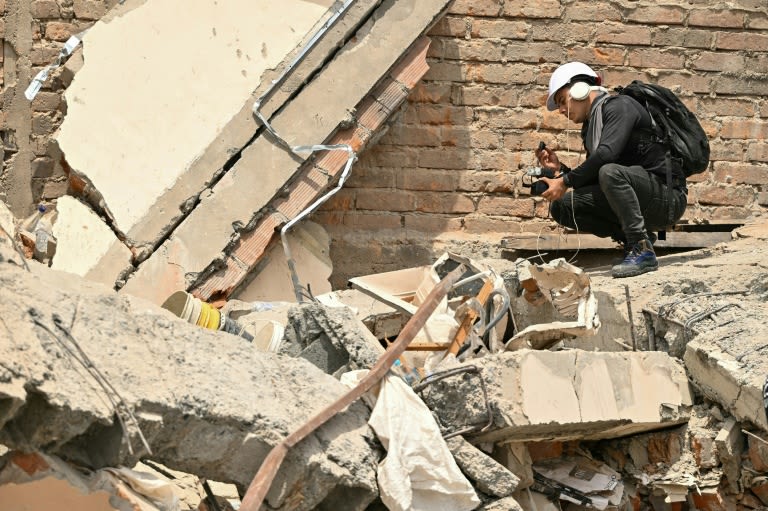
jpostabcnews+1jpost+1Rescuers racing against fading odds pulled a man alive from beneath a collapsed hotel in Colombia on Friday, nearly four days after a 7.4-magnitude earthquake tore through the country's western regions, killing at least 281 people and leaving 379 unaccounted for.abcnews+1
The discovery offered a rare moment of hope as the disaster entered a grimmer phase. The critical 72-hour survival window had passed on Thursday, and in Cali, Colombia's third-largest city, crews at most sites shifted from search-and-rescue operations to debris removal. "Unfortunately, we are reaching a point where the likelihood of finding survivors is dwindling, but our mission is to keep searching and find all those people who are reported missing," said David Tamayo, head of Colombia's National Unit for Disaster Risk Management.dailymaverick+1
The earthquake struck at 7:34 a.m. local time on Monday, August 10, with its epicenter near San José del Palmar in the Chocó region. It was the strongest quake to hit Colombia this century. President Abelardo de la Espriella reported 3,971 people injured, with more than 12,000 homes destroyed and over 74,000 damaged. More than 170 buildings collapsed, along with a pedestrian bridge, 20 road bridges, and more than 200 roads. The emergency spans 15 departments and 426 municipalities.artsakh+2
Cali and Pereira bore the heaviest losses. In Cali alone, at least 96 people died and 45 buildings collapsed. Four major hospitals were knocked out of operation, though health officials stabilized the system by expanding capacity at less-damaged facilities. In Pereira, the smell of decaying bodies began to permeate the air as a firefighter acknowledged that finding more survivors was "unlikely".aljazeera+1
Outside major cities, the response has been slower. In Buenaventura, rescue workers did not arrive until Wednesday night, leaving residents to dig through rubble with their bare hands. The International Rescue Committee reported that armed groups in some neighborhoods seized food donations, vowing to handle distribution themselves.biz.chosun+1
The disaster is the first major test for de la Espriella, a conservative who took office just days before the earthquake and campaigned on cutting public spending. He declared an economic emergency, announced three days of national mourning, and pledged to create a reconstruction fund. On Friday, he was set to make flying visits to five affected cities, including Cali, Pereira, and Quibdó.jpost+2
His administration has drawn criticism for its handling of international aid. Colombia accepted search-and-rescue teams from the United States, Israel, El Salvador, and Ecuador but turned away a Mexican team, citing certification requirements. Mexico's President Claudia Sheinbaum accused Colombia of moving the goalposts on credentials. Critics have suggested political motivations, a charge the government has denied. "We are cooperating with all countries without ideological or political considerations," Foreign Minister Omar Bula said.freemalaysiatoday+1
The Norwegian Refugee Council warned that roughly one million people in the hardest-hit departments had pre-existing humanitarian needs from armed conflict and displacement before the earthquake struck. In the town of El Cairo, most houses are uninhabitable and none of the four schools can be used. "I had a home, but I lost it when I was forced to flee Guaviare. Then I went to Chocó and was displaced a second time. Now, here, I've lost my home for the third time," one survivor told the NRC.nrc
More than 150 aftershocks have rattled the region since Monday. In Cali, 72-year-old Maria del Carmen Rodriguez gazed at her destroyed apartment from a soccer pitch where she and her husband have taken shelter. "We wonder what aid we're entitled to, whether they're going to relocate us somewhere else, because this is going to last a long time," she told AFP.yahoo+1