Newsletter Subscribe
Enter your email address below and subscribe to our newsletter
[forminator_form id="25163"]

All voices matter
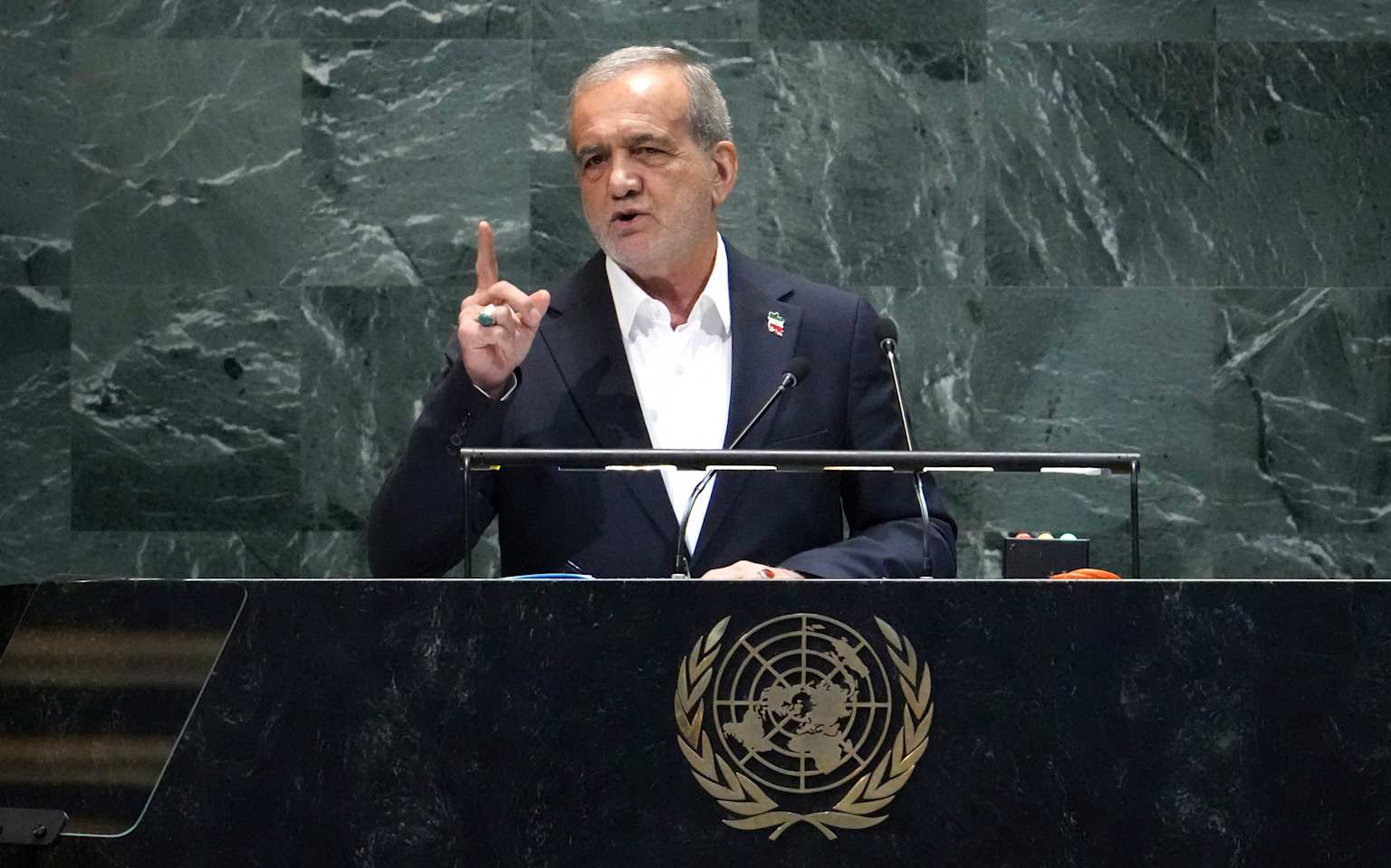
moneycontrol+1moneycontrol+1pbsIranian President Masoud Pezeshkian addressed the United Nations General Assembly on Wednesday in what is believed to be the first time a foreign leader has spoken at the world body while their country is at war with the host nation. Standing before the assembly in New York under heavy security, Pezeshkian cast Iran as the aggrieved party in the nearly seven-month conflict, declaring, "We have been the victims of terrorism."moneycontrol
"America and Israel attacked us with the latest technology. They hit us, but we didn't bend the knee," Pezeshkian told the assembly, according to multiple reports. He accused the United States and Israel of targeting Iranian universities, healthcare centers, schools, and hospitals, while insisting that Tehran's retaliatory strikes did not hit civilian populations.moneycontrol
Pezeshkian's address came one day after President Donald Trump used the same stage to pose a stark ultimatum to Tehran. "Will a deal be made with Iran that lets them rebuild and create a far greater country than it ever was before?" Trump asked Tuesday. "Or do I annihilate the Islamic Republic and do it quickly?" All but one member of the Iranian delegation walked out during those remarks.abc7ny+1
Despite the hostile rhetoric, the two sides held indirect talks on the sidelines of the assembly on Tuesday, mediated by Qatar — the first such contact since a June ceasefire collapsed. Trump described the roughly three-hour exchange between his envoys Steve Witkoff and Jared Kushner and Iranian officials as "a very good meeting," though he acknowledged the Iranian participants were "not the highest level." Secretary of State Marco Rubio said Trump was open to meeting Pezeshkian directly.pbs
Tehran played down the encounter. Iranian Foreign Ministry spokesperson Esmail Baghaei said the talks were "not anything new" and reiterated demands that Washington end its naval blockade of Iranian ports and release frozen Iranian assets.pbs
Pezeshkian also warned that Iran would not allow the Strait of Hormuz to be used for "aggression" against his country, a pointed reference to the strategically vital waterway through which a large share of global oil shipments passes. Commercial shipping in the strait has remained below prewar levels amid intermittent attacks.pbs+1
A senior Iranian official told Reuters that the delegation in New York has full authority to revive diplomacy with the United States, and that Tehran has offered to reopen the Strait of Hormuz within seven days if Washington eases military pressure. Brent crude has hovered around $100 per barrel, up from approximately $70 before the war began.independent
Israeli Prime Minister Benjamin Netanyahu is scheduled to address the assembly on Thursday, setting up another charged day of diplomacy at a gathering increasingly defined by the Middle East conflict.abc7ny