Newsletter Subscribe
Enter your email address below and subscribe to our newsletter
[forminator_form id="25163"]

All voices matter
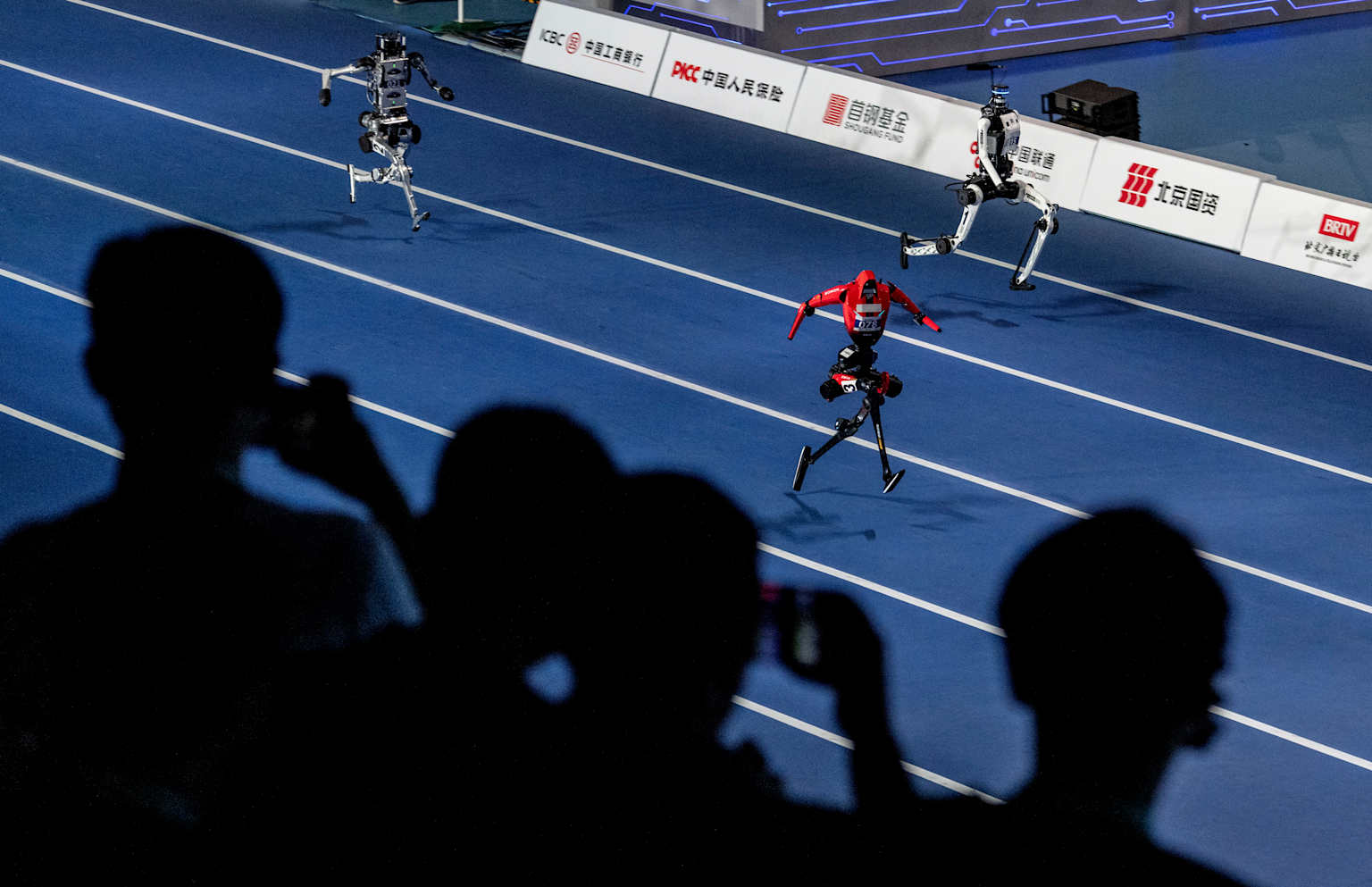
wxxv25+1wxxv25wxxv25The second World Humanoid Robot Games wrapped up this week in Beijing after five days of competition that saw humanoid robots shatter human athletic records, including Usain Bolt's 100-meter sprint mark, while also catching fire, losing limbs, and crashing into walls.
More than 2,000 humanoid robots from 666 teams across 16 countries competed in 51 events at the games, which ran at Beijing's National Speed Skating Oval, a venue built for the 2022 Winter Olympics. On opening day, August 22, a humanoid robot from Beijing-based X-Humanoid completed the 100-meter sprint in 9.39 seconds, beating Bolt's human world record of 9.58 seconds set in 2009. Another X-Humanoid bot reached 2.88 meters in a standing high jump, clearing the human record of 2.45 meters held by Cuba's Javier Sotomayor since 1993.wxxv25+1
The improvements over last year's inaugural games were stark. In 2025, the winning 100-meter time was a glacial 21.50 seconds and the best standing high jump was just 0.95 meters. Honor, the Chinese smartphone maker, said one of its robots clocked 9.32 seconds in a trial run before the opening. The Tiangong Ultra later posted an 8.64-second 100-meter time during the finals.clickpetroleoegas+2
The opening ceremony featured 80 Booster T2 humanoid robots marching in synchronized formation, each independently calculating its route, before reorganizing to spell out "BEIJING" on the arena floor. A humanoid mounted on a four-legged robotic horse then shot an arrow to ignite the games' symbolic flame.clickpetroleoegas
But the competition also underscored how far the technology has to go. Robots lost legs mid-sprint, careened into barriers, and in at least one case burst into flames. Tasks that humans find routine — folding clothes, stacking shelves, connecting cables — remained challenging for the machines. While some events required full autonomy, others allowed human teleoperation with a scoring penalty.theverge
The games served as a display of China's expanding robotics ecosystem. The number of teams grew 138 percent from last year, and approximately 150 companies across China are now competing in the humanoid sector, backed by more than $230 million in government support in just the first half of 2026, according to Reuters. The medal table was dominated by Chinese teams — 641 of the 666 participating teams were domestic. Major U.S. players like Tesla , Boston Dynamics Hyundai Motor Company, and Figure were absent.clickpetroleoegas+1
The competition comes amid growing U.S.-China tensions over robotics. Last month, the U.S. Federal Communications Commission banned imports of new foreign-made humanoid robots, citing national security, and the Pentagon added Chinese robotics firm Unitree to its list of companies with alleged Chinese military ties. But as The Verge noted, some analysts warn that efforts to ban Chinese robots could backfire given how dependent U.S. firms remain on Chinese components.theverge+1