Newsletter Subscribe
Enter your email address below and subscribe to our newsletter
[forminator_form id="25163"]

All voices matter
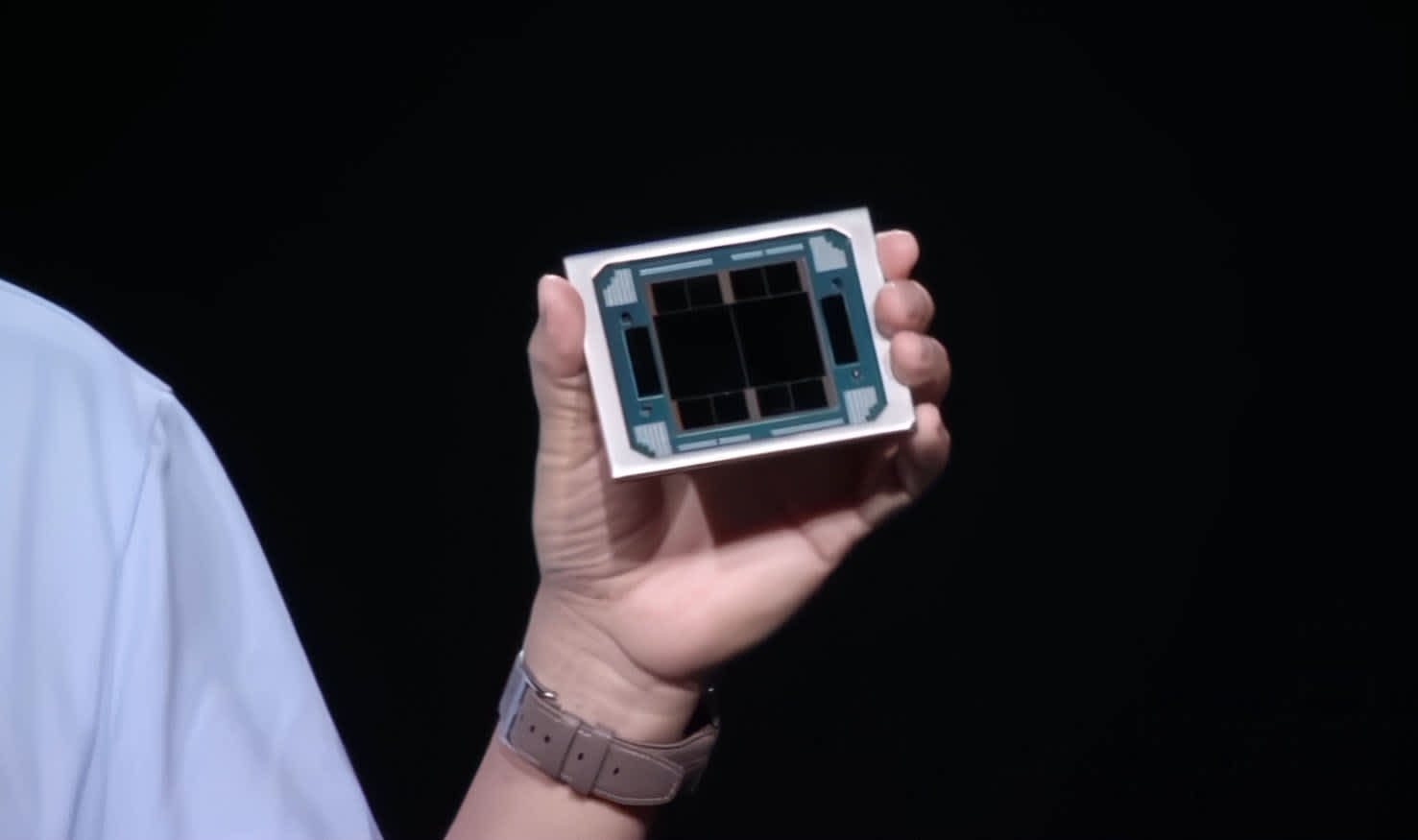
reutershuaweireutersHuawei on Thursday announced it is accelerating the launch of its next-generation Ascend 960DT AI training chip to the first quarter of 2027, pulling the timeline forward by three quarters from its earlier roadmap, as the Chinese tech giant intensifies its challenge to Nvidia in the AI computing market.
Rotating chairman David Wang made the announcement at the Huawei Connect 2026 conference in Shanghai, where the company also said it would launch a second chip, the Ascend 960PR for inference workloads, in the third quarter of 2027. A Huawei spokesperson told TechCrunch that the Ascend 960 chips are "doubling performance and advancing year by year".techcrunch+2
Alongside the chip roadmap, Huawei introduced what it calls the Peerium Computing Architecture, designed to make up to one million processors function as a single computer. The architecture relies on UnifiedBus, a high-speed interconnect protocol that links CPUs, NPUs, memory, storage, and networking hardware into a unified system.huawei+1
Huawei also unveiled the Ascend 960 SuperPoD, the industry's first to use near-packaged optics technology, supporting up to 4,096 NPU cards with up to 8 exaflops of FP8 computing power. The company said an Atlas 950 SuperCluster containing 256,000 computing cards is already being deployed, while the Atlas 960 system is under testing.scmp+2
China tech analyst Rui Ma noted on X that the announced SuperPoD is smaller than what Huawei had previously outlined, which called for a system scaling to 15,488 Ascend 960 chips. "The chip itself is coming WAY earlier, but the SuperPoD they announced is much smaller than what they originally laid out," Ma wrote.techcrunch
Eric Xu, Huawei's other rotating chairman, told reporters at the conference that demand for the company's AI computing equipment in China already outstrips supply, and that Huawei has no plans for a full-scale international expansion as a result. "Since we don't have enough capacity to even satisfy the demand in China, we don't have a plan to expand into the international market in a fully-fledged way," Xu said, according to Reuters.reuters
The accelerated roadmap comes as Huawei continues to advance its chip ambitions despite U.S. restrictions on China's access to advanced semiconductor manufacturing. The announcement also arrives a week before President Trump and Chinese President Xi Jinping are set to meet on September 24 in Washington. Xu argued that China needs to accelerate AI development to catch up with the United States, saying Chinese companies need to advance further before they can fully understand the risks posed by more powerful AI systems, according to the Financial Times.techcrunch