Newsletter Subscribe
Enter your email address below and subscribe to our newsletter

All voices matter
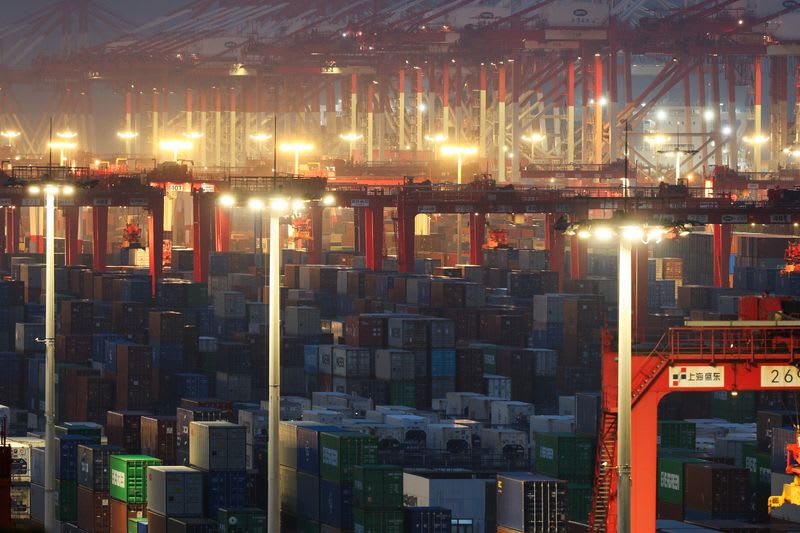
money.usnewsmoney.usnewsbloombergThe European Union's economic relationship with China is under growing strain, with Goldman Sachs The Goldman Sachs Group, Inc. warning on Thursday that the bloc's real problem is not the trade deficit itself but the rapid loss of global market share to Chinese competitors — even as Bloomberg reported that EU leaders lack the political will to act decisively.
In a note published Thursday, Goldman Sachs said that Chinese manufacturers, confronting weak domestic demand and excess capacity, have expanded aggressively into international markets, intensifying competition with European firms across the Asia-Pacific, Latin America, and Eastern Europe. "We estimate that this third-market competition, rather than the bilateral deficit itself, accounts for most of the European growth drag from China's export-led model," the bank said.money.usnews+1
The numbers underscore the scale of the shift. Europe's share of exported capital goods has fallen to 43% of global volume from 54% in 2005, while China's has surged to 24% from 7%, according to Goldman. Machinery exports from China to Europe have risen 50%, and overall Chinese exports to the EU grew roughly 16% in the first five months of 2026, compared with less than 10% growth in EU exports to China.money.usnews
Yet the EU's capacity to respond remains constrained. Bloomberg reported Thursday that some member states and officials involved in planning are "skeptical that the bloc is ready to take decisive action should diplomacy fail," with the report stating that the EU "doesn't have the political will to institute meaningful change or pick a fight with China."bloomberg
Germany, the bloc's largest economy, is particularly exposed. The Centre for European Reform estimated in May that China's export surge could shave 0.2 to 0.3 percentage points off German growth annually through 2029. Berlin's deep industrial ties to China limit its appetite for confrontation.cer
The EU and China agreed last week to an October deadline to produce "tangible results" in trade talks, with EU trade chief Maros Sefcovic saying both sides have sufficient time to deliver.bloomberg
Goldman expects Brussels to shift from its "largely accommodating stance" toward a more assertive but still targeted trade policy. A U.S.-style blanket tariff regime "remains unlikely since the EU would not want to jeopardize access to a key market for critical materials such as rare earths," the bank said. It expects policy action to focus first on steel, machinery, and basic chemicals — sectors where evidence of trade diversion and industrial damage is strongest.kfgo+1
The bloc has already begun acting in steel. Beginning this month, the EU is cutting tariff-free steel quotas by 47% and doubling out-of-quota duties from 25% to 50%. But whether broader measures follow depends on whether diplomacy delivers before the autumn deadline — or whether internal divisions prevail.atlanticcouncil