Newsletter Subscribe
Enter your email address below and subscribe to our newsletter
[forminator_form id="25163"]

All voices matter
ec.europa.eu.ec.europa.eu+1.investinglive.com.Eurostat confirmed on Friday, October 16, that annual inflation in the euro area rose to 3.8% in September from 3.2% in August. The final reading matches the flash estimate published on October 2, and inflation was 2.2% a year earlier. It is the third straight monthly increase and the highest rate since September 2023. The figure keeps pressure on the European Central Bank, whose target is 2%, ahead of its October 29 meeting.ec.europa.eu+2
Energy prices rose 18.9% from a year earlier, up from 14.3% in August. Energy added 1.71 percentage points to headline inflation and services added 1.52 points. Services inflation picked up to 3.2% from 3.0%. Inflation in food, alcohol and tobacco rose to 1.3%. Core inflation, which leaves out energy, food, alcohol and tobacco, edged up to 2.5% from 2.4%.ec.europa.eu
Inflation rose in all four of the bloc's largest economies:
(Eurostat)ec.europa.eu
Across the European Union, annual inflation rose in 23 member states and fell in only one, Slovakia. Romania had the highest rate at 6.5%, and Sweden had the lowest at 1.0%.ec.europa.eu
When the flash estimate came out, the 3.8% reading beat the 3.6% economists had expected in a Reuters poll. Reuters said the rise was driven mainly by fuel and natural gas costs.reuters.com
The ECB has raised rates twice this year, in June and September, in response to the energy shock from the conflict in the Middle East. Its deposit rate now stands at 2.5%. ECB staff projections from September expect headline inflation to average 3.0% in 2026, 2.5% in 2027 and 2.1% in 2028.ecb.europa.eu+1
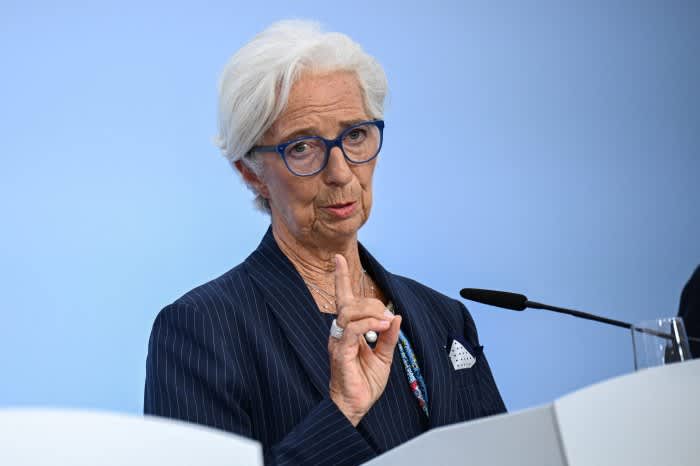
On Friday, ECB President Christine Lagarde said inflation is rising "predominantly, though not exclusively" because of energy. She said there are no second-round effects yet, meaning higher energy costs have not spread into wages and other prices. She added that the ECB cannot wait until such effects are in full view before acting.investinglive.com
Markets still see a move in October as unlikely. After the flash data, derivatives pricing implied about an 11.7% chance of a quarter-point hike in October and close to 70% for December. Jack Allen-Reynolds of Capital Economics told Reuters the ECB is "most likely to wait until December." He added that "if energy prices rose further in the next few weeks, an October hike would not be a big surprise".global.morningstar.com+1
Eurostat will publish its flash estimate for October on November 4.ec.europa.eu