Newsletter Subscribe
Enter your email address below and subscribe to our newsletter
[forminator_form id="25163"]

All voices matter
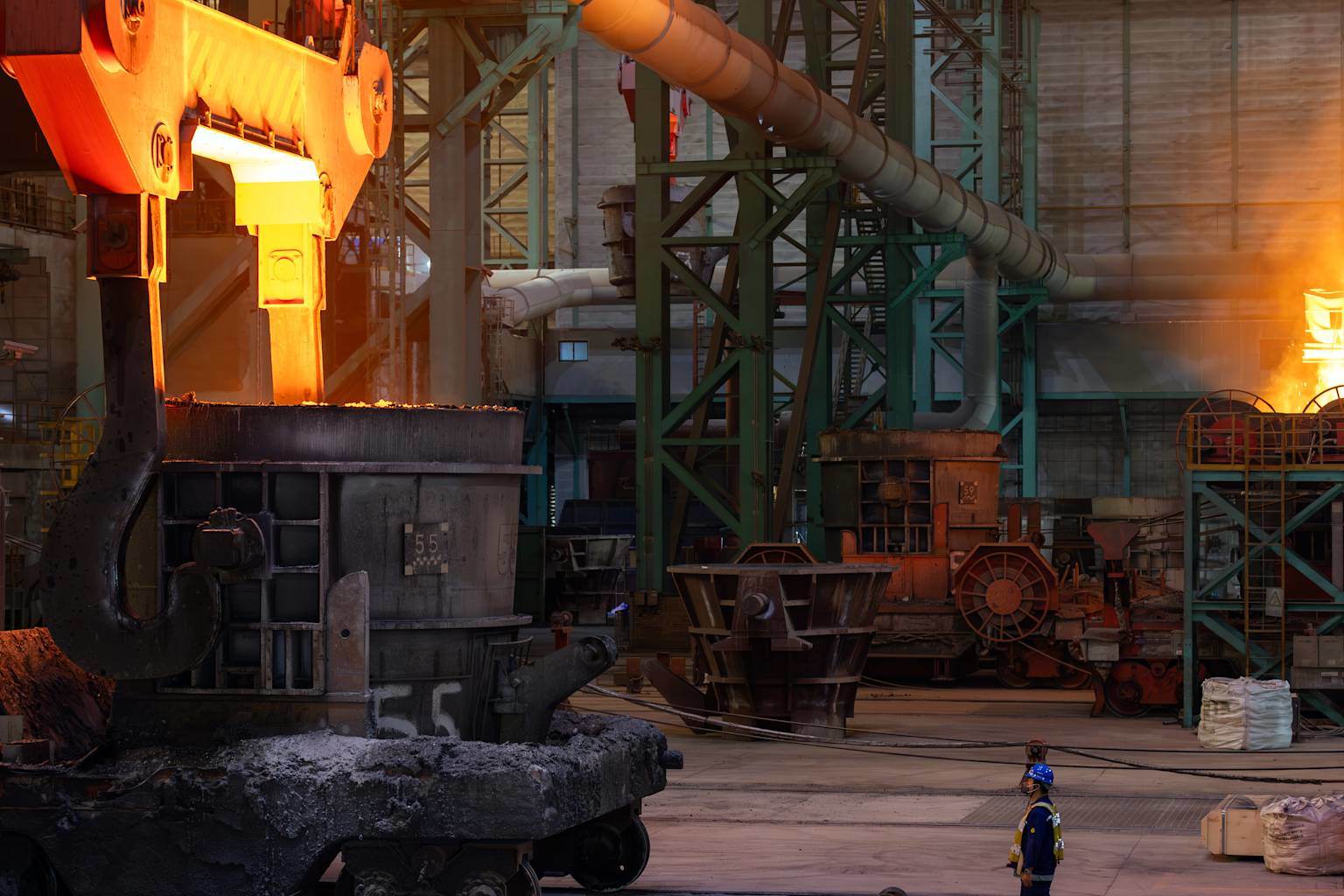
theedgemalaysia+1investingtradingview+1Chinese steel production fell sharply in July, putting the world's largest steelmaking industry on course for its weakest annual output this decade as a prolonged property crisis and faltering domestic demand weigh on the broader economy.
Mills produced 76.93 million tons of crude steel last month, down 3.6% from a year earlier and the lowest monthly total of 2026, according to National Bureau of Statistics data released on Monday. Output over the first seven months declined 3.1% year-on-year to 577.04 million tons, with July marking the weakest showing for the month since 2017, according to Bloomberg and Reuters data cited by Finimize.theedgemalaysia+2
The steel slump arrived alongside a batch of economic data that underscored persistent weakness across China's domestic economy. Industrial production rose 4.5% year-on-year in July, below expectations for 5% growth and down from 5.3% in June. Retail sales grew just 0.6%, well short of the 1.5% consensus, while fixed-asset investment fell 6.7% — worse than the 5.7% decline recorded in June. China's official manufacturing PMI slipped into contraction at 49.2 in July, down from 50.3 in June.investing+1
The weak readings reinforced a pattern that CommBank Commonwealth Bank of Australia economist Carol Kong described as a "two-speed economy." Exports have remained resilient, buoyed by demand for electric vehicles, solar panels, and AI-related hardware, but domestic consumption and private investment continue to struggle under the weight of falling property prices. Housing accounts for roughly 70% of Chinese household wealth, Kong noted, meaning the property downturn has an outsized effect on consumer confidence.commbank
Iron ore futures fell toward 14-month lows amid the demand concerns, while rebar spot prices — a bellwether for construction activity — slumped to near a 10-year low. The contraction in construction activity has deepened according to the latest purchasing managers' data, and fixed-asset investment has "fallen dramatically," Bloomberg reported.bloomberg+2
Unlike in previous downturns, Beijing has not deployed large-scale property or infrastructure stimulus. Policymakers have signaled a deliberate shift toward what they call "high quality growth," emphasizing productivity, innovation, and advanced manufacturing over the debt-fueled construction model of earlier decades. "The goal is no longer to maximise headline economic growth," Kong said, "but it is to really build a productive, innovative, technological-driven economy".commbank
For commodity markets, the implications are clear: the structural forces dragging on Chinese steel demand show few signs of reversing soon.