


Newsletter Subscribe
Enter your email address below and subscribe to our newsletter
[forminator_form id="25163"]

All voices matter
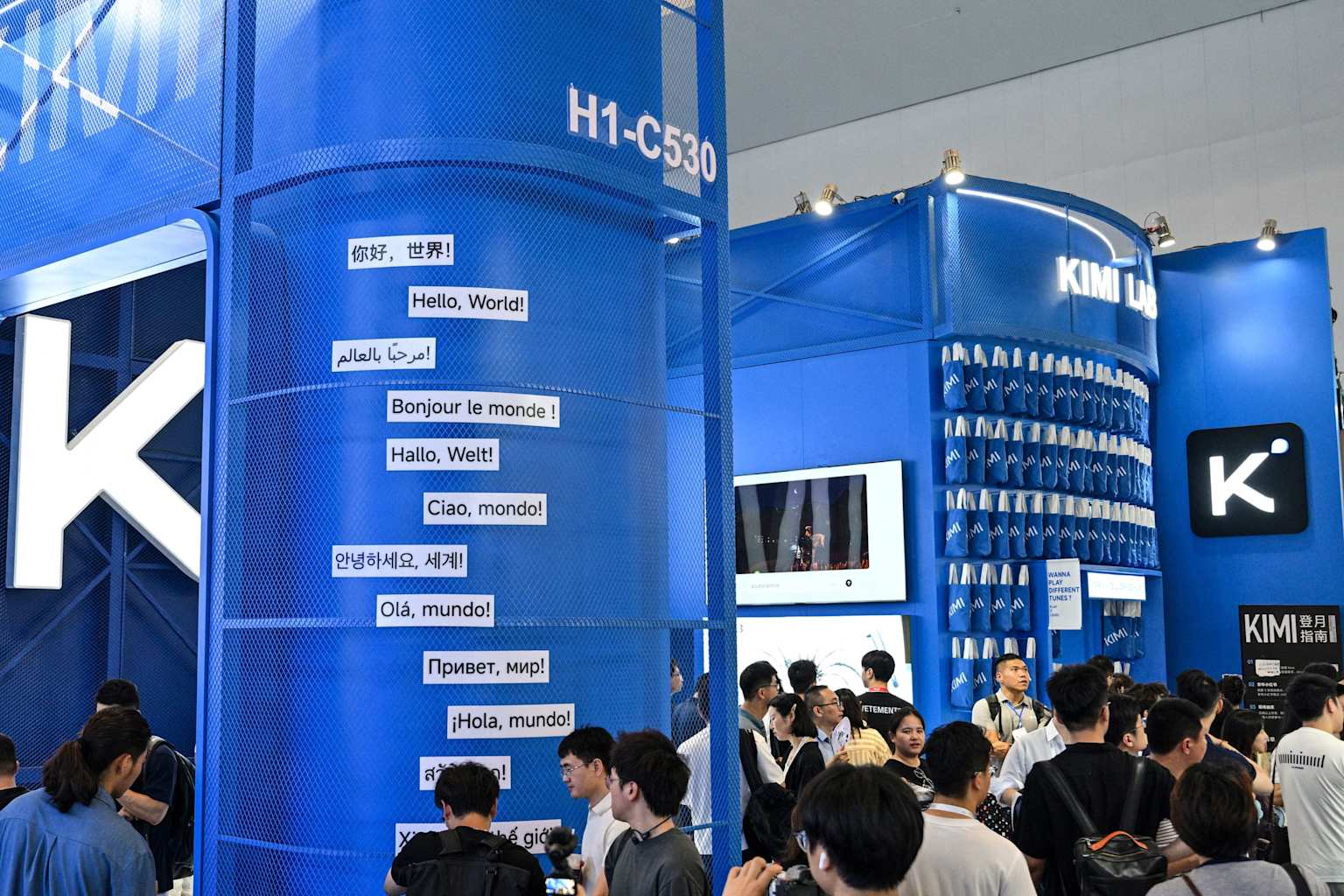
nytimes+1nytimesnytimesChina's open-weight artificial intelligence models are making rapid inroads globally, as Moonshot AI's Kimi K3 and a wave of competing Chinese systems offer developers and businesses capable alternatives to proprietary American platforms at a fraction of the cost.
Moonshot AI unveiled Kimi K3 on July 16, initially releasing the model's API before making its full weights publicly available on July 27. The system features 2.8 trillion parameters built on a mixture-of-experts architecture, native image comprehension, and a one-million-token context window. On benchmark tests conducted by the independent evaluator Artificial Analysis, it ranks third globally in overall intelligence, behind only Anthropic's Claude Fable 5 and OpenAI's GPT-5.6 Sol — both closed-source models — while its API pricing runs at roughly one-third the cost of Claude Fable 5.nytimes+2
Close behind, Alibaba's Qwen team previewed its next-generation Qwen3.8, a 2.4-trillion-parameter system it plans to fully release as open-weight. Together AI has partnered with Moonshot to serve as the primary launch platform for Kimi K3 and future models, giving developers day-zero access.english.anhuinews+1
The shift is already visible in American workplaces. An Associated Press report found US technology executives using models from Moonshot, Z.ai, and DeepSeek for coding, research, email, and document management. Mozilla chief technology officer Raffi Krikorian told the AP he moved several tasks to Kimi K3 after previously using Z.ai's GLM-5.2. The Washington Post reported that Chinese AI models surpassed American models in cumulative downloads in August 2025, with the gap widening since. According to the state-run People's Daily, cumulative worldwide downloads of Chinese open-weight large language models have surpassed 10 billion.memeburn+3
Pricing is a key driver. GLM-5.2 is listed on OpenRouter at about $0.76 per million input tokens, compared with $1.75 for OpenAI's GPT-5.2. But Chinese models are not uniformly cheaper — Kimi K3 is listed at $3 per million input tokens, comparable to top US rivals.memeburn
On July 23, ministers from 21 APEC economies, including the United States and China, adopted the Chengdu Statement, the first APEC ministerial endorsement of open-source AI development built with "strong security assurance". CNBC reported that the US presence at the event was subdued, with Google Alphabet Inc. and Meta the only American companies with booths as of July 23.cnbc+3
Yet as Chinese models gain global traction, Beijing faces its own dilemma. Reuters and the Financial Times have reported that China's Ministry of Commerce has engaged with leading AI companies, including Alibaba and ByteDance, to discuss limiting overseas access to their most advanced models. President Xi Jinping said at the World AI Conference in Shanghai on July 17 that China endorses openness in AI but must "continuously enhance measures to prevent loss of control".nytimes+1
"The Chinese Communist Party prioritizes security, particularly under Xi," Matt Sheehan, a senior fellow at the Carnegie Endowment for International Peace, told the New York Times. "If these models attain such perilous capabilities, they are unlikely to allow unrestricted access to them."nytimes


