


Newsletter Subscribe
Enter your email address below and subscribe to our newsletter
[forminator_form id="25163"]

All voices matter
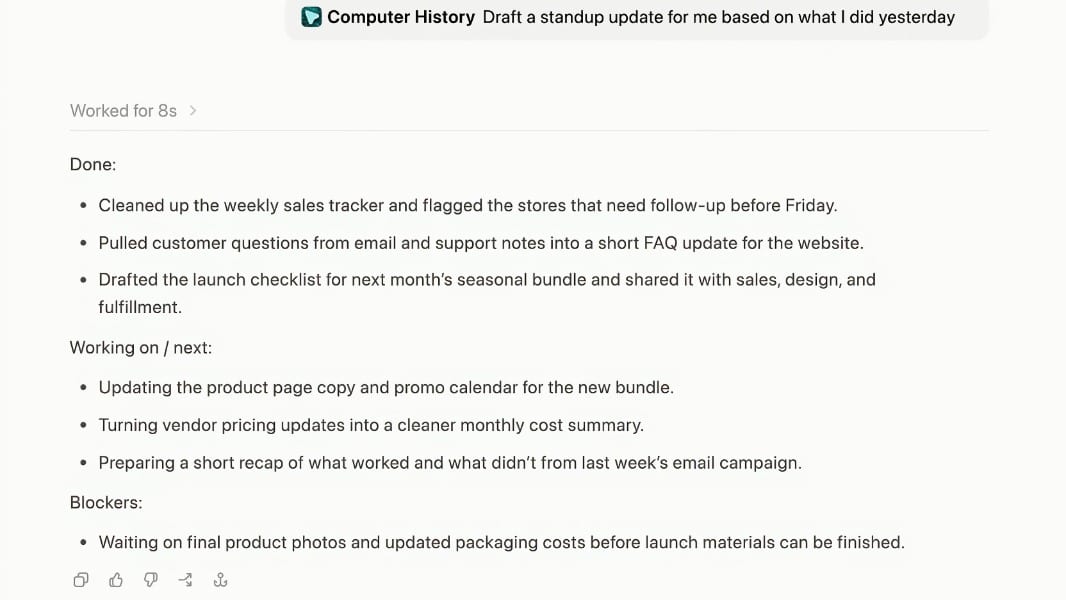
thenextweb+1digitaltrends+1thenextweb+1OpenAI has launched Computer History, a new feature for the ChatGPT macOS desktop app that logs user clicks, keystrokes, keyboard shortcuts, and app switches to build a searchable memory timeline — but stores those records as unencrypted plain-text Markdown files accessible to any program running under the same macOS user account.digitaltrends+1
Announced on August 13, the opt-in feature uses macOS accessibility APIs to track interaction events and convert them into structured memories that ChatGPT and Codex can reference for context-aware assistance. It does not capture screenshots, screen recordings, audio, or video, and it automatically excludes content viewed in private or incognito browser tabs, according to Ari Weinstein, OpenAI's product and engineering manager, who detailed the feature on X.theverge+2
Computer History replaces Chronicle, an earlier Codex research preview that relied on periodic screen captures. Temporary event files remain on the device for 48 hours before deletion, after which local memories persist as plain-text Markdown. OpenAI says it processes raw data on its servers without retaining it afterward unless legally required.cryptobriefing+2
OpenAI's own documentation acknowledges the risk plainly: the memory files are not encrypted, and other programs running as the same macOS user may be able to access them. That means malware or any malicious application already present on a Mac could read the stored activity data without needing to compromise ChatGPT itself. Digital Trends noted an additional concern around prompt injection, where malicious instructions hidden in websites or documents could influence what the AI sees in its history.digitaltrends+1
The feature draws comparisons to Microsoft Windows Recall, which faced intense privacy backlash when announced in 2024 over its reliance on screenshots. OpenAI appears to have taken a more cautious path by making Computer History opt-in from the start and using structured interaction data rather than screen captures.cryptobriefing+1
Computer History is currently limited to Pro, Business, and Enterprise tier users on macOS. It is unavailable in the European Economic Area, Switzerland, and the United Kingdom, following a pattern common for AI features that run up against the EU's data protection regime. For Business and Enterprise workspaces, an administrator must enable the feature before individual users can opt in. Users can pause data collection, exclude specific apps and websites, and delete individual timeline entries.thenextweb+2
OpenAI states that memory files are not used to train models, though when memories surface as context in later chats, those conversations may still become training data depending on user settings.thenextweb


