Newsletter Subscribe
Enter your email address below and subscribe to our newsletter
[forminator_form id="25163"]

All voices matter
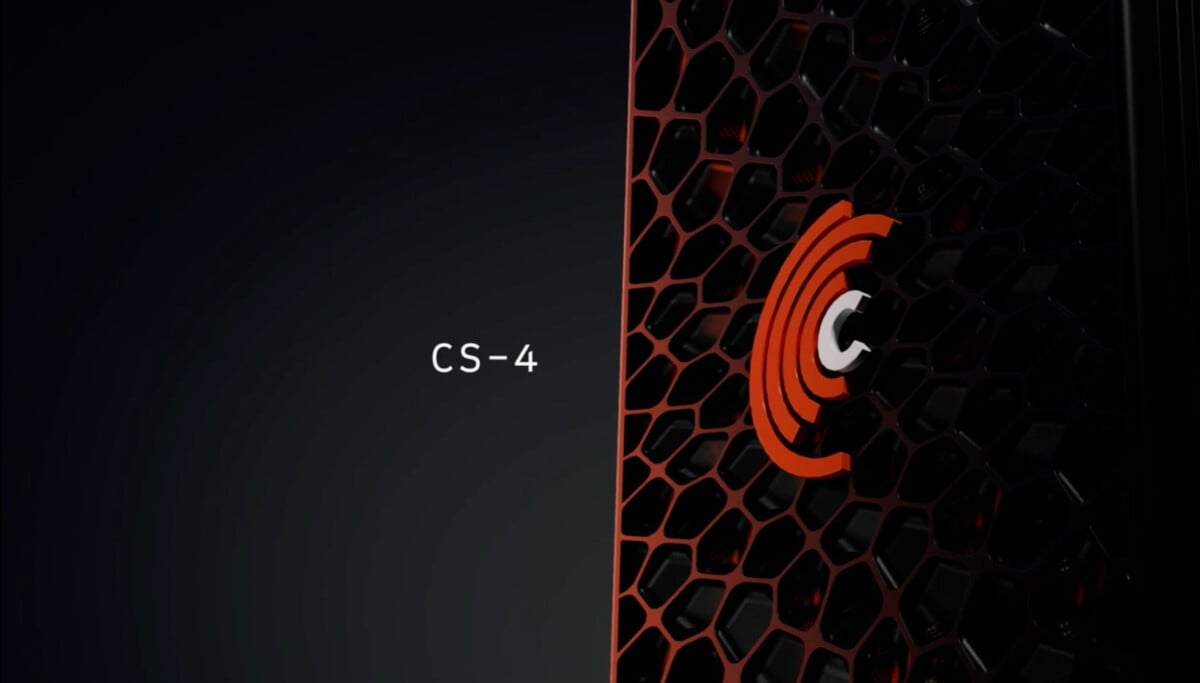
theregister+1theregistertheregister+1Cerebras Systems unveiled the CS-4, its next-generation rack-scale AI accelerator, at the company's Supernova event in San Francisco on Tuesday, claiming the system delivers up to 30 times faster inference than GPU-based solutions. The announcement marks the chipmaker's most aggressive bid yet to challenge Nvidia in the rapidly growing AI inference market.
The CS-4 is built around three of Cerebras' newly announced WSE-3 Turbo processors — dinner-plate-sized chips that double the compute and memory bandwidth of their predecessors by pushing existing silicon harder rather than introducing a new chip design. Each WSE-3T delivers 250 petaFLOPs of AI compute and 43.2 petabytes per second of memory bandwidth, achieved by roughly doubling the clock speed to an estimated 2.8 GHz through improved power delivery.theregister
Together, the three chips give the CS-4 a total of 750 PFLOPs of AI compute and 129.6 petabytes per second of memory bandwidth. On GPT-OSS-120B, Cerebras says the system achieves more than 4,400 tokens per second per user, compared to roughly 350 tokens per second on the fastest GPU-based inference service, according to benchmarking firm Artificial Analysis.quiverquant+1
"In AI, speed is productivity," CEO Andrew Feldman said at the event. "Cerebras CS-4 delivers industry-leading speeds on the largest frontier models, fundamentally changing the paradigm."quiverquant
The CS-4 introduces a modular "backpack" architecture with 50 percent fewer components than its predecessor, which CTO Sean Lie said would accelerate data center construction. The system also features switchless chip-to-chip connections using a 2D torus topology, cutting interconnect latency from five microseconds to two.investing+2
Cerebras said first shipments will begin later this quarter. The company also outlined plans for a next-generation chip and server in 2027, with Feldman projecting the company will deliver 600 megawatts of computing power by the end of that year and achieve 20 times more throughput.investing
The launch comes as Cerebras tries to carve out a niche against Nvidia's dominance in AI hardware. The Register noted that the WSE-3T's headline performance figures rely heavily on sparsity, which "as a general rule doesn't benefit LLM inference," and that Cerebras is now partnering with AWS Amazon.com, Inc. and AMD Advanced Micro Devices, Inc. to handle compute-intensive prefill processing on their hardware. Last week, Cerebras reported an adjusted loss of $6.9 million on revenue of $180.1 million.theregister+1