Newsletter Subscribe
Enter your email address below and subscribe to our newsletter
[forminator_form id="25163"]

All voices matter
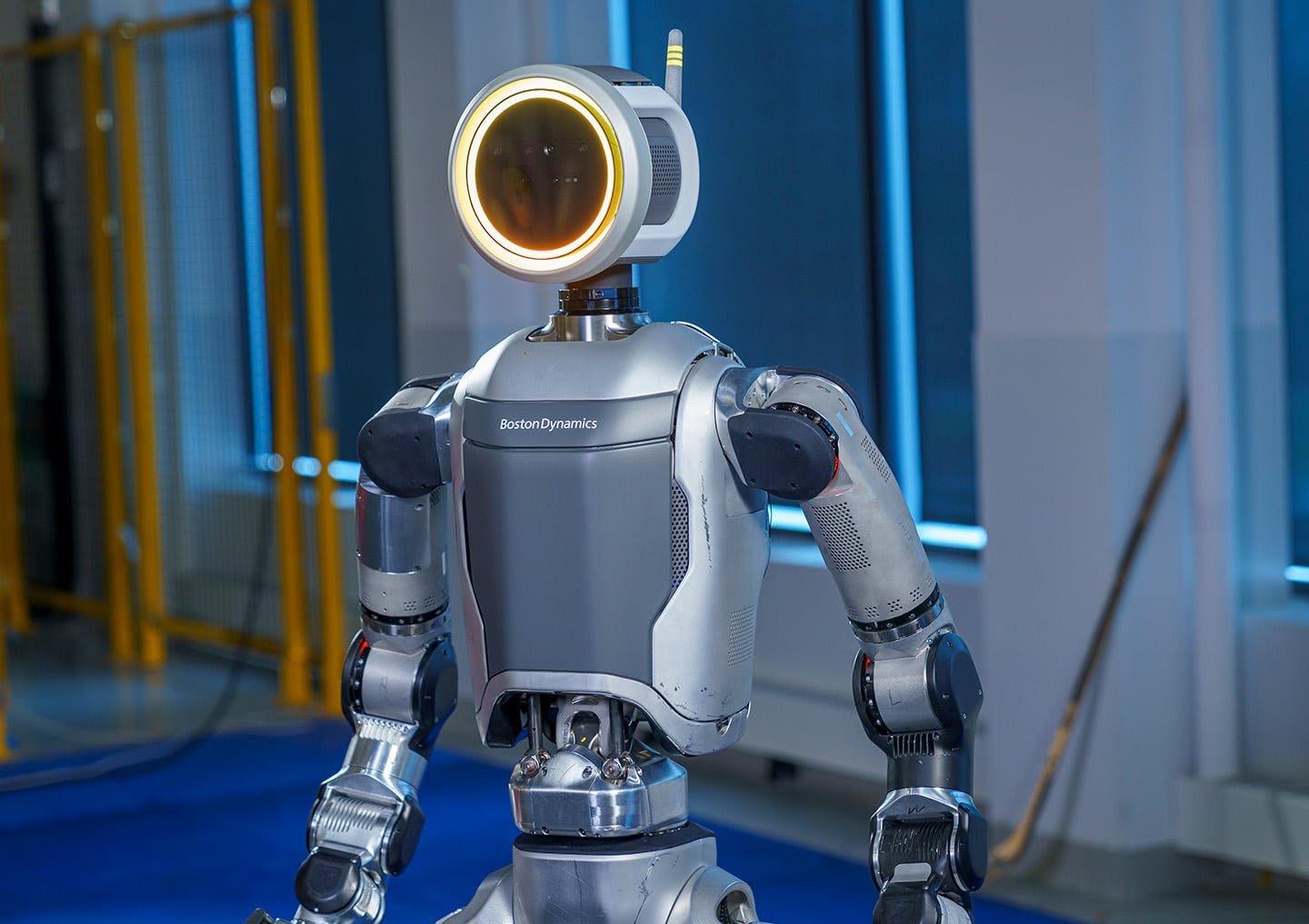
johnkoetsier+1fortuneforbes+1Boston Dynamics has revealed a new generation of its Atlas humanoid robot that features "almost an order of magnitude" reduction in complexity compared to its predecessor, with dramatically fewer parts designed to enable mass manufacturing. The disclosure comes alongside a push by the company's interim CEO for a U.S. national robotics strategy.
In an interview published this week, Alberto Rodriguez, Boston Dynamics' director of robot behavior, described the new Atlas as a fundamentally simpler machine. "If you look at this Atlas compared to the previous generation, there's almost an order of magnitude reduction in complexity," Rodriguez said. "It has way, way fewer parts and way fewer unique parts. The manufacturing process is much faster and simpler, which leads to higher reliability and lower cost."johnkoetsier
Rodriguez said the company has been able to demonstrate equal or better performance from the streamlined design, which he called critical for scaling production. Hyundai Motor Group, Boston Dynamics' parent company, has announced plans for a factory capable of producing up to 30,000 Atlas units per year.humanoidhub+1
The new Atlas, first shown publicly at CES 2026 in January, is fully electric, weighs 198 pounds, and can lift up to 110 pounds. It features 56 degrees of freedom and a four-hour battery it can swap independently. Its AI brain runs on Nvidia hardware, with Google Alphabet Inc. DeepMind contributing to its cognitive capabilities.forbes+1
Boston Dynamics has also been showcasing Atlas's physical capabilities through a collaboration with Hyundai's "School of Football" campaign, tied to the FIFA World Cup 2026. The campaign shows Atlas learning to kick a soccer ball and execute complex moves like a "Ghost Rabona," using human motion capture data refined through simulation and AI-trained policies.youtube+2
Rodriguez framed the soccer work as essential research into "physical intelligence" — the core control algorithms governing balance, agility, and force generation — distinct from "reasoning intelligence" that handles task planning.johnkoetsier
In a Fortune op-ed published June 30, Boston Dynamics interim CEO Amanda McMaster warned that without a national robotics strategy, the U.S. risks repeating the decline it experienced in semiconductors. "We have seen what that looks like in semiconductors. We cannot afford to repeat it in robotics," McMaster wrote, noting that China currently accounts for over 54% of all global robotic deployments.fortune
McMaster called for incentives, workforce development programs, supply chain strategies, and urged support for recently introduced legislation to establish a Congressional National Robotics Commission. Her op-ed followed a June report from the International Federation of Robotics showing U.S. industrial robot installations rose 11% in 2025 to 38,000 units — a recovery, but still a fraction of Chinese deployment volume.ifr+1