Newsletter Subscribe
Enter your email address below and subscribe to our newsletter
[forminator_form id="25163"]

All voices matter
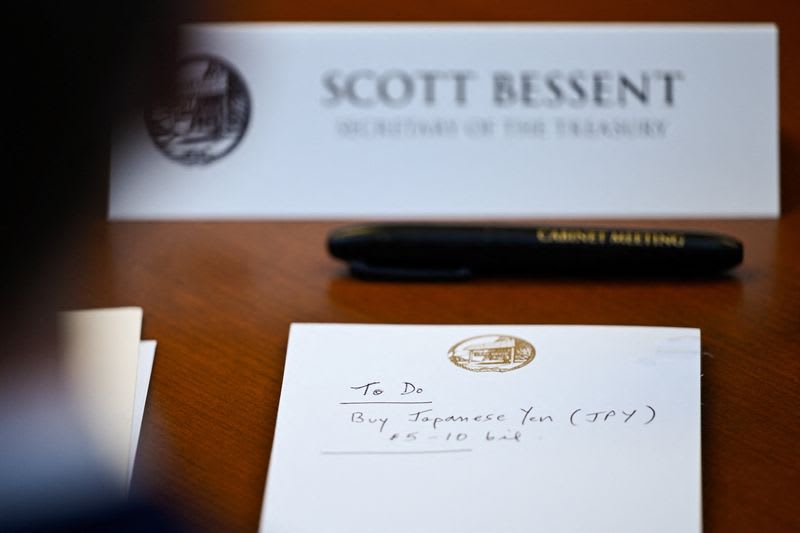
wtvbamreuterswtvbamU.S. Treasury Secretary Scott Bessent inadvertently revealed a handwritten "to-do" list during a cabinet meeting at Camp David on Friday that indicated plans to purchase $5 billion to $10 billion worth of Japanese yen, according to a Reuters photograph taken during the session.
The image, captured over Bessent's shoulder at 11:33 a.m. ET during an on-the-record portion of the meeting, shows a Camp David notepad bearing the underscored words "To Do" followed by "Buy Japanese Yen (JPY) $5-10 bil." Bessent's name card is visible immediately above the notepad on the conference table.wtvbam+1
The accidental disclosure came amid an already extraordinary day in currency markets. Earlier Friday morning, roughly two hours before the photo was taken, Reuters Thomson Reuters Corporation reported that the Treasury had notified a number of banks — through the Federal Reserve Bank of New York — that it may intervene in the yen market and that they should "stand ready for future action."reuters+1
Japanese authorities had already stepped in to prop up the yen on Thursday in New York trading, the country's first such foray in three months, as the currency's slump to four-decade lows threatened to worsen living costs amid an energy shock. That intervention triggered the yen's biggest weekly rise since February.kfgo+1
A further notable strengthening occurred Friday afternoon. Data from LSEG showed the dollar dropped from about 158.9 yen around 4:14 p.m. ET to about 157.6 yen just before 5 p.m. — a decline of roughly 0.8%.kfgo+1
The U.S. Treasury has not intervened to support the yen since 2011, when it joined other G7 countries in coordinated action following a devastating earthquake and tsunami in Japan. Any direct American yen purchases would represent a dramatic policy shift.wtvbam+1
The groundwork for such action has been laid over months. A joint statement issued by U.S. and Japanese finance ministers last September established that foreign exchange intervention "should be reserved for combatting excess volatility and disorderly movements" and would be "equally appropriate for addressing excessively volatile or disorderly depreciation or appreciation."treasury
In June, Japanese Finance Minister Satsuki Katayama said she and Bessent had agreed to take "bold" steps on currencies if needed, telling reporters the two nations were increasingly "aligned" on foreign exchange policy. Japan has spent roughly $73 billion on intervention since late April, but previous gains had evaporated within weeks.cnbc+2
A Treasury spokesperson did not immediately respond to a Reuters request for comment on the contents of the notepad or whether the Treasury had intervened on Friday.wtvbam