Newsletter Subscribe
Enter your email address below and subscribe to our newsletter
[forminator_form id="25163"]

All voices matter
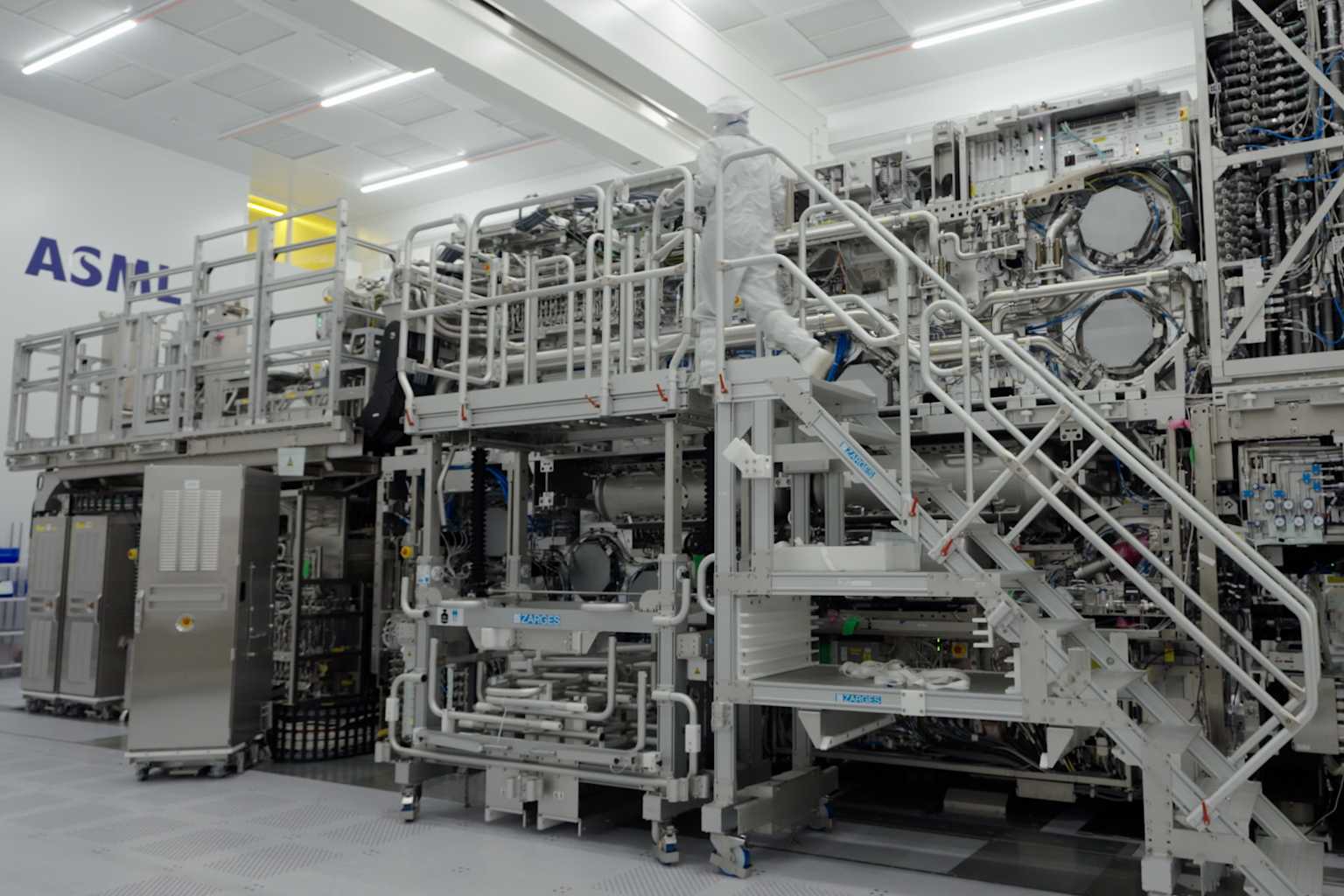
bloomberg+1theedgemalaysia+1ASML+1ASML Holding , Europe's most valuable company, did not sell a single chip-manufacturing machine on the continent in the second quarter of 2026, a stark illustration of Europe's failure to keep pace with the global semiconductor investment wave driven by artificial intelligence.
"We're not selling anything at all in Europe. That's because Europe isn't investing and because no chip factories are being built there," Frank Heemskerk, ASML's executive vice president for global public affairs, said at an event in Amsterdam on Monday evening.bloomberg+1
The disclosure comes as the United States, China, and India pour resources into building domestic semiconductor manufacturing capacity. According to Heemskerk, all three are aggressively courting ASML to expand its operations on their soil. China and India "roll out the reddest of red carpets" for the company, he said, while the U.S., where ASML already conducts a quarter of its research, is pressing for an even larger footprint.theedgemalaysia+1
"We need to scale up our production. We aren't doing that solely in the Netherlands," Heemskerk said. "There is a fierce competitive battle to get us to do it somewhere else. What's important for ASML is that Europe steps up to the plate."theedgemalaysia
Europe contributed zero to ASML's net system sales in the second quarter, compared with a combined 1% share for Europe, the Middle East, and Africa in 2025. The European Union is overhauling its Chips Act, enacted in 2023 to address pandemic-era semiconductor shortages and boost the continent's share of global production, but the bloc's auditing body said last year that the EU is unlikely to meet its target of doubling its market share by 2030.moomoo+1
The European vacuum stands in contrast to ASML's surging global business. When the company reported second-quarter results in July, it posted net sales of €9.3 billion — above the high end of its guidance — and raised its full-year 2026 outlook to €43–45 billion in net sales with gross margins of 54% to 56%. South Korea was ASML's largest market in the first half, driven by demand for its extreme ultraviolet lithography systems used in advanced DRAM and high-bandwidth memory production, followed by China.ASML+2
ASML plans to increase annual production capacity for its low-NA EUV tools and immersion DUV tools by roughly 30% each in 2027. Wells Fargo and Citi Citigroup Inc. have both revised upward their global wafer fab equipment spending forecasts, citing an AI infrastructure boom and a storage chip supercycle.moomoo+1
The equipment spending surge is bumping up against other constraints. In a report published September 18, UBS warned that silicon wafer prices would need to rise 40% to 50% to incentivize manufacturers to expand capacity after a prolonged downturn, projecting 12-inch wafer utilization could reach 99% by 2028. Without new capacity, severe shortages could emerge after 2028, adding another potential bottleneck for the semiconductor industry — and further underscoring the cost of Europe's inaction.techflowpost+1