Newsletter Subscribe
Enter your email address below and subscribe to our newsletter
[forminator_form id="25163"]

All voices matter
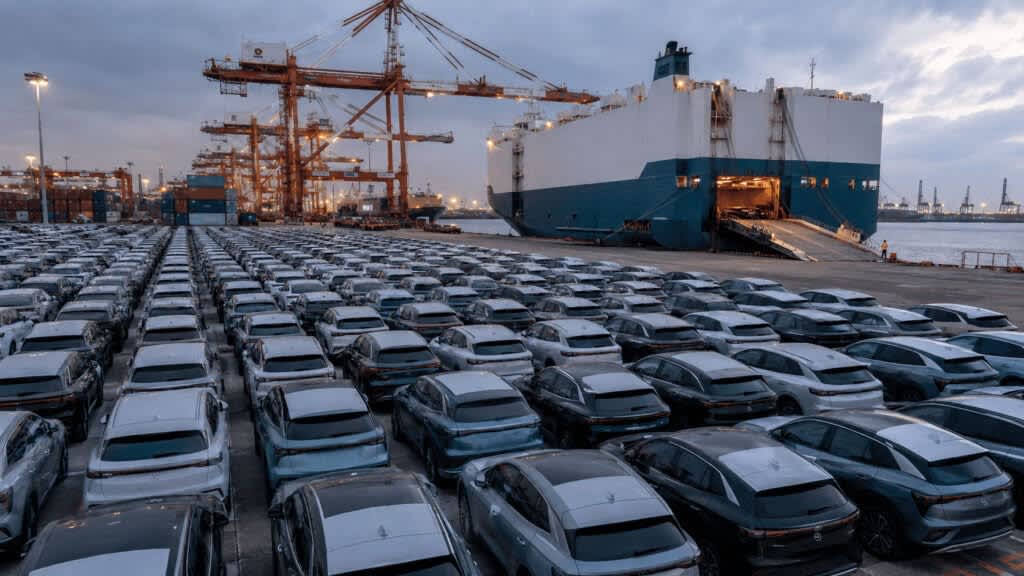
reutersreutersreuters+1Southeast Asian nations have collectively spent more than $20 billion on Chinese-made clean technology products so far in 2026, a 50% increase from the same period last year, according to data from energy think tank Ember. The spending surge has made the Association of Southeast Asian Nations the largest market in Asia for Chinese clean-tech components, spanning solar panels, batteries, electric vehicles and grid infrastructure.moderndiplomacy+1
The purchases come as Chinese exporters face growing trade barriers in Europe and North America, making the fast-industrializing economies of Southeast Asia an increasingly important alternative market.reuters+1
The region's demand runs across virtually every category of clean energy equipment. ASEAN countries have spent just under $7 billion on energy storage batteries, $6.3 billion on electric vehicles, $4.1 billion on solar arrays, $1.6 billion on grid components and $1.2 billion on heating and cooling systems, according to Reuters.reuters
Solar imports alone are up nearly 90% year-over-year, with the Philippines, Malaysia, Indonesia and Vietnam each roughly doubling their spending on Chinese solar products compared with 2025. ASEAN now accounts for 57% of China's total solar exports across Asia.moderndiplomacy+1
The spending wave reflects a broader transformation in China's export profile. Clean technology accounted for 6.6% of all Chinese exports in the first half of 2026, or $140 billion, up from 2.7% in 2020, according to Ember's China Energy Transition Review published on September 7. That puts clean tech on course to rival China's traditional export engines of garments, furniture and appliances.ember-energy+1
Ember senior analyst Muyi Yang told Latitude Media that importing countries are not simply buying finished products but are also investing further up the supply chain, using Chinese upstream components to build domestic manufacturing capacity. He pointed to Southeast Asia, where economies are advancing from panel assembly into solar cell and silicon fabrication.latitudemedia
Despite the import surge, coal still accounts for a majority of Southeast Asia's power generation mix. The region's population of roughly 700 million and GDP growth of about 5% annually are driving steadily rising electricity consumption, and clean technology imports alone do not guarantee a rapid shift away from fossil fuels.reuters+1
As Reuters columnist Gavin Maguire wrote, "every additional shipment of solar modules, batteries, EVs and grid equipment into Southeast Asia potentially accelerates the deployment of lower-carbon energy systems across one of the world's fastest-growing economic regions". Whether that potential translates into measurable emissions reductions will depend on how quickly governments deploy the imported equipment and whether renewable energy and storage investment can outpace growing demand for coal-fired power.moderndiplomacy+1