Newsletter Subscribe
Enter your email address below and subscribe to our newsletter
[forminator_form id="25163"]

All voices matter
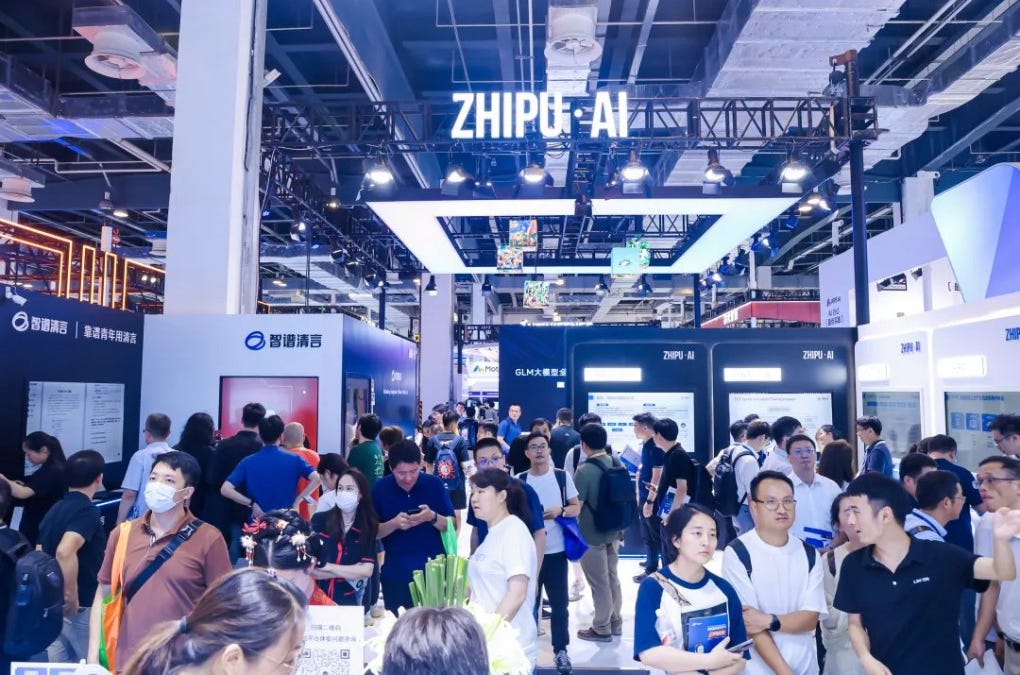
thenextwebreuterscnbc+1Z.AI, the Chinese AI company formerly known as Zhipu, has completed construction of a 1-gigawatt data center that runs exclusively on domestically produced chips, according to Bloomberg, marking what may be the clearest evidence yet that Beijing's push to replace restricted Nvidia silicon is bearing fruit at scale.
The facility, which draws roughly enough power to supply 750,000 homes, has begun partial operations and is designed to train Z.AI's GLM family of large language models, Bloomberg reported, citing a person familiar with the matter. The company now operates several computing clusters, each containing more than 10,000 chips — none of them from Nvidia.thenextweb
Bloomberg did not identify the specific chips powering the site. China's leading AI accelerator designer is Huawei, whose Ascend processors have been Z.AI's primary domestic hardware partner since at least early 2026, when the company trained its GLM-Image model end-to-end on Huawei's Ascend Atlas 800T A2 servers. Competitors Cambricon and Alibaba also produce domestic AI chips.huaweicentral+2
The buildout lands amid China's broader $295 billion, five-year plan to construct a nationwide network of AI data centers with at least 80 percent domestic hardware. Multiple Chinese cities have raced to deploy 10,000-chip computing clusters over the past year, with a Huawei Ascend 910C-based cluster launched in Shenzhen in March.tomshardware+2
The data center announcement caps a remarkable stretch for Z.AI. After listing on the Hong Kong Stock Exchange in January 2026, the company's market capitalization surged past HK$1 trillion ($128 billion) by June. It raised $4 billion in a follow-on share sale in July and is weighing a dual listing in Shanghai.reuters+3
On June 14, Z.AI released GLM-5.2, a 753-billion-parameter open-weight model under the MIT license that landed within a percentage point of Anthropic's Opus 4.8 on a key agentic benchmark at roughly one-fifth the cost, according to CNBC. The model gained an unexpected showcase days later when Hugging Face used it to defend against an autonomous AI agent that breached its production infrastructure in early July. Commercial model APIs had blocked Hugging Face's forensic queries due to safety guardrails, forcing the company to pivot to a locally hosted GLM 5.2 inference stack to complete its investigation.memeburn+3
The real proof will come with Z.AI's next generation of models. Domestic chips still lag Nvidia on raw performance, and orchestrating tens of thousands of them into stable training runs remains an engineering challenge. Z.AI founder Tang Jie signaled the company's ambitions in an internal letter on July 11, announcing a two-year "Touch High" plan that prioritizes foundational model research over short-term revenue. His stated threshold: "Not reaching the summit is failure."geopolitechs+1