Newsletter Subscribe
Enter your email address below and subscribe to our newsletter
[forminator_form id="25163"]

All voices matter
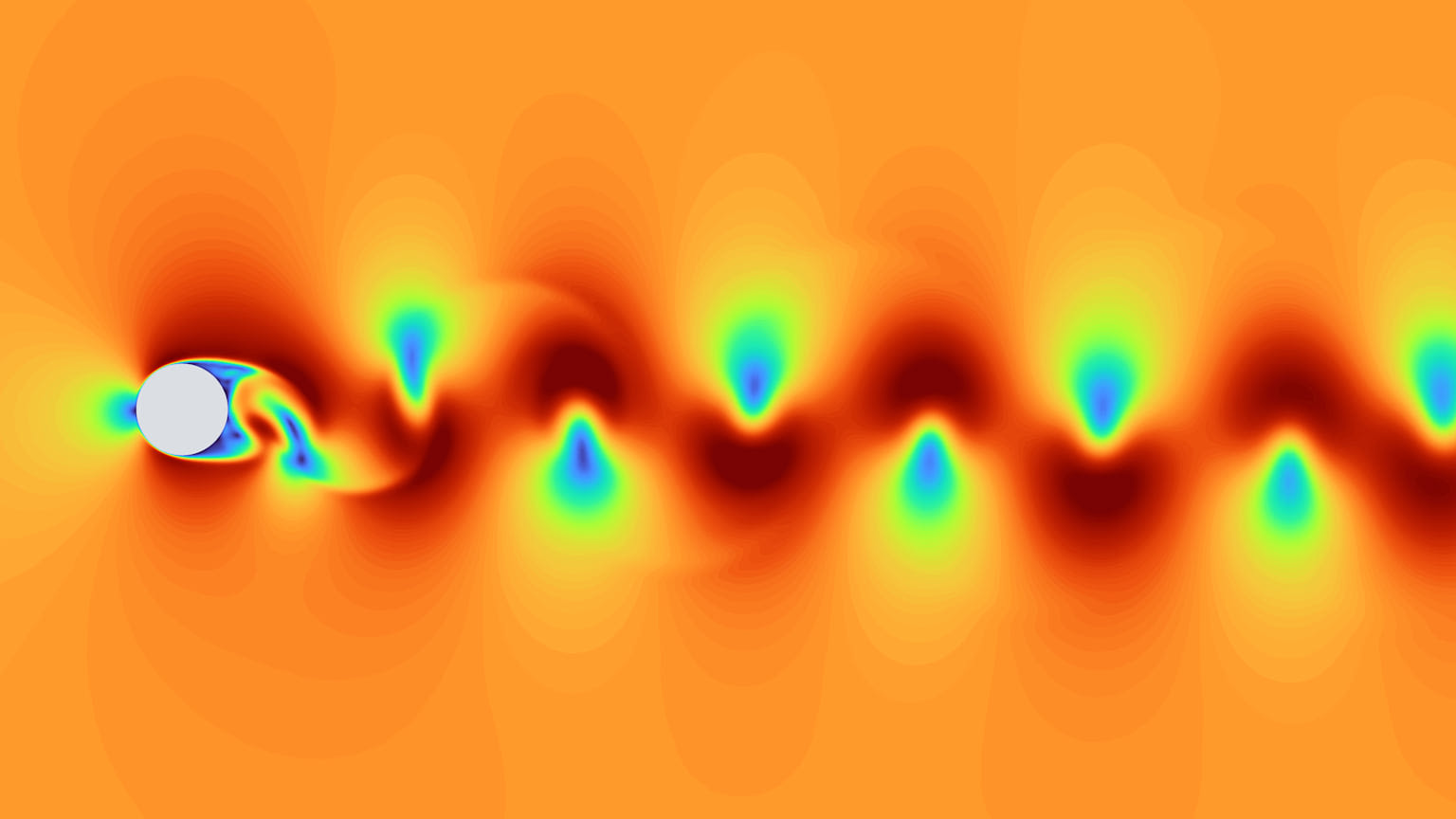
scientificamerican.com.openai.com+1.terrytao.wordpress.com+1.New York University mathematician Tristan Buckmaster and Anthropic's Levent Alpöge say they have proved, with heavy AI assistance, that the three-dimensional Navier-Stokes equations can blow up in finite time with no external force applied. The pair argue this closes the loophole left by OpenAI's September result. Buckmaster posted the dense proof on Mastodon on Friday morning, November 20, and wrote that the writeup was left unpolished to avoid being scooped "after last time," Scientific American reported. The certificate backing the result has not been released yet, and the authors say it will come soon.scientificamerican.com
The paper is 79 pages long, dated November 20, and ships with a Lean 4 formalization, according to Buckmaster's GitHub repository. Fields Medalist Terence Tao wrote on his blog that the paper is "technically human-readable" and that its overall strategy is broadly clear. It follows one of the expected routes to the result: the authors build an approximate, discretely self-similar solution numerically, then use rigorous perturbation theory to turn it into an exact solution. Tao added that "more work needs to be done to create a proper, professionally written proof."terrytao.wordpress.com+1
In September, OpenAI said an internal system had produced a proof, along with a Lean formalization, that a smooth fluid starting at rest can develop a singularity. In OpenAI's construction, a smooth external force is applied to the fluid, as stated in OpenAI's announcement. That result technically met the wording of the Clay Mathematics Institute's prize problem. Many experts still saw the finely tuned "stirring" force as a loophole, Scientific American noted. The new paper instead builds smooth initial data that blows up with no force at all, The Condia reported.openai.com+2
The September announcement also set off a priority dispute. Buckmaster questioned whether OpenAI had improperly accessed his prompts, and the company denied it, according to the Anchorage Daily News. OpenAI has acknowledged the pair's priority on forced Euler blowup, according to the company.adn.com+1
Tao also highlighted a companion result, which he called the most "digested" of the day's announcements. Alpöge, Buckmaster and Matei Coiculescu have written a human-readable, AI-assisted proof of finite-time blowup for the unforced three-dimensional incompressible Euler equations, and it is formalized in Lean, Tao wrote.terrytao.wordpress.com
The Navier-Stokes paper came out alongside an even bolder claim. Alpöge has released an AI-assisted proof of the Riemann hypothesis, New Scientist reported. Tao described it as an "enormous" Lean-only proof of the Generalized Riemann Hypothesis, generated with an internal AI model. He wrote that working out its strategy "will take some time," though "at least we have a human author to communicate with to assist with this task."newscientist.com