Newsletter Subscribe
Enter your email address below and subscribe to our newsletter
[forminator_form id="25163"]

All voices matter
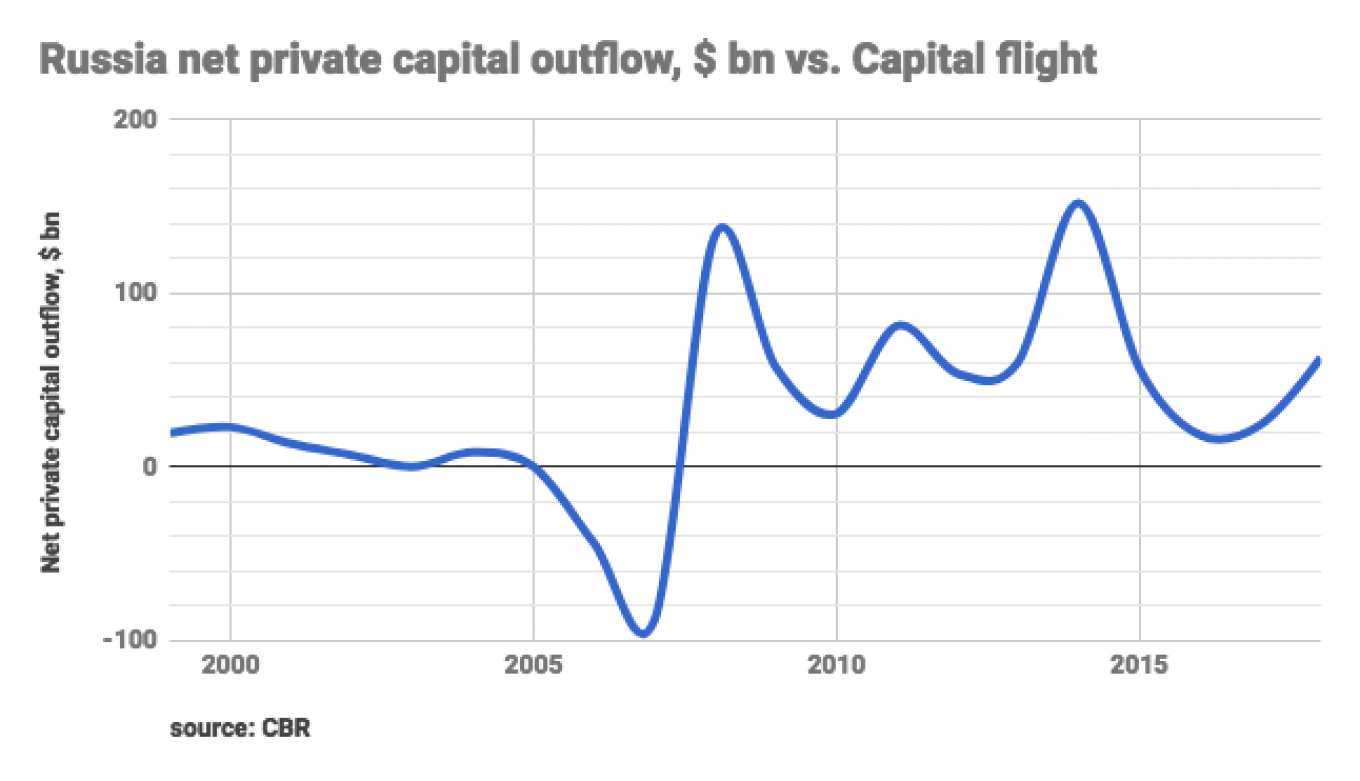
united24media+1ground+1lemondeCapital flight from Russia over the past 25 years has surpassed the country's entire annual gross domestic product, draining more than $1 trillion from an economy now battered by war costs, Ukrainian drone strikes, and a deepening crisis of public confidence in the banking system.
Calculations from Russia's Center for Macroeconomic Analysis and Short-Term Forecasting, a body close to the Kremlin, show that cumulative capital outflows from the real sector exceeded 110% of GDP between 2001 and 2025, with total outflows across the economy reaching 130% of GDP, according to The Moscow Times. Over the past decade, the real sector lost roughly 3% of GDP annually, while overall outflows averaged 4% to 5% of GDP per year.united24media+2
The Central Bank of Russia classified detailed private-sector outflow data after the full-scale invasion of Ukraine began in 2022, but its earlier records show cumulative outflows of $780.8 billion between 2001 and 2021, and $907.4 billion dating back to 1994. The Moscow Times estimates the total has now surpassed $1 trillion. The record year was 2022, when more than 12% of GDP fled the country as Western businesses withdrew and hundreds of thousands of Russian citizens moved savings abroad.unn+2
The trend has accelerated in 2026. The Central Bank reported a record $12.2 billion in unrecorded capital outflows in the second quarter alone — 8.7 times the figure from the first quarter and the highest since records began in 1994. Between February and July, Russian citizens withdrew nearly 2.6 trillion rubles ($32.5 billion) from banks, pushing cash in circulation past 21.5 trillion rubles. By August, 37% of survey respondents identified physical cash as the best way to store savings, surpassing bank deposits for the first time since late 2022.ground+1
The Kremlin-linked CMAFP had warned in late 2025 that Russia could face a systemic banking crisis by October 2026 if depositors began pulling money at scale — a scenario that now appears to be unfolding.themoscowtimes
Ukrainian drone strikes on refineries, ports, and e-commerce warehouses have compounded Russia's economic strain. Vladimir Putin acknowledged on September 1 that the attacks caused damage amounting to roughly 1% of GDP. Le Monde reported that the strikes reduced Russia's oil refining capacity by 20% to 30% and cut federal oil and gas revenues by about 1,500 billion rubles. Annual inflation surpassed 6% in September and is expected to approach 7% by year-end, well above the Kremlin's 4% target for the seventh consecutive year. On September 11, the central bank held its key rate at 14%, maintaining borrowing costs that economists say are strangling civilian-sector growth.lemonde+1
"Even according to official forecasts, GDP is not expected to grow by more than 1% in 2026," Pyotr Mironenko, co-founder of the Russian exile economics outlet The Bell, told Le Monde.lemonde