


Newsletter Subscribe
Enter your email address below and subscribe to our newsletter
[forminator_form id="25163"]

All voices matter
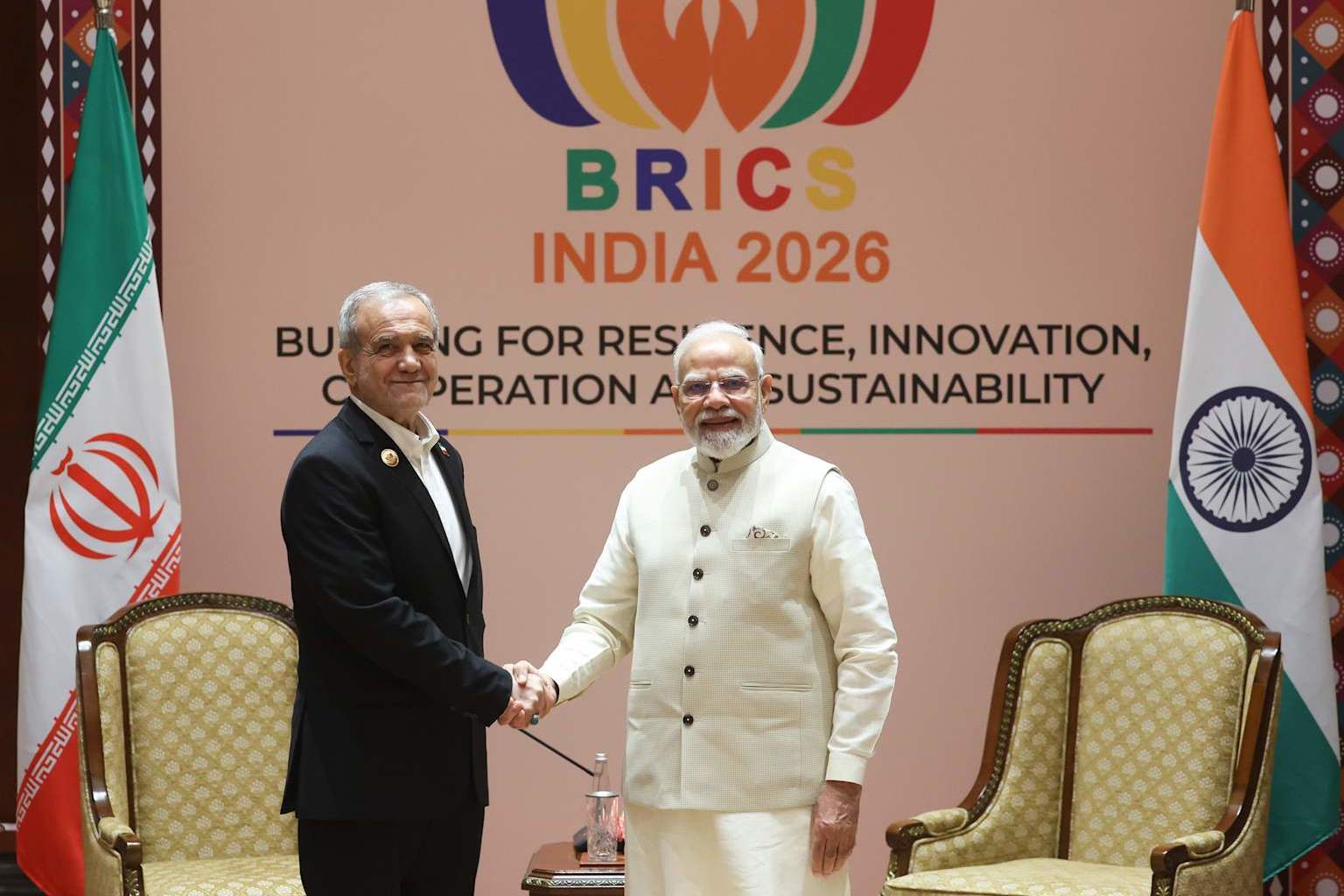
indiatodaycnbcindiatoday+1Iranian President Masoud Pezeshkian declared that Iran will not yield to American economic and military pressure, speaking in New Delhi on the sidelines of the BRICS summit that began on September 12. His defiant remarks came as the months-long US-Israeli military campaign against Iran and an accompanying naval blockade continue to squeeze the country's economy.
"Since we are seeking truth and justice, we will not yield in front of bullying arrogance," Pezeshkian told a gathering of Indian religious leaders on Friday. In an interview with India Today, he went further, claiming Washington had believed it could overthrow Iran's government and install a "puppet government" within a day, drawing comparisons to what he said the US had done in Venezuela and Syria.indiatoday+1
"They thought that within a few days after martyring our leader and military commanders, managers, directors, and ministers, then the society would remain quiet, and they would be able to reach their own objectives," Pezeshkian said. Instead, he claimed, Iranians rallied behind the state: "Not only this did not happen, but only the people came to the street with full power."indiatoday
Pezeshkian said US pressure had now reached "a critical and dangerous stage" following military aggression and heavy sanctions. He accused Washington of blocking food and medicine imports and imposing a naval blockade, calling it "the most savage thing they can do". According to Xinhua, citing Iranian state news agency IRNA, Pezeshkian said the US "seeks to make them capitulate owing to livelihood problems," but insisted Iran would not bow.newscord+2
Pezeshkian's visit marked his first trip to India, where he held a bilateral meeting with Prime Minister Narendra Modi on Friday. Modi raised concerns about the safety of seafarers and called for resolving the Middle East conflict through "dialogue and diplomacy," according to CNBC. India imports nearly 85% of its fuel and relies heavily on shipments through the Strait of Hormuz, where traffic has slowed sharply since the conflict began on February 28. Ten Indian seafarers have died due to the conflict, per the Indian government.cnbc
Oil prices surged to a four-month high on September 11 as threats to the Strait of Hormuz and the Bab al-Mandeb Strait raised fears of prolonged supply disruptions. Gulf littoral states are scheduled to meet in Oman on Monday, September 14, to discuss designating safe maritime routes.chinadailyasia+1
At a BRICS leaders' meeting, Pezeshkian called on member states to oppose the "normalization of attacks on non-military and critical infrastructure," including peaceful nuclear facilities, warning that putting them at risk "poses a threat to international peace and security". In a separate meeting with Malaysian Prime Minister Anwar Ibrahim, he stressed that the region did not need a "gendarme" and that security should be ensured by regional countries, not outside powers.azernews+1
Ibrahim praised Iran's resistance, saying "another country might have been defeated in less than three days". Pezeshkian's remarks stood in contrast to those of US President Donald Trump, who said Thursday that Iran would have "wiped out Israel and the Middle East" had Washington not acted. "If I had it to do again, I would do exactly what I did," Trump said.wanaen+1


