Newsletter Subscribe
Enter your email address below and subscribe to our newsletter
[forminator_form id="25163"]

All voices matter
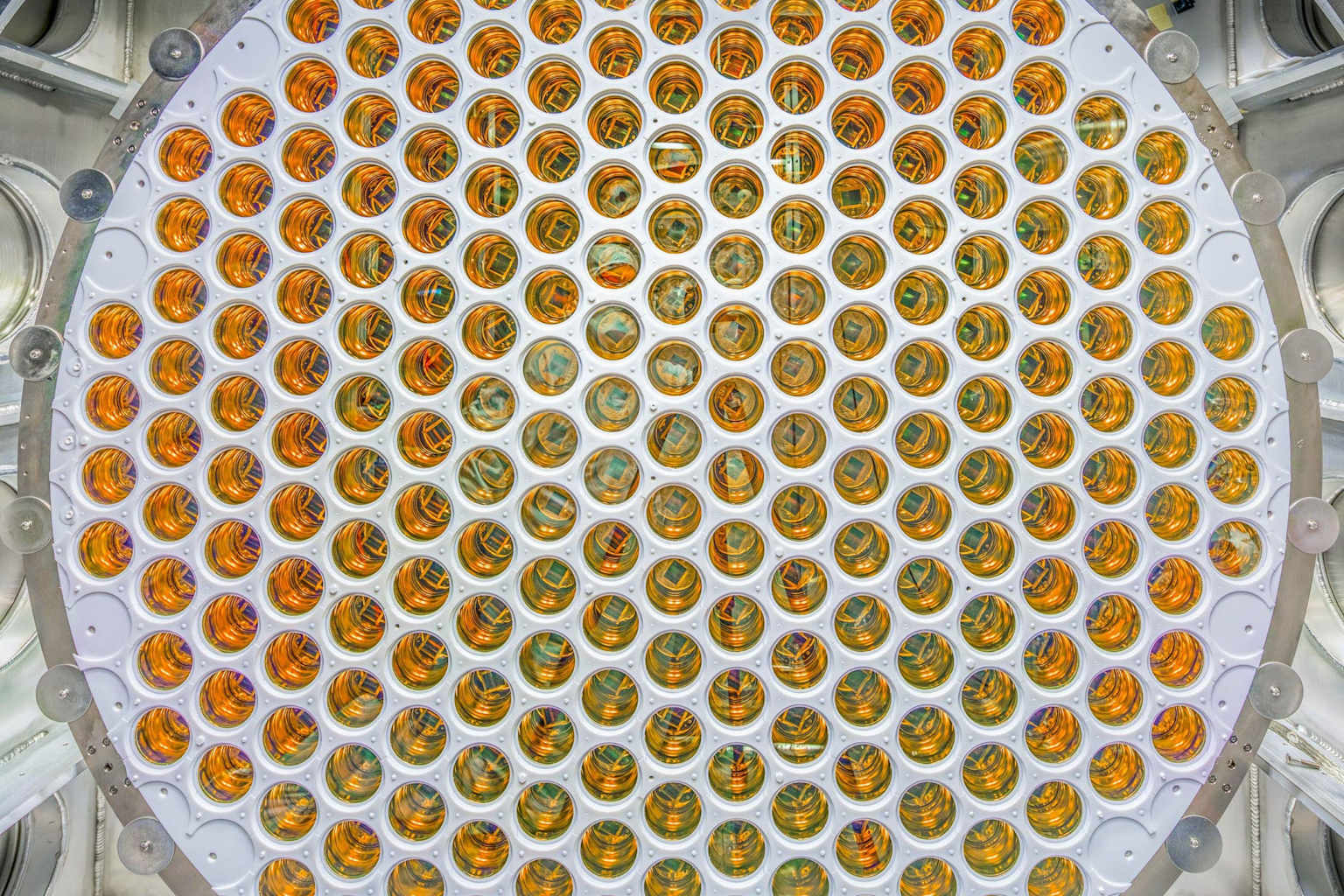
imperialimperialimperialThe world's most sensitive dark matter detector has recorded a single, unexplained particle interaction that researchers say is the most compelling potential dark matter signal the experiment has ever seen. The finding, presented at the TeV Particle Astrophysics conference in Tendo, Japan, falls well short of what physicists require to claim a discovery but has prompted cautious excitement among the 250-scientist collaboration behind the LUX-ZEPLIN experiment.
The LZ experiment, located nearly a mile underground at the Sanford Underground Research Facility in South Dakota, uses seven metric tons of liquid xenon to hunt for weakly interacting massive particles, or WIMPs — a leading dark matter candidate. The collaboration identified the anomalous event in data collected over 220 live days between March 2023 and April 2024, during a search targeting higher-energy signals than those explored in earlier analyses.imperial
The result carries a statistical significance of 2.6 sigma — notable, but below the 5-sigma threshold conventionally required for a discovery in particle physics. If the event were caused by dark matter, it would point to a heavier type of WIMP than many researchers had originally expected.imperial
"We're very intrigued to see this event in the data, in the region where we expect dark matter to show up and the competing backgrounds are very low," said Rick Gaitskell, a professor at Brown University and LZ spokesperson. "With only one event, we don't want to get ahead of ourselves. We are not claiming to have seen dark matter."imperial
The collaboration has already collected substantially more data than was used in this analysis. Researchers will now examine those additional observations to determine whether the signal strengthens, fades, or can be attributed to a previously unidentified background process.imperial
Professor Henrique Araújo of Imperial College London noted that "rare event searches are also sensitive to rare backgrounds, so we need to analyse more data to be sure." Looking further ahead, the proposed XLZD Rare Event Observatory, containing roughly ten times more liquid xenon than LZ, could begin operating by the mid-2030s and would be capable of detecting hundreds of similar interactions.imperial
In a separate development announced on August 31 at Italy's Gran Sasso National Laboratory, the XENON Collaboration reported the first observation of low-energy solar neutrinos scattering off electrons in its XENONnT detector — achieving a neutrino energy threshold of about 17 keV, the lowest ever recorded. The detected signal is dominated by proton-proton neutrinos, produced in the fusion reactions that power the Sun. The 5-sigma result demonstrates that technology built to hunt dark matter is now opening new windows on neutrino physics. Both experiments are laying the groundwork for XLZD, which aims to push the search for dark matter and the study of rare particle interactions to unprecedented sensitivity.azoquantum+2