Newsletter Subscribe
Enter your email address below and subscribe to our newsletter
[forminator_form id="25163"]

All voices matter
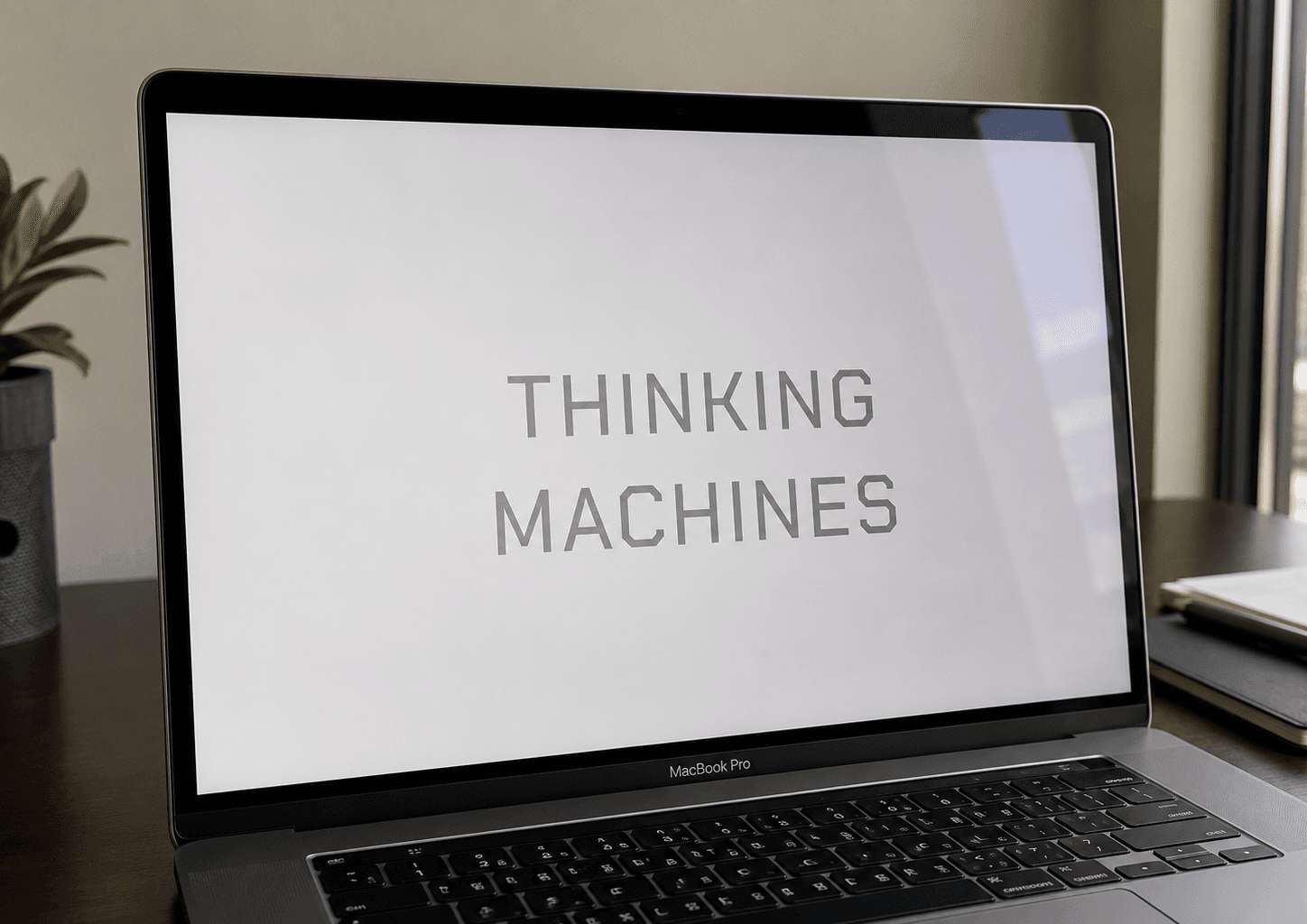
thinkingmachines.ai+1.x.com+1.artificialanalysis.ai+1.Thinking Machines Lab on Friday, November 20, released Inkling 2 Mini. It is an open-weights model that the company says is "small enough to run on your laptop," and it gets its reasoning ability from running part of its network several times for every token. The release follows Inkling 2 Small. The lab joked on X that "some of you thought" that model "was too big at 594B parameters".thinkingmachines.ai+1
The model is a mixture-of-experts system with 26.4 billion total parameters and 3.4 billion active. Counting the loops, it uses 5.4 billion weight activations per token. Most of its weights were trained and are deployed natively in NVFP4, which keeps its total footprint at about 20GB. It is licensed under Apache 2.0, accepts text and image inputs, and supports a context window of up to 1 million tokens.thinkingmachines.ai+2
The model has 24 layers. The middle 12 run three times per token, while the first and last six run once. That gives it 48 logical layers built from 24 physical ones. The company says looping lets the model "reach the right answer with fewer tokens," especially in agentic coding.huggingface.co+2
According to the lab, Inkling 2 Mini leads every open-weights model under 100 billion parameters on DeepSWE v1.1, at 48.2%, and on Vals Index v2.2, at 46.5%. Artificial Analysis gave it a score of 20 on its Intelligence Index, matching Qwen3.8 27B with about one-fifth as many active parameters. The firm also said it was about six times cheaper and four times faster per task than that model.thinkingmachines.ai+1
Looping raises a question for AI oversight, since a model can reason internally without writing its steps down. The lab said that at this scale, chain-of-thought reasoning "gets shorter but stays legible." It is also releasing a variable-loop research model so outside researchers can test this. Unite.AI noted that the company describes these monitorability findings as preliminary.x.com+1
The weights are on Hugging Face, and the model is available on Tinker for inference and fine-tuning. Day-one inference support covers SGLang, vLLM, Ollama and NVIDIA Dynamo, among other tools. Through Ollama, it runs on Macs with at least 32GB of RAM. vLLM said it supports both the main model and its variable-loop checkpoint on NVIDIA Blackwell, Hopper and DGX Spark hardware.vllm.ai+1
The company is open about the model's weaknesses. It scores 50.0% on MultiChallenge and 33.4% on ComplexConstraints v1.1, behind Qwen3.8-27B on both multi-turn chat and instructions with many constraints. The model card also warns that the model "may take destructive actions, such as deleting or overwriting files, without confirmation." It advises users to "run agentic workloads in a sandbox".thinkingmachines.ai+1