


Newsletter Subscribe
Enter your email address below and subscribe to our newsletter
[forminator_form id="25163"]

All voices matter

Archaeologists in Italy have used artificial intelligence for the first time to reconstruct the appearance of a man killed during the eruption of Mount Vesuvius in 79 AD, offering a vivid glimpse into the catastrophe that buried the ancient Roman…

Archaeologists have unveiled vivid new frescoes and four previously unknown rooms at Villa di Poppea near Pompeii, offering fresh insights into the lavish residence traditionally associated with Poppaea Sabina, the second wife of Emperor Nero.
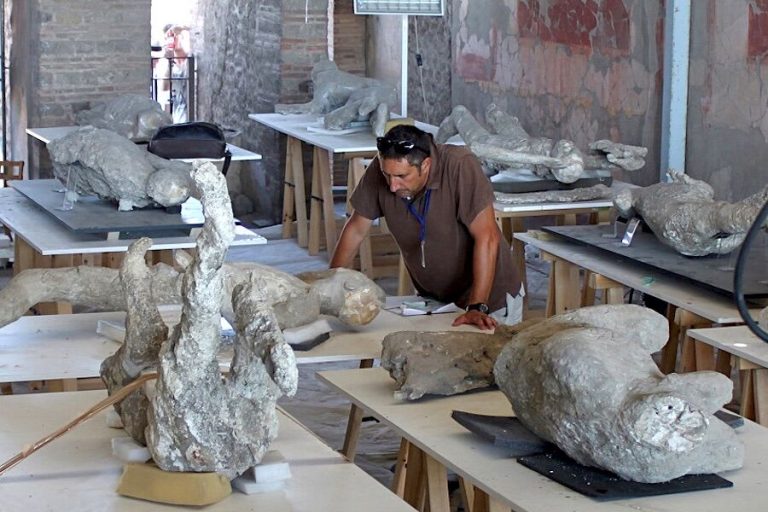
Victims of Mount Vesuvius' catastrophic eruption in 79 CE wore thick woolen tunics and cloaks when they perished, according to new research that has reignited debate over whether the disaster occurred during a scorching August day or during cooler autumn…

Researchers at Pompeii have uncovered a construction site frozen in time by Mount Vesuvius's eruption in 79 CE, confirming how ancient Romans created concrete that has endured for nearly two millennia. The discovery, published Tuesday in Nature Communications, settles a…

Archaeologists have unveiled a previously unknown tower atop an ancient Roman villa in Pompeii, using advanced digital reconstruction techniques that are revealing architectural features lost for nearly 2,000 years. The discovery, published this week in the eJournal of Pompeii Excavations,…
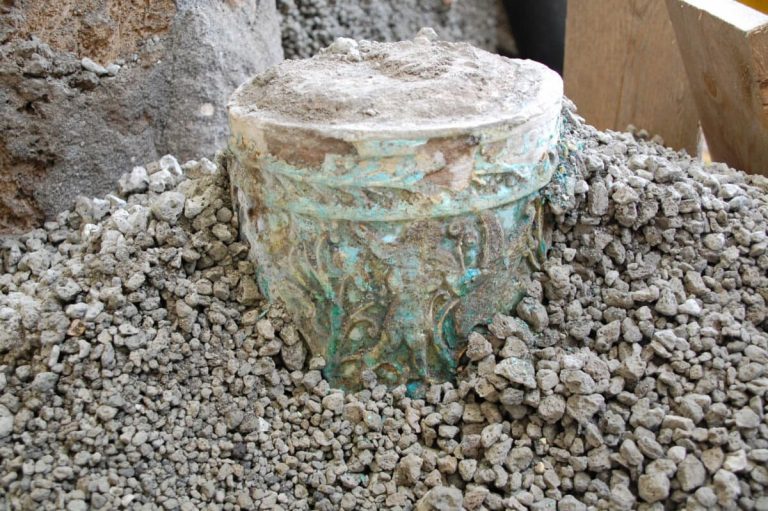
Archaeologists have uncovered a rare Egyptian faience vessel in an unlikely location: the kitchen of an ancient fast-food establishment in Pompeii, revealing the extent of cultural exchange between Egypt and Rome's working classes in the final days before Mount Vesuvius…

A groundbreaking digital reconstruction project has revealed that wealthy Pompeii families likely built impressive towers as symbols of their status and influence, challenging long-held assumptions about how the ancient Roman city's upper floors were used.

Archaeologists have uncovered new evidence confirming that survivors returned to live among the ruins of Pompeii after Mount Vesuvius buried the ancient Roman city in 79 AD, transforming it into a makeshift camp that persisted for centuries.

A Roman-era mosaic panel featuring erotic imagery was officially returned to Pompeii's archaeological park on Tuesday, more than eight decades after a Nazi officer stole the artwork during World War II.