



Newsletter Subscribe
Enter your email address below and subscribe to our newsletter
[forminator_form id="25163"]

All voices matter

Physicists at the University of Southampton and the Indian Institute of Technology Kanpur say a heavy neutrino that most theorists have ignored may help explain why the universe is made of matter and not empty of everything. In a study…

University of Wisconsin–Madison physicist Francis Halzen won the Nobel Prize in physics on Tuesday, Oct. 6, for the discovery of high-energy neutrinos of astrophysical origin. The Royal Swedish Academy of Sciences announced the award in Stockholm, the Associated Press reported.
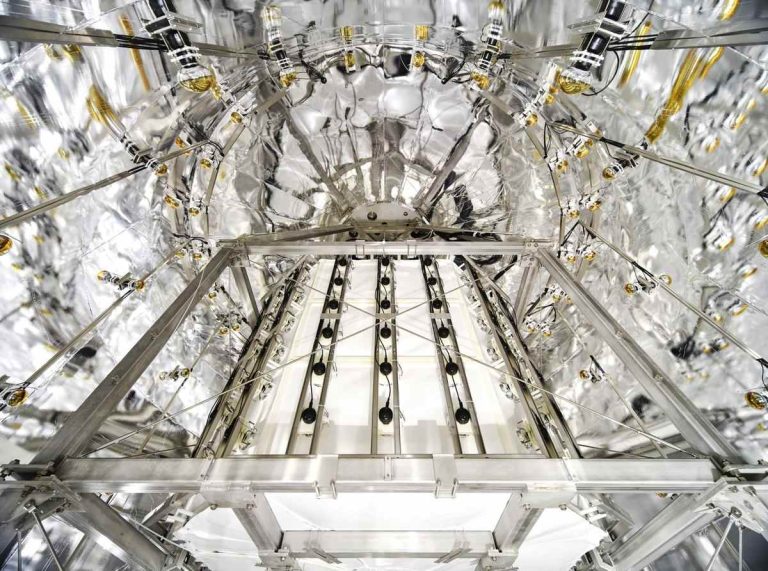
A detector built to find dark matter has instead caught the quietest neutrinos ever recorded. On Monday, the XENON collaboration announced that its XENONnT experiment, buried 1,400 meters beneath Italy's Gran Sasso mountain, achieved the first observation of low-energy solar…

Astronomers have linked a high-energy neutrino detected by the IceCube Observatory in Antarctica to a distant, dust-choked galaxy 11 billion light-years away — a finding that challenges long-held assumptions about where the universe's most elusive particles originate.

A massive underground particle detector in southern China has delivered its first major scientific results, achieving the most precise measurements ever recorded of how neutrinos transform as they travel through space.