Newsletter Subscribe
Enter your email address below and subscribe to our newsletter
[forminator_form id="25163"]

All voices matter
reuterscnbc+1tipranksNvidia has seen its market capitalization fall by approximately $1 trillion from its June peak, as a confluence of factors — a liquidity crisis in South Korea, reports of a delay to a key product, and broader semiconductor sector pressure — has dragged shares below $200 and pushed its forward valuation to levels not seen since before the AI boom began.
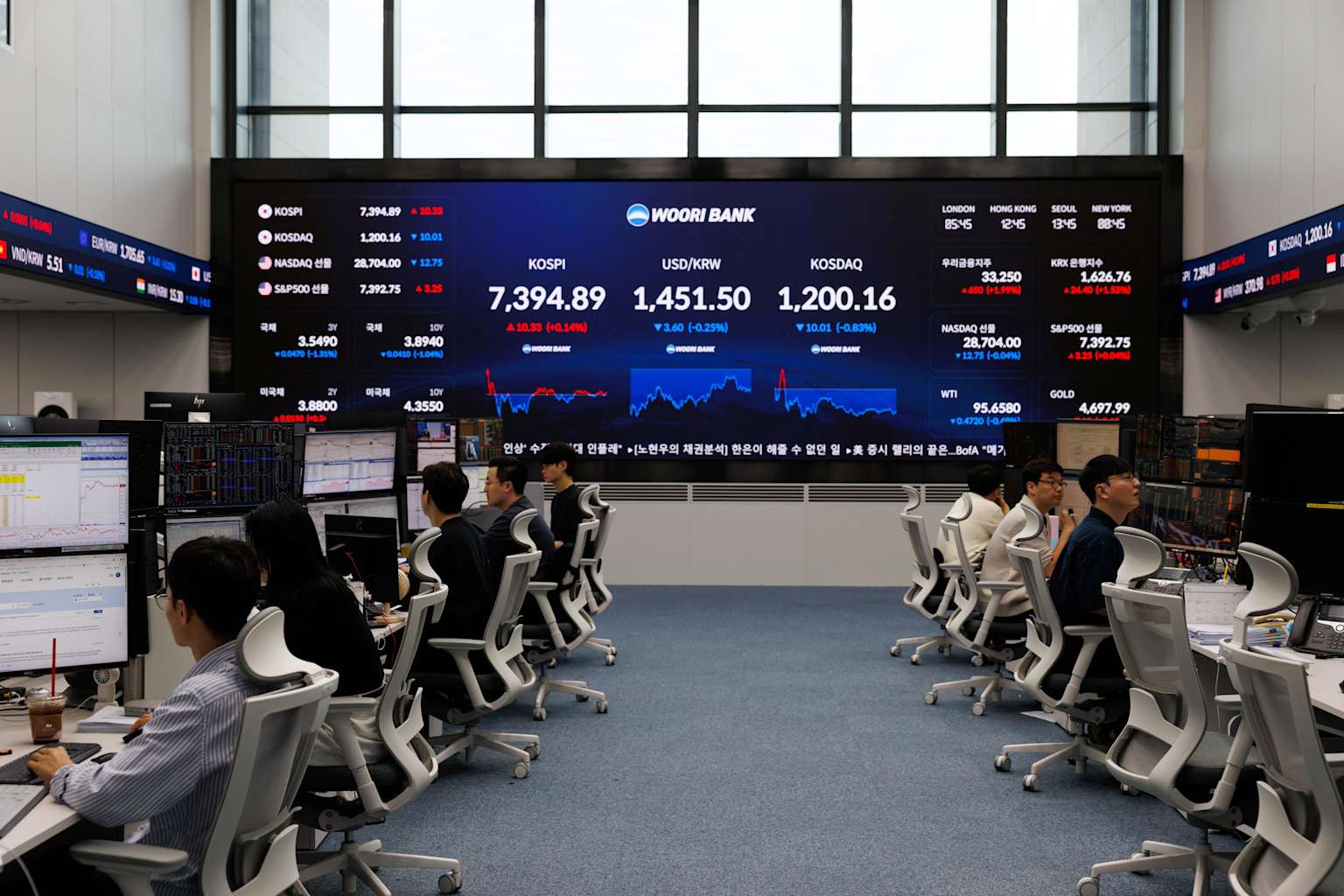
The selloff accelerated in early July after South Korea's Kospi, the world's best-performing major index in 2026 with gains of 74% year-to-date, entered bear market territory. The index plunged more than 20% from its June 22 record close of 9,114.55, falling to 7,246.79 on Wednesday, according to Reuters. The crash — driven by concentrated positions in Samsung Electronics and SK Hynix, which account for 60% of the index — triggered forced margin calls that rippled through global chip stocks.reuters+2
The Wall Street Journal reported that margin calls were forcing selling by investors, amplifying volatility "both on the uptrend and in drawdowns". The Philadelphia Semiconductor Index PHLX Semiconductor Index lost nearly 5% as Intel , Micron , and AMD Advanced Micro Devices, Inc. fell as much as 10%.wsj+1
Compounding the pressure, research firm SemiAnalysis reported that Nvidia's Kyber NVL144 rack-scale architecture — showcased by CEO Jensen Huang at GTC just months ago — faces a delay of more than 12 months, pushing its release to 2028 due to manufacturing bottlenecks in a specialized 78-layer circuit board, according to CNBC. Nvidia denied the report, stating "Our roadmap is intact".cnbc+1
Nvidia shares closed at $196.93 on Tuesday, down roughly 18% from their June highs near $240 and trading well below the $200 level lost on June 23. The company's market cap stood near $4.73 trillion as of July 7, down from approximately $5.7 trillion at its peak.companiesmarketcap+3
Goldman Sachs The Goldman Sachs Group, Inc. reaffirmed its Buy rating on July 6, with analyst James Schneider maintaining a $285 price target and calling the valuation "quite compelling" as Nvidia's forward price-to-earnings ratio has retreated to a level well below its multi-year average. The analyst consensus remains a Strong Buy, with 36 of 37 analysts rating it a Buy and an average 12-month price target of $309.33.tipranks+1
The question facing investors is whether the selloff reflects a fundamental reassessment of AI spending or merely forced liquidation from an overleveraged corner of the market. As one Yahoo Finance analysis put it, the setup is "binary" — strong AI spending guidance from cloud companies in late July could push Nvidia back above $200, while fading confidence could crack $190.beincrypto