Newsletter Subscribe
Enter your email address below and subscribe to our newsletter
[forminator_form id="25163"]

All voices matter
bioengineer+1bioengineer+1link.aps+1The Double Chooz collaboration has reported the first direct measurement of antineutrinos emitted by spent nuclear fuel, demonstrating that a nuclear reactor remains detectable by particle physics instruments long after its chain reaction has stopped. The results, published in Physical Review Letters on August 4, open the door to new methods of monitoring nuclear facilities for nonproliferation purposes.arxiv+1
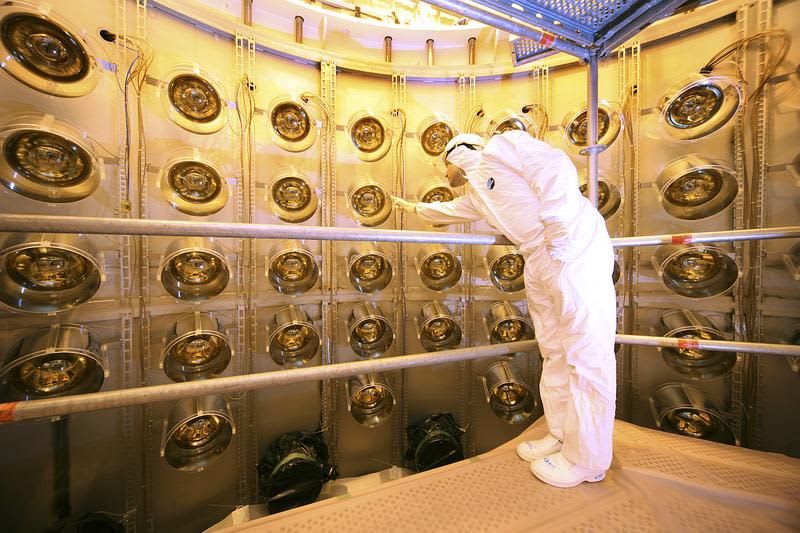
The experiment was carried out at the Chooz nuclear power plant in northern France, where the Double Chooz detector sits roughly 400 meters from two reactor cores. The detector contains more than 30 cubic meters of liquid scintillator installed underground to reduce cosmic ray interference.interestingengineering+1
The team, led by Anthony Onillon and Thierry Lasserre of the Max Planck Institute for Nuclear Physics in Heidelberg, Germany, analyzed 17.2 days of data collected while both reactor units were completely shut down. During that period, they identified approximately 100 antineutrino candidate events originating from radioactive decay inside the reactor cores and nearby spent-fuel cooling pools.interestingengineering
"Antineutrinos interact only extremely rarely with matter," Onillon said. "However, when one interacts within the Double-Chooz detector, a characteristic double-light signal is produced that can be distinguished from background events."interestingengineering
The detected signal closely matched detailed simulations based on the remaining nuclear fuel inventory and the predicted decay of long-lived fission products. This agreement represents the first direct experimental validation of models describing antineutrino emission from shutdown reactors and spent fuel — models that had until now remained unconfirmed by observation.bioengineer+1
The antineutrinos are produced mainly by the beta decay of long-lived fission products created during normal reactor operation. Their energy distribution depends on the composition, age, and cooling history of the fuel.bioengineer
According to APS Physics, spent nuclear fuel and shutdown reactors emit antineutrinos that nuclear watchdogs could use for real-time monitoring of plants and detecting illicit removal of nuclear fuel. Because antineutrinos pass through shielding and cannot be blocked or redirected, detectors positioned near a facility could provide passive verification of reactor status without relying on information from plant operators.link.aps+1
Interest in this approach is already growing. Results from the JUNO-TAO experiment, presented at the Neutrino 2026 conference, have also explored detection of antineutrinos from spent fuel during reactor shutdowns. The Double Chooz measurement now provides the first published benchmark against which those efforts can be compared.bioengineer+1