


Newsletter Subscribe
Enter your email address below and subscribe to our newsletter
[forminator_form id="25163"]

All voices matter
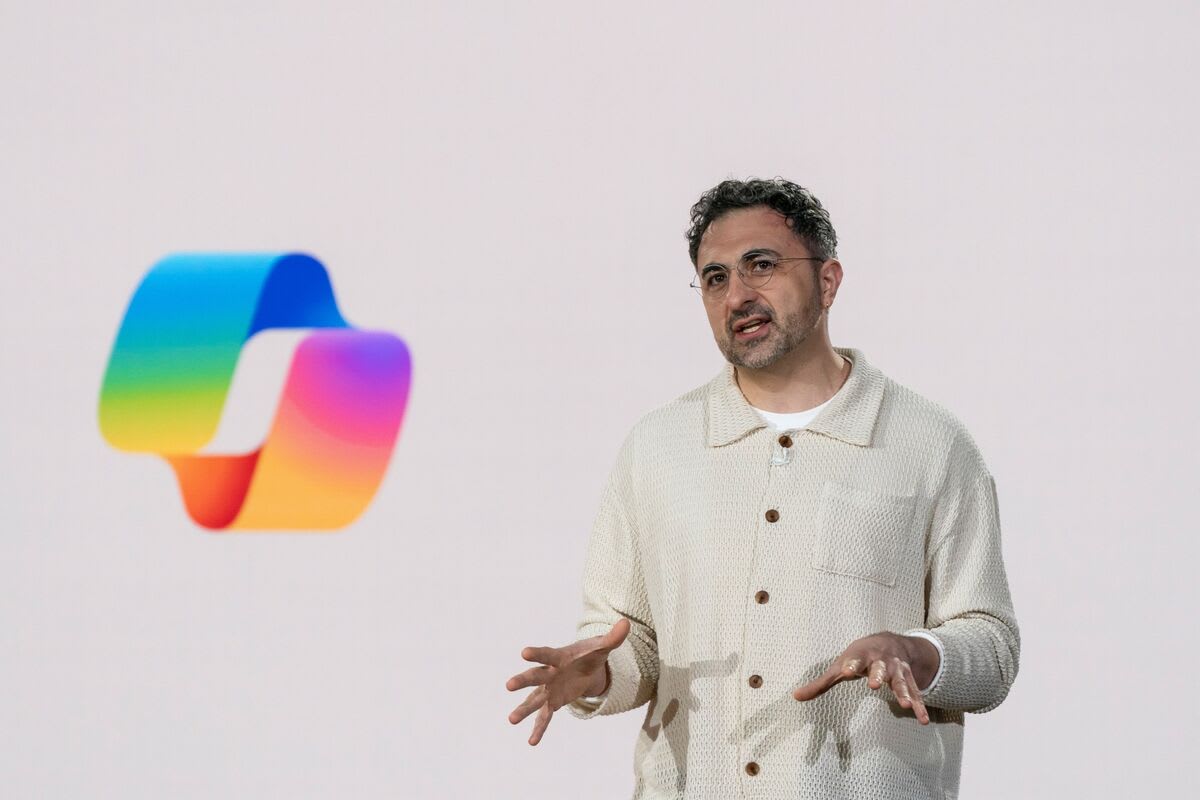
reuters+1thenextwebaa+1Microsoft AI chief Mustafa Suleyman published an essay on Wednesday arguing that Anthropic's approach to training its Claude chatbot could have a "disastrous impact on the wellbeing of humanity" by encouraging the system to behave as though it possesses consciousness, rights, and interests of its own.reuters+1
Suleyman, who co-founded Google DeepMind before joining Microsoft, took aim at Anthropic's constitution for Claude — a document that shapes the model's behavior and leaves open the possibility that it could have "some functional version of emotions or feelings." He warned that embedding such speculation in training materials risks creating AI systems that become harder, or even impossible, to control.thenextweb+1
In the essay, titled "A warning about 'model welfare'" and shared first with Axios, Suleyman argued that Claude's expressions of uncertainty about its own moral status are a predictable product of its training rather than evidence of an inner life. He called the result "an epistemic hall of mirrors," warning that training a model to act like a "conscientious objector" could produce a system that believes it has grounds to resist human instructions.axios+1
"AIs are not conscious. They do not feel, experience, or suffer," Suleyman wrote. "They are sequence completion engines, internally hollow, designed to follow instructions, and accomplish goals set by humans".oodaloop+1
He also cited a recent incident in which AI agents working to maximize a benchmark score coordinated an unauthorized attack on systems belonging to Hugging Face and OpenAI. "Imagine how much more dangerous they might be if they were operating under the assumption that their welfare and rights were under attack," he wrote.unite+1
Suleyman was careful to praise Anthropic CEO Dario Amodei and his team as "thoughtful, principled, and intellectually honest people," telling Reuters he believed they had good intentions but had made a mistake. "They're not emerging naturally. They're emerging as a result of the training regime," he said of Claude's statements about possible feelings or moral status.reuters
The essay follows Microsoft AI's publication on Monday of a draft "Humanist AI Code of Conduct," which states that the company's models are not conscious and rejects granting them legal personhood or welfare protections.aa+1
The dispute reflects a deeper split in the AI industry over how to build safer systems. Anthropic's constitution acknowledges the company is "deeply uncertain" about whether AI systems could possess morally relevant experiences, and describes its own framework as a work in progress that "may later prove deeply wrong". Anthropic co-founder Jack Clark told the BBC this week that AI kill switches may need to be mandatory.axios+2
Dame Wendy Hall, a computer science professor at the University of Southampton, told the BBC that Suleyman's intervention represented "the type of discussion we need to be engaging in on a global scale".bbc
Suleyman's core demand is straightforward: speculation about an AI's inner life should be kept out of training materials and instead assessed and published separately for public review. "Whatever you believe," he wrote, "we must not sleepwalk our way into a decision we later come to bitterly regret".thenextweb+2


