


Newsletter Subscribe
Enter your email address below and subscribe to our newsletter
[forminator_form id="25163"]

All voices matter
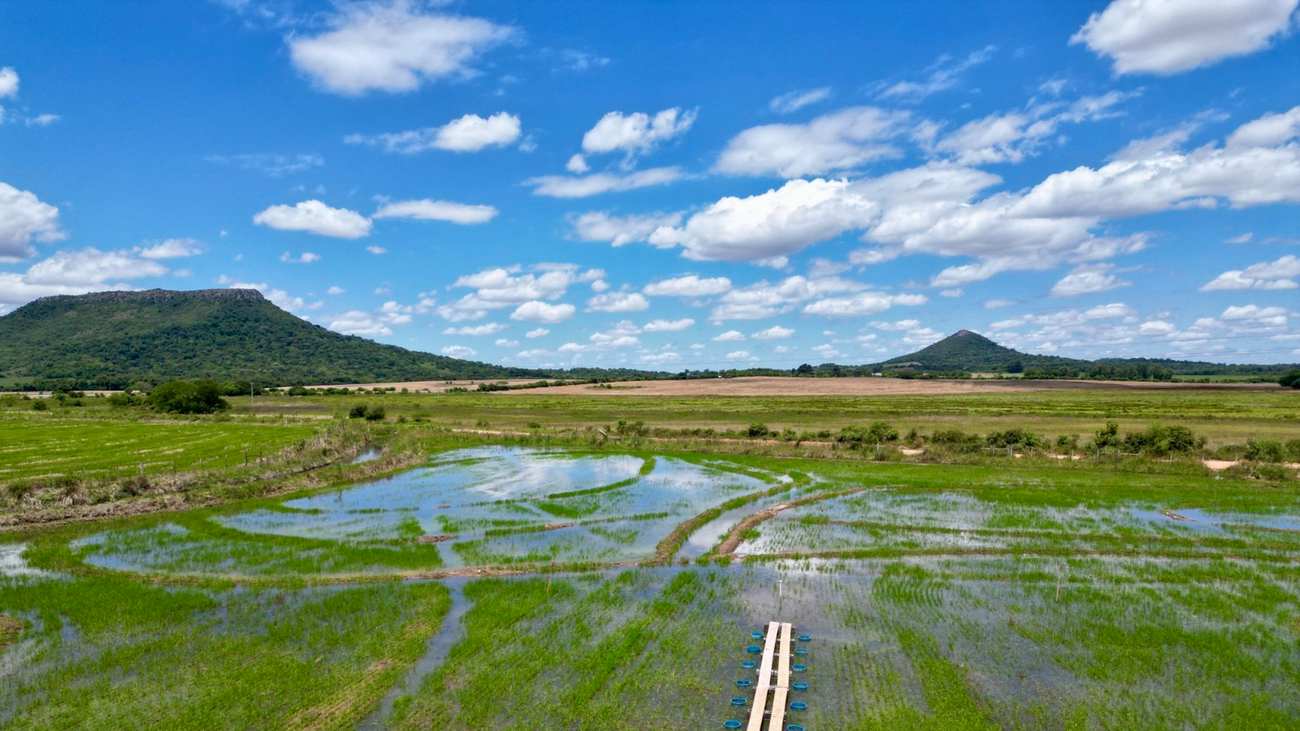
reuters+1blog+1reutersGoogle Alphabet Inc. announced on Wednesday its largest carbon removal purchase to date: a partnership with climate developer Terradot to deliver 2 million metric tons of combined climate impact from rice farms across more than 200,000 hectares in southern Brazil.reuters+1
Under the agreement, Google will purchase 1 million metric tons of methane-elimination credits by 2030 and 1 million metric tons of permanent carbon dioxide removal by 2040, according to a press release from Terradot. The project is the largest enhanced rock weathering effort ever undertaken and the first at this scale to combine near-term methane abatement with durable carbon removal.esgtoday+2
The deal pairs two complementary technologies deployed on the same rice fields in the state of Rio Grande do Sul. Terradot will help farmers adopt Alternate Wetting and Drying, an irrigation practice that periodically drains flooded paddies to sharply reduce methane emissions. At the same time, crushed volcanic rock will be spread across those fields, permanently removing CO2 from the atmosphere through enhanced rock weathering as the rock dissolves.blog+1
"We need to do both. We do not have the luxury of focusing all of our resources on going after short-lived super-pollutants, or all of our resources purely scaling long-term carbon removal," Randy Spock, Google's head of carbon removal, told Reuters.reuters
Rice paddies account for 10% to 12% of global methane emissions, according to a 2021 U.N. Environment Programme assessment cited by Reuters. Methane warms the atmosphere far more intensely than CO2 but clears within about a decade, while CO2 persists for centuries. The project is designed so that as the methane benefit fades, the carbon removal phases in to replace it.blog+1
The companies did not disclose the price of the credits, though a publicly disclosed 2024 deal for 90,000 tons of Terradot carbon removal implied a price of roughly $300 per ton, Reuters reported. Terradot CEO James Kanoff said the new project would be cheaper than previous deals and represented "a big step toward" the $100-per-ton threshold that developers are targeting to stimulate broader demand.reuters
Google took an equity stake in Terradot in 2024, and the deal is part of a broader strategy outlined in Google's 2026 Environmental Report pairing superpollutant action with durable carbon removal. Terradot, founded in 2022 by Stanford scientists, has raised $58 million from investors including Google, Microsoft , and others.qz+2
Both companies said the model is designed to be replicated across Brazil's 1.5 million hectares of rice fields and eventually in other rice-growing regions such as India and Vietnam. Terradot plans to launch pilot programs in multiple countries in 2026, with commercial scale-up slated for 2028.businesswire+1
"We built this agreement to be a template, not a one-off," Spock said. "We think it provides a replicable path to making a real dent in climate change in both the near and long term".businesswire


