Newsletter Subscribe
Enter your email address below and subscribe to our newsletter
[forminator_form id="25163"]

All voices matter
reutersibtimesreutersForeign investors sold a net $25.48 billion worth of stocks across seven Asian markets in July, marking a ninth consecutive month of outflows as concerns over AI spending and semiconductor valuations drove heavy selling in Taiwan and South Korea, according to Reuters citing LSEG data.reuters
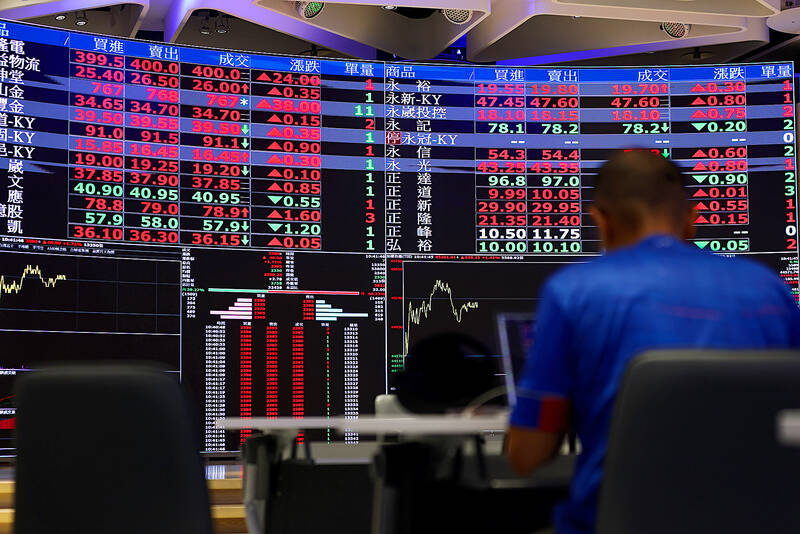
Taiwan accounted for $22.95 billion of the outflows — nearly 90% of the total — following roughly $8 billion in net selling in June. South Korea recorded $6.26 billion in foreign outflows, its third straight month of net selling. Together, the two markets saw $29.21 billion exit, more than the regional total due to offsetting inflows elsewhere.ts2+1
The selling was concentrated in technology-heavy markets exposed to the AI and semiconductor supply chain. BNP Paribas analysts said in a July note that "AI heavyweights in South Korea and Taiwan faced massive selloffs as investors started to question their chip-demand forecasts and debt-repayment ability." The analysts added that China's Moonshot announcement about low-cost AI models "aggravated negative market sentiment."reuters
Taiwan's TAIEX suffered its largest-ever single-day point decline on July 17, falling 2,953.71 points or 6.47%, as Taiwan Semiconductor Manufacturing Co. dropped more than 7% during the session. South Korea's Kospi had crossed 9,000 points for the first time on June 18 before the reversal took hold, with Samsung Electronics and SK hynix accounting for more than half of the index's value during the rally.ibtimes
South Korean regulators responded by tightening rules on single-stock leveraged ETFs and ETNs in mid-July, citing annualized volatility of 113% for SK hynix and 96% for Samsung Electronics.ibtimes
While Taiwan and South Korea hemorrhaged capital, India attracted $2.12 billion in inflows and Thailand drew $1.46 billion. Indonesia and the Philippines logged smaller inflows of $88 million and $69 million, respectively.reuters
Herald van der Linde, head of Asia-Pacific equity strategy at HSBC , said in a note last week that "the unusually high swings in AI-related sectors are making global investors diversify, and on that measure we think India looks better placed." HSBC recently upgraded India to neutral within Asia.reuters
The divergence suggests a rotation within Asia rather than a wholesale retreat. TSMC's July revenue of NT$467.58 billion represented a 44.7% year-on-year increase, indicating that the correction reflected a reassessment of valuations rather than a collapse in underlying semiconductor demand.ibtimes