Newsletter Subscribe
Enter your email address below and subscribe to our newsletter

All voices matter
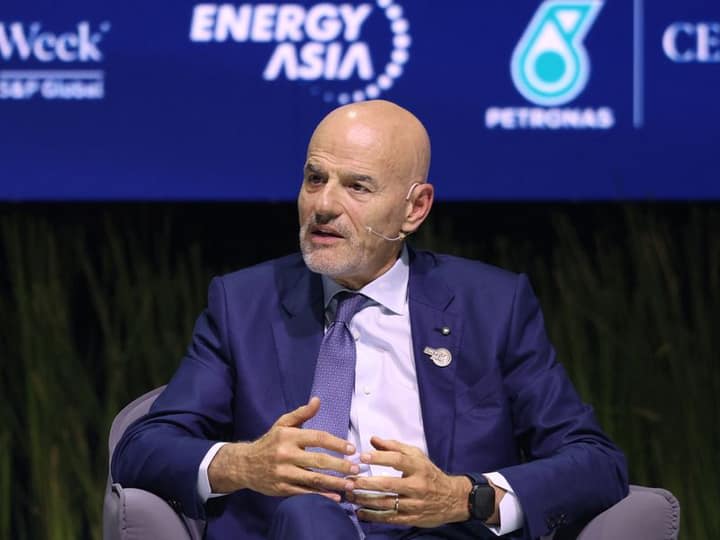
reutersaljazeera+1rigzone+1Claudio Descalzi, CEO of Eni , warned that the global oil market risks breaking out of its current $80-to-$100-per-barrel range by the first quarter of 2027 at the latest, a move that would boost inflation and strain energy-importing economies, according to Reuters.reuters+1
The forecast, published Saturday, comes as renewed hostilities between the United States and Iran have disrupted shipping through the Strait of Hormuz and injected fresh uncertainty into global energy markets.
Descalzi's warning lands during a turbulent week for oil. On Tuesday, Iran attacked three commercial vessels in the Strait of Hormuz, prompting the U.S. to launch retaliatory strikes and revoke a temporary waiver of sanctions on Iranian oil. President Trump declared the ceasefire with Iran over and threatened to reimpose a naval blockade.aljazeera+2
Brent crude surged more than 4% on Wednesday — its largest daily gain since June — before settling back around the mid-$70s as mediators sought to prevent a return to full-scale war. Tanker traffic through the strait slowed during the week as security conditions deteriorated.cnbc+1
Descalzi's bullish outlook contrasts with some other forecasters. The U.S. Energy Information Administration's July Short-Term Energy Outlook projects Brent averaging roughly $82 per barrel in 2026 and falling to about $65 in 2027, citing persistent stock builds. Barclays in late June cut its 2027 Brent forecast to $85 per barrel from $88, citing improving Hormuz flows at the time.rigzone+1
However, Enverus Intelligence Research in March projected Brent could average $100 per barrel in 2027 if the strait remains largely closed, aligning more closely with Descalzi's scenario.enverus
Bloomberg reported Saturday that Descalzi said it was "possible" the energy crisis worsens in the short term. The International Energy Agency had flagged a potential oil surplus in 2027 if Hormuz flows recovered fully, but this week's escalation has cast doubt on that assumption.facebook+1
The divergence among forecasters underscores a central tension: if diplomacy can restore stable shipping through Hormuz, prices may ease toward the EIA's lower projections. If conflict persists, as Descalzi warns, markets face a breakout above the range that has defined oil trading for much of 2026.