Newsletter Subscribe
Enter your email address below and subscribe to our newsletter
[forminator_form id="25163"]

All voices matter
project-syndicatecnbcproject-syndicate+1China and the United States held the third Track 1.5 Dialogue in Beijing on August 25, with roughly 40 representatives from government, think tanks, and business communities discussing ways to strengthen political trust, expand trade cooperation, and explore joint efforts in artificial intelligence. The talks came as China's trade surplus continues to widen at a pace that has prompted one of the world's most prominent economists to call for a new international monetary agreement akin to the 1985 Plaza Accord.scmp+1
The dialogue, co-hosted by the International Department of the Communist Party of China and the Asia Society of the United States, was led on the Chinese side by Liu Haixing, head of the party's International Department. The US delegation included John Thornton, co-chairman of the Asia Society's board of trustees, and Kevin Rudd, the organization's chief and former Australian prime minister.scmp
Liu urged both sides to reject "zero-sum games" and pursue "normal stability with controllable disagreements," building on the framework established when President Xi Jinping and President Donald Trump met in Beijing in May and agreed to pursue a "constructive China-US relationship of strategic stability". Representatives called for cooperation across economy and trade, healthcare, AI, and food security.news.cgtn+2
The diplomatic engagement unfolds against the backdrop of China's ballooning trade surplus. Data released September 7 showed Chinese exports jumped 25% year-on-year in August, pushing the monthly surplus to $119.1 billion. The year-to-date cumulative surplus has reached roughly $805 billion, putting China on track to exceed last year's record $1.2 trillion.tomorrowsaffairs+4
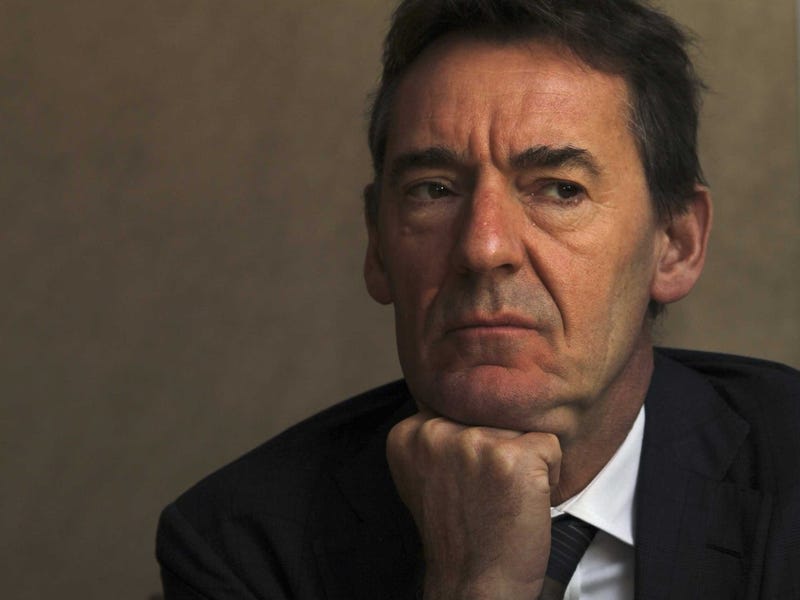
Writing in Project Syndicate on September 11, Jim O'Neill, former chairman of Goldman Sachs The Goldman Sachs Group, Inc. Asset Management, argued that the imbalances demand coordinated international action. "A new agreement to address today's global imbalances has become increasingly necessary," O'Neill wrote, noting that the Chinese renminbi appears roughly 20% undervalued on a trade-weighted basis. He suggested the United Kingdom, as host of the G20 in 2027, could help orchestrate what he called a modern equivalent of the Plaza Accord.project-syndicate+1
Separately, the growing reach of Chinese economic diplomacy was on display in Colombo on Saturday, where Dr. Chen Wenling, a senior research fellow at the Academy of Contemporary China and World Studies, called for a substantially expanded economic relationship between China and Sri Lanka. Speaking at the China-Sri Lanka Friendship Organizations Symposium, Chen proposed reviving a bilateral free-trade agreement, increasing Chinese imports of Sri Lankan goods, developing Sri Lanka as an "Indian Ocean maritime capital," and deepening cooperation in AI and the digital economy.slguardian
O'Neill's analysis underscored the tension at the heart of these developments: China's export strength, while fueling its global ambitions, reflects weakening domestic demand that threatens its own growth targets. China's annualized real GDP growth slowed to 4.3% in the second quarter, and without a rebound in consumption, hitting the government's 4.5-5% target for 2026 looks difficult.tomorrowsaffairs