Newsletter Subscribe
Enter your email address below and subscribe to our newsletter

All voices matter
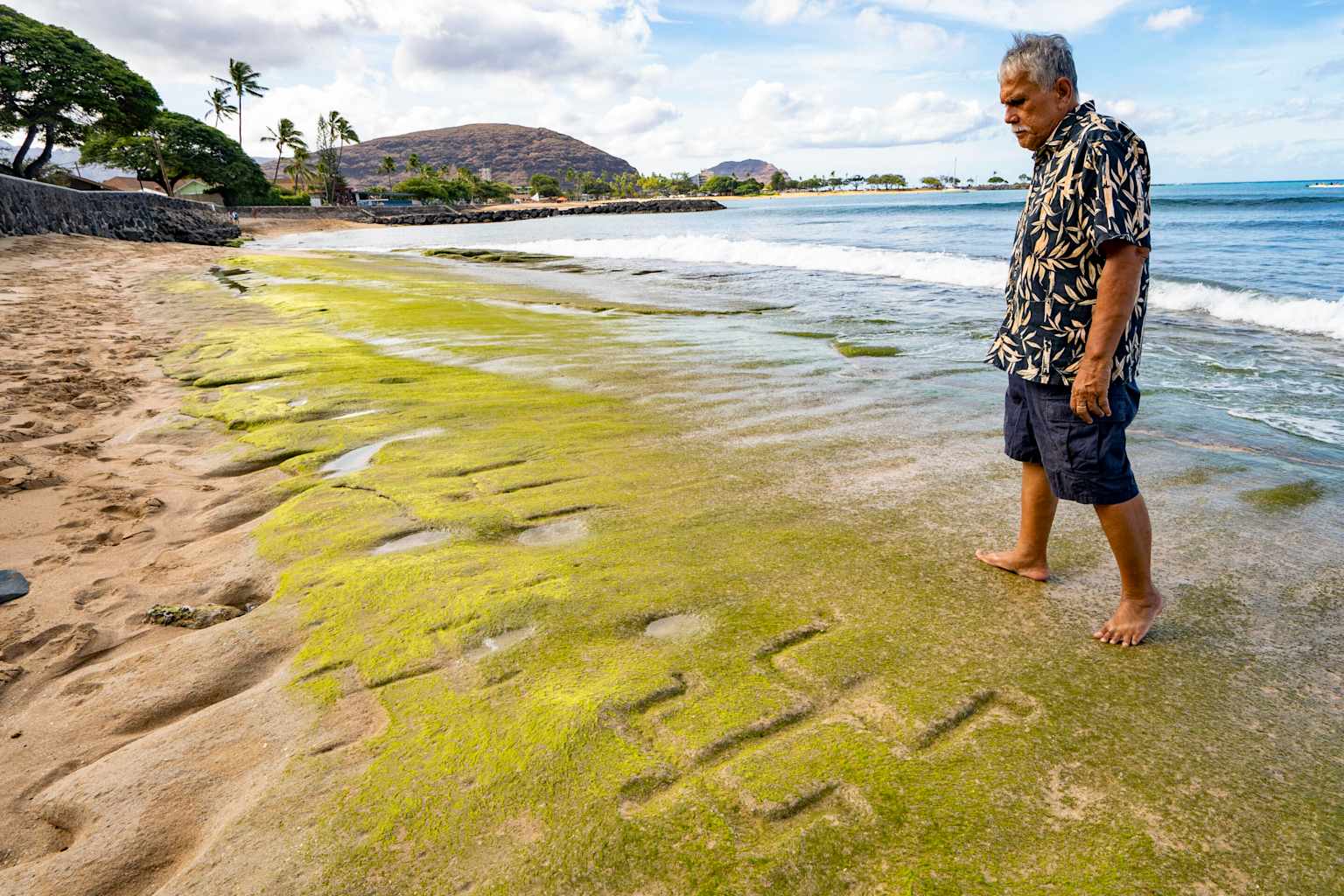
archaeologymag+1.sfgate+1.sfgate.archaeologymag+1.archaeologymag+1.A collection of ancient Hawaiian petroglyphs dating back at least 500 years has reappeared on Oahu's Waianae Coast after being buried beneath sand for nearly a decade. The 26 anthropomorphic stick figures, some stretching over eight feet tall, emerged in July 2025 following seasonal ocean swells and shifting tides that swept away sand covering the sandstone carvings.archaeologymag+3
This marks the first time the entire panel has been visible since the petroglyphs were initially discovered by two guests at a U.S. Army recreation center in 2016. The complete collection stretches approximately 115 feet along the shoreline and becomes accessible during low tide when gentle waves ebb and flow over the algae-covered sandstone.arnottslodge+2
For Native Hawaiian communities, the reappearance carries profound spiritual meaning. Glen Kila, a cultural practitioner whose family traces its lineage to the original Polynesian settlers of the Waianae Coast, interprets the phenomenon as his ancestors sending a message about rising ocean levels.arnottslodge
"My interpretation, just by looking at it, was Maui," Kila said, referring to the largest petroglyph figure with outstretched fingers. "Because of the way the fingers stretch from the east to the west—it's symbolic of the rising and setting sun. That is a spiritual symbol, much like the cross in Christianity".arkeonews+1
The carvings are believed to represent ceremonial narratives or cosmological cycles, with raised arms in certain figures possibly signifying sunrise and sunset or other ritual movements tied to natural events and spiritual beliefs.nps+1
The ocean's natural rhythm serves as both protector and revealer of these ancient carvings, creating a unique preservation cycle that has safeguarded them for centuries. According to Nathan Wilkes, external communications chief for the U.S. Army Garrison Hawaii, "This is a natural process where the ocean and currents gradually uncover, and then later recover, these glyphs over time." The petroglyphs remain buried under protective sand for most of the year, only emerging when seasonal weather patterns—particularly storm activity from May to November—generate stronger Pacific currents that churn up sand and sediment.arkeonews
This cyclical burial and exposure system has proven remarkably effective at minimizing erosion damage to the soft sandstone medium. While archaeologists and Army cultural resource specialists regularly monitor the site to ensure long-term protection, they acknowledge that the ocean itself plays the most vital role in preserving these vulnerable carvings. As the sands inevitably shift again in coming months, the petroglyphs will likely vanish once more beneath the shoreline, waiting patiently for their next natural unveiling—a process that transforms each reappearance into both a geological phenomenon and a fleeting window into Hawaii's ancient past.arkeonews
Hawaiian petroglyphs represent one of the Pacific's most distinctive rock art traditions, with thousands of carvings scattered across the islands' volcanic landscapes and coastal zones. While most Hawaiian petroglyphs are found etched into dark basaltic lava flows—particularly at sites like Puako on the Big Island—the Waianae Coast discovery stands out for its rare sandstone medium and shoreline location. Army archaeologist Alton Exzabe, who helped document the site, noted that despite managing "several thousand archaeological sites" across Hawaii, this represents "the first one with petroglyphs directly on the shoreline."youtube+1
The artistic style of these coastal carvings aligns with broader Hawaiian petroglyph traditions, featuring predominantly anthropomorphic stick figures that archaeologists classify among the older petroglyph styles found throughout the islands. What makes the Waianae petroglyphs particularly noteworthy is the unusual level of detail—two massive figures display clearly defined fingers, a relatively uncommon feature in Hawaiian rock art. Archaeological dating suggests these carvings could be associated with a broader site complex dating to approximately 1480 CE, based on calibrated radiocarbon analysis from nearby seawall construction. This timeline places them within the period when Native Hawaiian communities were establishing permanent settlements along the Waianae Coast, using petroglyphs to record genealogies, spiritual beliefs, and connections to the land that sustained them.arkeonews+3