Newsletter Subscribe
Enter your email address below and subscribe to our newsletter
[forminator_form id="25163"]

All voices matter
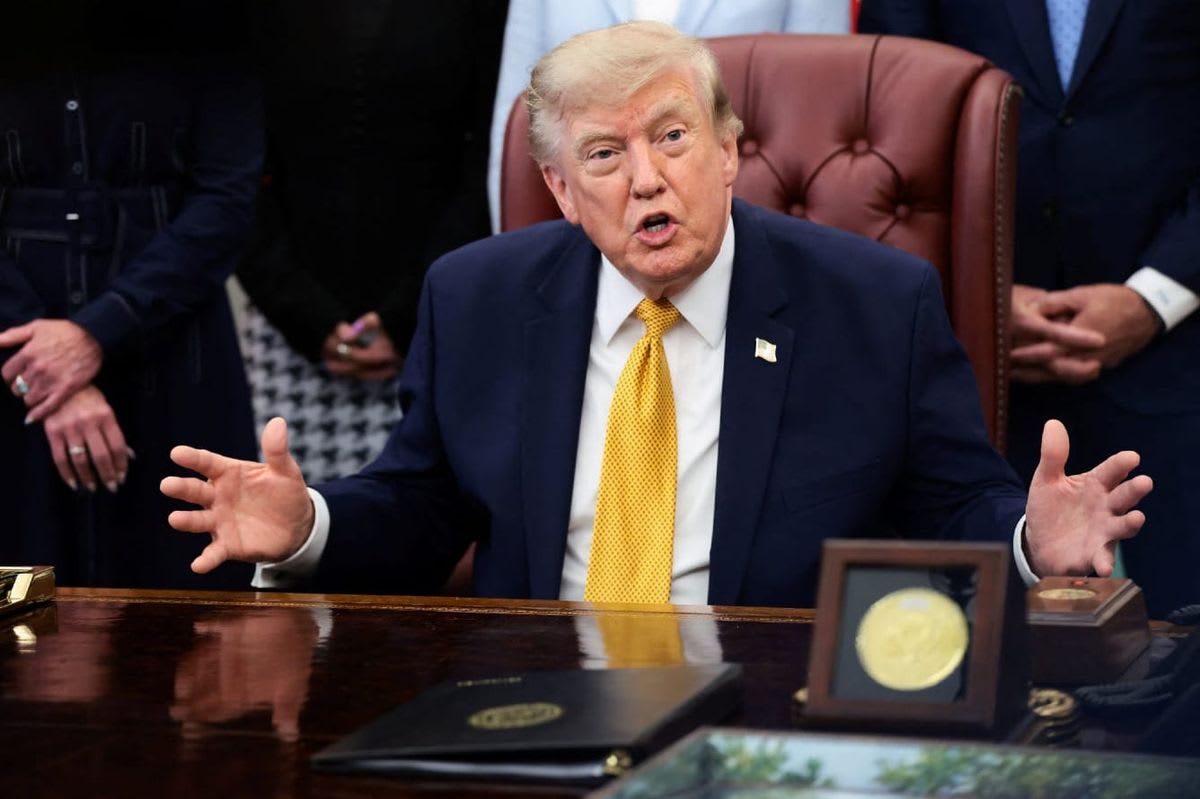
marketscreenerreutersaxiosU.S. President Donald Trump on Monday turned Iran's demand for war reparations back on Tehran, stating that he is "likewise demanding compensation from Iran for those it has killed and wounded," according to Reuters. The statement came just a day after Iran's Supreme National Security Council outlined six sweeping conditions for reopening the Strait of Hormuz, including that the United States pay compensation for damage inflicted during months of air strikes.marketscreener
The exchange marks a new chapter in the rhetorical standoff between Washington and Tehran. On Saturday, Mohammad Bagher Zolghadr, secretary of Iran's Supreme National Security Council, issued a statement demanding full compensation for war damages, the lifting of the U.S. naval blockade, sanctions relief, withdrawal of American forces from the region, and the unconditional release of frozen Iranian assets. Iranian Foreign Minister Abbas Araghchi reinforced the position on Sunday, saying there was "no possibility of resuming talks until the U.S. stops violating the MOU and compensates for the violations".chosun+2
Trump's counter-demand reframes the compensation issue as a two-way obligation, pointing to American and allied casualties sustained during the conflict that began with U.S. and Israeli strikes on Iran in late February.
Trump's compensation demand came alongside a broader posture of restraint. In an interview with Axios published Sunday, the president said the U.S. was "low-keying it" and only "semi-negotiating" with Iran. "We are just watching Iran with its huge inflation and the fact they have no money," he said, describing the standoff as "like a chess game."axios
The Wall Street Journal News Corp reported that Trump has privately told senior aides he is willing to end the conflict without a nuclear agreement if Iran fully reopens the Strait of Hormuz. Meanwhile, a separate Iran-Oman agreement on shipping lanes through the strait is in its "final stages," according to Araghchi, though he stressed that completing the technical arrangement does not mean the waterway will reopen.reuters+2
The stalemate continues to ripple across the region. Yemen's Houthi rebels attacked Saudi Aramco's Jazan refinery over the weekend, days after Saudi Arabia signed a defense pact with Turkey and Pakistan. Oil prices rose on Monday as hopes for a swift resolution faded, with analysts noting that Gulf crude exports remain well below pre-war levels. About 8 million barrels of oil are leaving the Gulf nightly through the strait's southern lane under U.S. military coordination, according to a U.S. official cited by Axios, but full commercial traffic remains far from restored.energynewsbeat+2
Vice President JD Vance characterized the situation on Saturday: "This thing is not over. It's obviously not at the beginning. We're in the middle of the game".timeskuwait