Newsletter Subscribe
Enter your email address below and subscribe to our newsletter

All voices matter
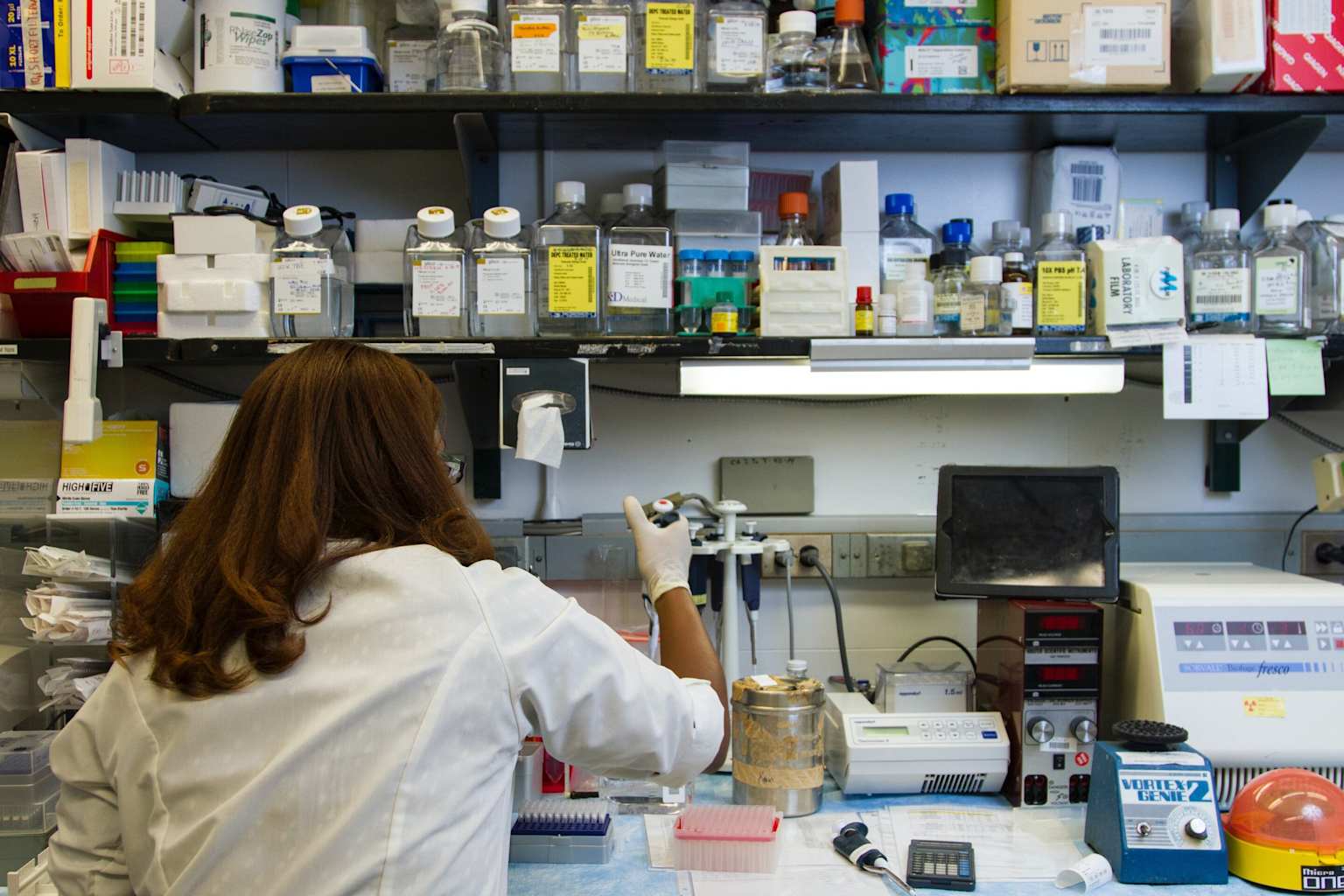
science+1pubmed.ncbi.nlm.nih+1stanforddailyStanford University researchers have formally introduced Biomni, a general-purpose biomedical AI agent capable of autonomously executing research tasks across dozens of scientific subfields, in a paper published Thursday in the journal Science. The system, which has already been used by 15,000 scientists to automate 100,000 biomedical workflows, represents one of the most ambitious efforts yet to embed artificial intelligence directly into the daily work of biological research.science+1
Biomni integrates large language model reasoning with retrieval-augmented planning and code-based execution, enabling it to dynamically compose and carry out complex biomedical workflows without relying on predefined templates or rigid task flows. The platform draws on 150 specialized tools, 59 databases, and 105 software packages to automate biomedical data analysis.pubmed.ncbi.nlm.nih+1
To build its knowledge base, Biomni first deploys an "action discovery agent" that mines essential tools, databases, and protocols from tens of thousands of publications across 25 biomedical domains. Benchmarking has shown the system achieves strong generalization across tasks including causal gene prioritization, drug repurposing, rare disease diagnosis, microbiome analysis, and molecular cloning — all without task-specific prompt tuning.pubmed.ncbi.nlm.nih
The system was developed by Stanford researchers and the spinout company Phylo. It is freely accessible through a no-code web interface at biomni.stanford.edu.biomni.stanford+3
Biomni has already demonstrated real-world impact. A specialized version called Biomni-AD, developed jointly by Stanford and Mount Sinai's Icahn School of Medicine, won a $1 million grand prize from the Alzheimer's Disease Data Initiative in March for its work as a scientific collaborator in Alzheimer's research.stanforddaily
Stanford HAI highlighted the system this week as a leading example of how AI is accelerating scientific discovery. The researchers behind Biomni describe its ambition in sweeping terms: the system "envisions a future where virtual AI biologists operate alongside and augment human scientists to dramatically enhance research productivity, clinical insight, and healthcare".hai.stanford+1