Newsletter Subscribe
Enter your email address below and subscribe to our newsletter
[forminator_form id="25163"]

All voices matter
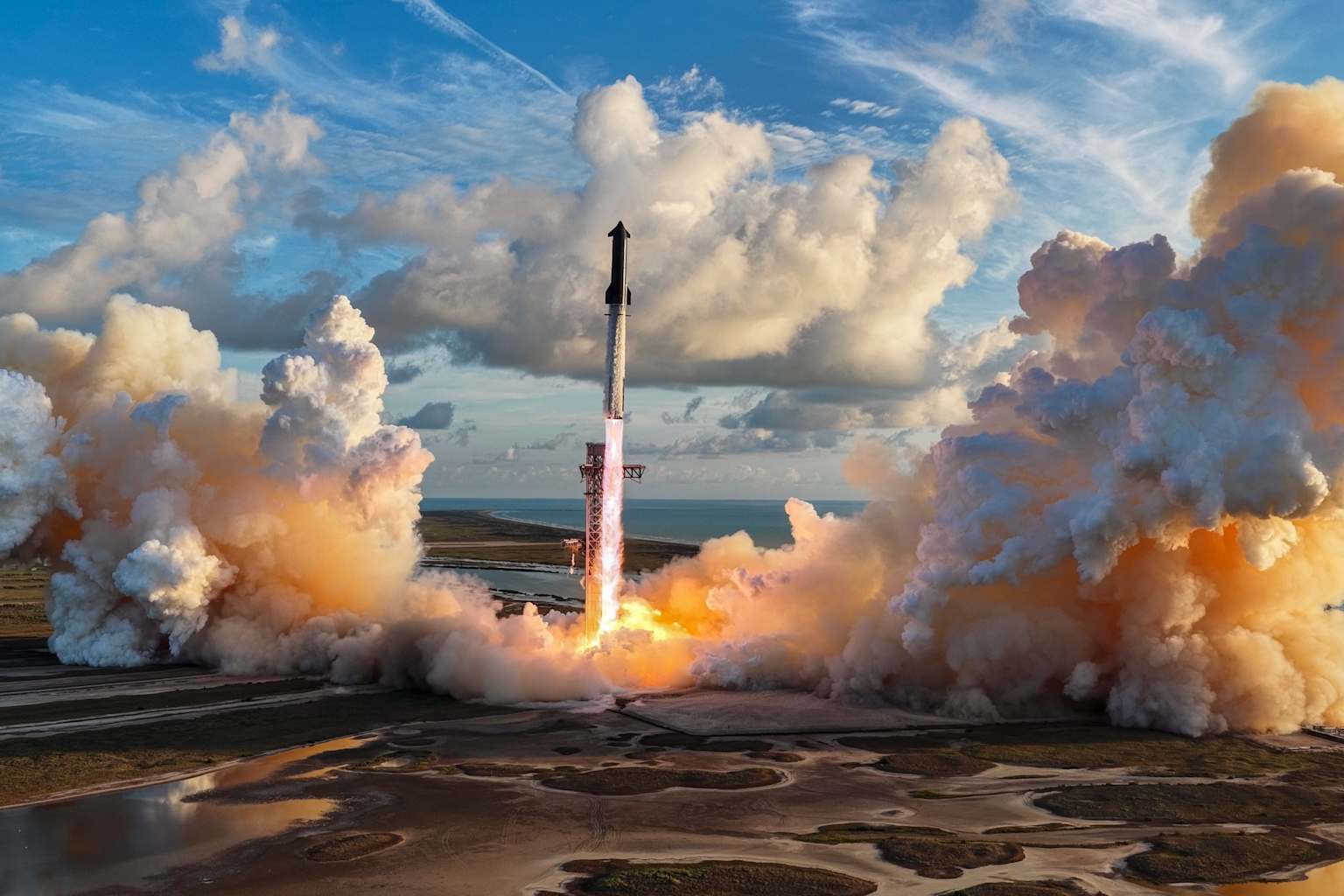
nbcdfw.com.reuters.com+1.spaceflightnow.com.SpaceX launched Starship on its 15th test flight from Starbase, Texas, on Friday, Nov. 13. The 22-hour mission was meant to recover the entire rocket at the launch pad, according to the Associated Press. The first half of the attempt failed within minutes. The Super Heavy booster malfunctioned and did not return to its Texas pad. It ended up in the Gulf of Mexico after an automatic abort, while the spacecraft kept heading toward orbit, AP reported.apnews.com+1
The setback ends hopes for what SpaceX described as "the first full recovery of an orbital launch system." The upper stage's historic landing attempt is still planned for Saturday, Nov. 14, the company said on its mission page.spacex.com
The launch was cleared only hours ahead of time. As of Friday morning, the Federal Aviation Administration still had not issued a launch license, Reuters reported. The agency then issued a revised license allowing a single Flight 15 launch and the related Starship reentry, according to Seeking Alpha.reuters.com+1
Booster 22 was supposed to fly back to Pad 2 about 6.5 minutes after liftoff and be caught by the tower's "chopstick" arms. It would have been the first catch of a Version 3 Super Heavy, Spaceflight Now reported. SpaceX has caught boosters three times before, most recently in March 2025, according to Reuters.spaceflightnow.com+1
Ship 42 is set to release 26 Starlink V3 satellites, SpaceX said. It will then circle Earth for about 22 hours before trying to return to the tower. No rocket has ever done this. If the ship is not healthy, mission controllers can send it to a splashdown off Hawaii or Chile instead, Spaceflight Now noted.spaceflightnow.com+1
For the landing, the ship would reenter over populated areas of northern Mexico and South Texas, Space.com reported. Even after reentry, controllers could divert it to the Gulf or order it to self-destruct, CNN reported.cnn.com+1
The flight comes after the September test, which was Starship's first to reach orbit. That mission was planned to last 10 hours but ended after about three, with a splashdown in the Pacific, Reuters reported. NASA has paid SpaceX about $3.2 billion to develop Starship as a moon lander, and SpaceX has spent at least $15 billion of its own money, according to Reuters.reuters.com
SpaceX says recovering both stages is central to its plans. "Falcon rockets are still not fully reusable. We still throw that second stage away every single flight," SpaceX vice president of launch Kiko Dontchev said at a recent NASA summit, AP reported. "Starship, we're going to catch both the first stage and second stage."nbcdfw.com