Newsletter Subscribe
Enter your email address below and subscribe to our newsletter
[forminator_form id="25163"]

All voices matter
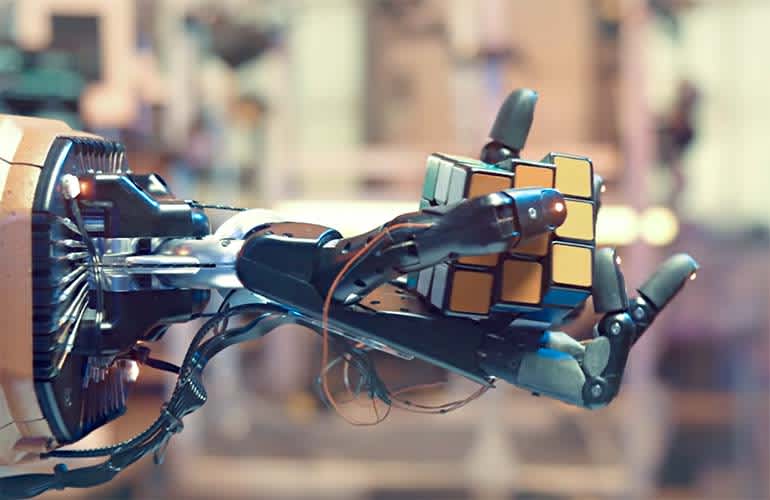
fortune.com.fortune.com.fortune.com.OpenAI has broken up its stand-alone robotics team and moved the researchers onto other teams, the company confirmed to Fortune. A spokesperson described the change as a sign of OpenAI's commitment to robotics, not a retreat from it. The company says its general-purpose frontier models, including GPT-6 Astra, have shown they can be applied to robots directly.fortune.com
According to the company, the robotics research group now sits within the main research team, which reports to Chief Research Officer Mark Chen. The applied robotics and hardware teams have joined the larger Applied organization under President Greg Brockman, Fortune reported. Reuters also carried the report.tradingview.com+1
OpenAI said that at the start of the year, its researchers thought the best route to progress in robotics was to build on models like Sora, its video generator, which has some implicit sense of how the physical world works. Since then, the company said, models such as GPT-6 Astra have proven useful for robotics without that step, and that finding led to the reorganization. In one Nvidia study, an agent running on Astra succeeded 74.8% of the time on a simulated manipulation benchmark. The best specialized robotics models on that leaderboard reached 51.0%, according to Fortune.fortune.com
The change happened so recently that OpenAI's booth at the CoRL robotics conference in Austin this week was empty, even though it was still listed in the event's floor plan. Carnegie Mellon assistant professor Guanya Shi told Fortune that he reads the move as a sign OpenAI sees robotics as "no longer a special problem." He added that small specialized models that run on a robot's own computer, without a constant internet connection, will still be needed.fortune.com
The approach challenges robotics startups that have raised billions on the idea that robots need their own specialized AI. MIT professor Russ Tedrake, CEO of Walden Robotics, argued that those companies still have something the big AI labs lack: real-world deployment data from places like factory floors. Pete Florence, cofounder of Generalist, said it was not clear that any current model would come to dominate robotics, Fortune reported.fortune.com
OpenAI shut down an earlier robotics team in 2020 and started a stand-alone group again in 2024, when it partnered with Figure on models for humanoid robots. That partnership ended in February 2025. The company has said it is building its own humanoid robot, and CEO Sam Altman is aiming for a first public demonstration in 2027, according to Fortune. OpenAI's hardware hiring has continued to grow in recent months, AIBase noted. The spokesperson said OpenAI still plans to bring general-purpose robots into the world and believes folding the team into broader model work is the fastest way to do it.news.aibase.com+1