Newsletter Subscribe
Enter your email address below and subscribe to our newsletter
[forminator_form id="25163"]

All voices matter
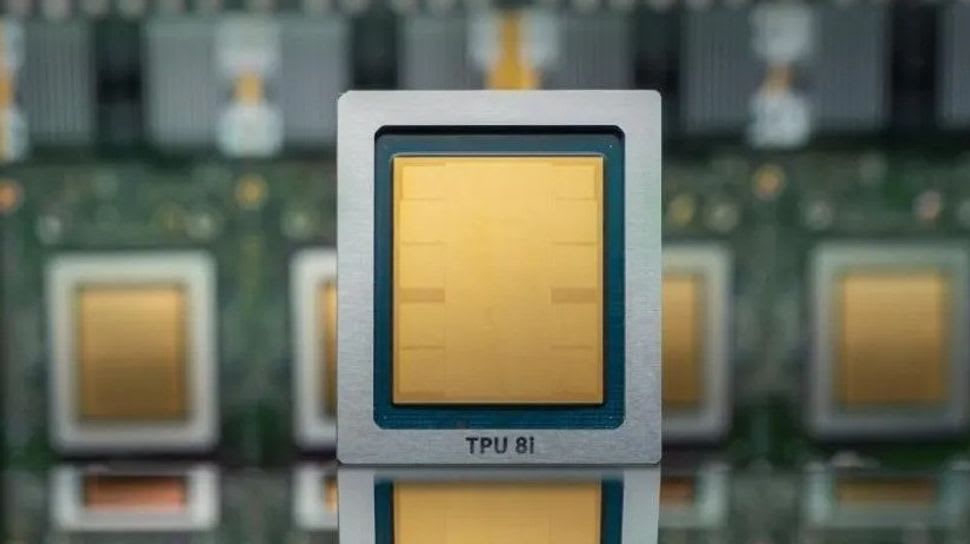
bloomberg.com.news.futunn.com+1.newsletter.semianalysis.com.Google is adding two specialized versions to its tensor processing unit (TPU) lineup. One is built for confidential computing and the other for AI models that need to pull in more information while answering queries. The move steps up Google's challenge to Nvidia in the AI chip market, Bloomberg reported on Monday, November 9. Alphabet's Google wants to build on its fast rise as an Nvidia rival in a market worth hundreds of billions of dollars, and the chips are aimed at an industry that is moving toward AI agents while dealing with new security problems, Bloomberg said.bloomberg.com
The new variants are called the TPU 8tx and the TPU 8i Max, according to Bloomberg's reporting as relayed by Futu News. The 8tx is mainly for government agencies and regulated businesses that need secure, confidential computing. It works alongside chips from Advanced Micro Devices under a partnership between the two companies. The 8i Max is designed for AI applications that need long context windows, the report said.news.futunn.com
In an interview, Amin Vahdat, who heads Google's chip business, said the four eighth-generation TPU products are each tuned for different needs. He described this as part of Google's long-held view that specialized chips carry large advantages, according to the report. The chip unit used to release a new AI processor about every two years.news.futunn.com
The new variants extend a split approach Google introduced at Cloud Next in April. There, it unveiled the TPU 8t for training and the TPU 8i for inference, the first time a TPU generation came as two separate chips. Google says a TPU 8t superpod scales to 9,600 chips and delivers 121 exaflops of compute. The TPU 8i has 384 MB of on-chip SRAM and 80% better inference performance per dollar than the previous generation, according to Google Cloud.cloud.google.com+1
Security has been a weak spot for TPUs. A Google representative at a recent workshop confirmed that TPUs did not yet support confidential computing at the accelerator level, according to a Substack analysis. Google Cloud had relied instead on AMD-based confidential virtual machines and on Nvidia GPUs for that work.cloud.google.com+1
Google has also been making its TPUs available outside its own cloud. In late October it announced it was bringing TPUs to Oracle Cloud Infrastructure. Independent tests also suggest the chips are competitive. Research firm SemiAnalysis published agentic inference benchmarks on November 9 showing Google's seventh-generation Ironwood TPU matching or beating Nvidia's GB300 systems on performance per dollar for several models. Nvidia's NVFP4 format still led in some FP8 comparisons, though SemiAnalysis noted it comes at some cost to accuracy.newsletter.semianalysis.com+1