Newsletter Subscribe
Enter your email address below and subscribe to our newsletter
[forminator_form id="25163"]

All voices matter
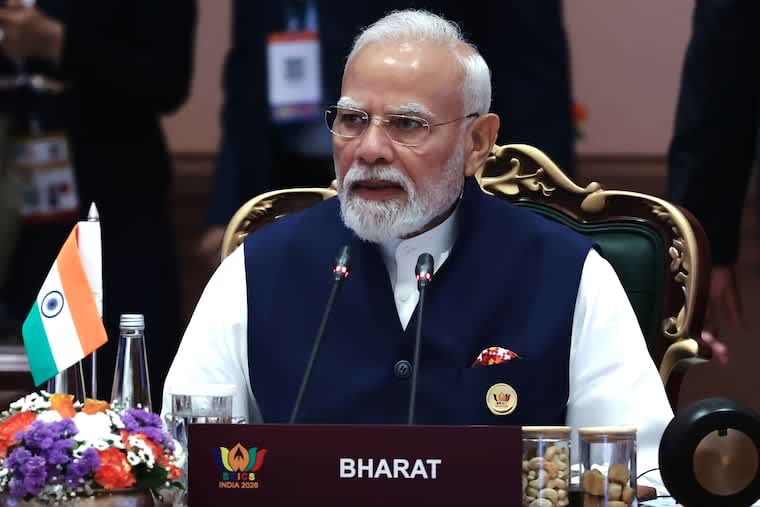
news4jax+1news4jax+1economictimes.indiatimesIndian Prime Minister Narendra Modi on Sunday cautioned that the "weaponization of technology and critical minerals" could undermine global development, delivering the warning at the BRICS summit in New Delhi with Chinese President Xi Jinping seated alongside him — a pointed message given China's dominance over rare earth processing and its recent export controls on the resources.news4jax+1
"The weaponisation of technology and critical minerals can hinder our shared progress," Modi said during a session on resilience and innovation, without naming any country directly. He called for "inclusivity in the adoption of technology" and urged stronger cooperation across the Global South to address mounting geopolitical risks.thewire+1
Modi's remarks carried unmistakable weight given China's grip on the critical minerals supply chain. Beijing accounts for roughly 60% of the world's mined production of magnet rare earths, 91% of refined output, and 94% of permanent magnet supplies, according to figures from the International Energy Agency cited in reporting by The Wire. China introduced rare earth export controls in response to U.S. tariffs and, while it scaled some restrictions back after the Busan summit between President Donald Trump and Xi, Reuters reported earlier this month that approvals for Indian imports remain limited.thewire
The summit's New Delhi Declaration, adopted Saturday, reiterated language from last year's Rio Declaration affirming the need for "reliable, responsible, diversified, resilient, fair, sustainable and just supply chains" for critical minerals while preserving sovereign rights.thewire
Beyond minerals, Modi warned that rising conflicts are taking an expanding toll on ordinary people. "Pandemics, climate disasters and supply-chain disruptions have shown that in today's interconnected world, no crisis remains confined to a single region," he said, announcing that the bloc agreed to establish an integrated early warning system for infectious diseases.economictimes.indiatimes+1
The joint declaration expressed concern over escalating tensions in the Middle East and Sudan, calling for disputes to be resolved through dialogue — a diplomatic achievement given that BRICS now includes Iran, Saudi Arabia, and the United Arab Emirates, which hold competing positions on the conflicts. The bloc also criticized unilateral sanctions and rising tariffs, backed greater use of local currencies in trade, and reiterated calls for reform of the U.N. Security Council and global financial institutions.news4jax+1
The summit marked Xi's first visit to India in seven years, following a prolonged chill in relations after the deadly 2020 border clash in eastern Ladakh. In closing remarks, Modi urged member nations to convert the summit's agreements into "tangible and time-bound action" and wished China well as it assumes the rotating BRICS chairmanship. The bloc, now 11 members representing about half the world's population, he said, "is not merely a group of countries, but an ecosystem of solutions".economictimes.indiatimes+1